


Evidence: Terpenes for Sleep Shift Sleep Stages with 300 mg CBD
Myrcene, linalool, β-caryophyllene, terpinolene, pinene, and humulene carry the strongest evidence for sleep support, but the science points to blends rather than single-terpene magic. The clearest human data comes from a formulation combining these compounds with CBD, and even that study showed modest, stage-specific improvements, not longer nights. Anyone on sedatives, pregnant, or managing other medications should talk to a clinician before adding terpene products to a nightly routine.
TL;DR:
- Human studies show that a blend of terpenes with CBD can modestly improve stages of sleep, but effects on total sleep duration are minimal.
- Terpenes like myrcene and pinene act at GABAA receptors similar to prescription sleep aids, while caryophyllene targets CB2 receptors linked to pain relief.
- Matching specific terpenes to sleep issues, such as anxiety or pain, is more effective than relying on high terpene percentages on labels.
- Consistent use over at least four weeks is necessary to observe measurable improvements, and dosage transparency is crucial for safe, effective application.
- Users should consult healthcare professionals before combining terpenes with sedatives or medications, especially if pregnant, breastfeeding, or on other CNS depressants.
Table of Contents
- Terpenes for Sleep: A Profile of the Top Six
- How Terpenes Affect Sleep: Mechanisms and the Human Trial That Matters
- Dosing, Delivery, and Interactions: Using Terpenes for Sleep Safely
- Choosing a Terpene-Rich Product for Sleep
- How Hemp-flower Approaches Terpene Testing
- What the Evidence Actually Supports
- Try a Terpene-Forward Option: Deep Space THCa Blunt
- Sources
- FAQ
Terpenes for Sleep: A Profile of the Top Six
Not every sleep problem is the same, and not every terpene addresses the same problem. A racing mind at 11 PM calls for something different than pain that keeps waking you at 3 AM. Matching the terpene to the actual disruption matters more than chasing the highest total terpene percentage on a label.
Myrcene shows up in mangoes, hops, and lemongrass, and it’s the terpene most associated with the sedating “couch lock” effect people report from certain cannabis strains. A preclinical study on beta-myrcene found it produced sedative-hypnotic effects in an insomnia mouse model, with changes in GABAergic and serotonergic signaling that offer a plausible mechanism for why it feels calming. This is animal data, not a human trial, but it lines up with decades of anecdotal reporting.
Linalool is the floral terpene behind lavender’s reputation as a bedtime scent, and that reputation has some backing. Standardized lavender oil high in linalool has shown clinical benefit for anxiety, and anxiety reduction is often the real lever behind better sleep. If your insomnia is driven by an overactive mind rather than physical discomfort, linalool is worth prioritizing.
β-caryophyllene works differently. It binds to CB2 receptors, and that activity carries anti-inflammatory and pain-relieving effects in preclinical research, alongside anxiolytic properties tied to cannabinoid-terpene interactions. For someone whose sleep gets wrecked by chronic pain or tension rather than racing thoughts, this terpene targets the actual cause instead of just sedating on top of it.
Terpinolene shows sedative activity in animal studies and often appears in sleep-focused terpene blends alongside myrcene, though it’s less studied as a standalone compound. It tends to work as a supporting player rather than the lead.
Pinene and 3-carene, both pine-family monoterpenes, have some of the most specific mechanistic evidence available. Research on 3-carene found it enhances sleep in mice by acting at the GABAA-benzodiazepine receptor site, the same binding site targeted by prescription sleep medications like zolpidem.
Humulene, found heavily in hops, brings anti-inflammatory activity that can support restorative sleep when pain or swelling is part of the problem, though direct sleep trials on humulene alone are limited.
- Myrcene: best for general sedation and muscle relaxation
- Linalool: best for anxiety-driven sleeplessness
- β-caryophyllene: best when pain interrupts sleep
- Terpinolene: best as a supporting terpene in a blend
- Pinene/3-carene: best for a GABA-pathway sedative effect
- Humulene: best for inflammation-related sleep disruption
How Terpenes Affect Sleep: Mechanisms and the Human Trial That Matters
The mechanistic story behind terpenes for sleep runs through a few overlapping pathways, and none of them work in isolation from each other or from cannabinoids. Pine-family terpenes like α-pinene and 3-carene act as positive modulators at the GABAA-benzodiazepine receptor site, the same target as many prescription hypnotics. That’s a meaningful detail: it suggests these terpenes may not just relax you the way a cup of chamomile tea does. They may be interacting with the same inhibitory neurotransmission system that controls how fast you fall asleep and how deep you stay there.
Myrcene appears to act through a related but distinct route, with preclinical work showing altered GABAergic and serotonergic signaling in sedated mice. β-caryophyllene takes a third path entirely, binding CB2 receptors rather than GABA sites, which is why it shows up more often in pain-related sleep research than in pure sedation studies.
A randomized, double-blind, placebo-controlled crossover trial testing an oral formulation combining CBD and terpenes found a small but statistically significant rise in the share of the night spent in slow-wave sleep and REM combined, without any change in total sleep time.
The numbers: participants took 300 mg of CBD plus 1 mg each of several terpenes, at least four days a week for four weeks. The result was a mean increase of 1.28 percentage points in SWS+REM time (95% CI 0.09 to 2.46, P=0.03), with people who started with low baseline SWS+REM seeing the biggest gains, some up to roughly 48 minutes a night by week four.
That’s a real signal, but it’s a narrow one. Total sleep time didn’t budge. The effect showed up in sleep architecture, not sleep quantity, which tells you to expect terpenes to change how you sleep before they change how long you sleep. It also reinforces that the benefit came from a blend of CBD and multiple terpenes together, not from any single compound working alone.
Dosing, Delivery, and Interactions: Using Terpenes for Sleep Safely
The clinical trial’s regimen gives you a concrete anchor: 1 mg of each terpene alongside 300 mg of CBD, taken at least four days a week for a month before researchers saw measurable change. That’s a milligram target, and it’s worth remembering because most product labels list terpenes as a percentage of flower weight, not milligrams per serving. A flower percentage doesn’t translate directly into the dose used in the study without knowing the total terpene content and serving size, which is exactly why a certificate of analysis matters more than a percentage number on a jar.
Delivery method changes both onset and control:
- Inhalation (flower, pre-rolls) delivers terpenes fastest, often within minutes, but makes precise milligram dosing harder to track night to night.
- Oral formulations (capsules, tinctures, gummies) offer the most consistent dosing and match how the clinical trial delivered its terpene blend, though onset is slower, often 45 to 90 minutes.
- Essential oils used aromatically (diffused, not ingested) support the linalool-anxiety pathway without adding cannabinoid exposure at all.
- Topicals suit β-caryophyllene’s pain-relief angle when localized discomfort is the primary sleep disruptor.
Most people see the clearest benefit taking a terpene or terpene-cannabinoid product 30 to 60 minutes before their intended bedtime, and effects appear to build over consistent use rather than working as a one-off knockout dose. That matches the trial’s four-week timeline.
Pro Tip: Don’t judge a sleep terpene product after one night. The clinical data showing SWS+REM improvement came from at least four weeks of consistent use, not a single dose.
Interactions deserve real caution. Pine-family terpenes acting at the GABA-benzodiazepine site raise the possibility of additive sedation with prescription sleep medications, benzodiazepines, or other CNS depressants including alcohol. Anyone pregnant, breastfeeding, or taking medications metabolized through the liver should discuss terpene or cannabinoid products with a clinician before starting, the same caution that applies to combining THCa and CBD for deep sleep.
Before buying anything, check for a batch-specific certificate of analysis, milligram-per-serving terpene data (not just percentages), contaminant screening results, and a clear cannabinoid breakdown.
Choosing a Terpene-Rich Product for Sleep
A high terpene percentage on a label means very little without a lab report behind it. What is a good terpene percentage? The percentage tells you volume; the certificate of analysis tells you what you’re actually getting.
Match the format to your specific need. Oral formulations give you the dosing consistency that clinical research relies on. Inhaled flower gives you faster onset and lets you sample how indoor versus outdoor growing shapes a strain’s terpene profile. Blends that pair cannabinoids with multiple terpenes reflect the combination approach that showed measurable results in the crossover trial, rather than isolating one compound and hoping for the best.
Run through this before you buy:
- Third-party COA available for the specific batch, not a generic product-line report
- Terpenes listed by compound and, ideally, by milligram content
- Cannabinoid content clearly stated (THCa, CBD, or both)
- Contaminant screening for pesticides, heavy metals, and residual solvents
- Batch number that matches what’s printed on the packaging
How Hemp-flower Approaches Terpene Testing
The company runs a testing regimen built around transparent sourcing and lab-verified potency across its indoor and greenhouse-grown strains. That matters specifically for terpene reliability, since a batch’s terpene profile can shift with harvest and curing conditions, and only a current certificate of analysis tells you what’s actually in the jar you bought.
The format range, from flower and pre-rolls to concentrates like THCa wax and crumble, maps directly onto the delivery options discussed above: inhaled flower for faster onset, concentrates for stronger dosing control, each with lab data behind it.
What the Evidence Actually Supports
The honest read on terpenes for sleep is this: they’re real, they’re mechanistically plausible, and they’re nowhere near as powerful as marketing copy implies when used alone. The GABA-benzodiazepine data on pine terpenes is genuinely compelling science. The myrcene rodent studies are consistent with decades of user reports. But the one human clinical trial with a rigorous design showed a change in sleep architecture, not a knockout increase in total sleep time, and it used a blend, not an isolated compound.
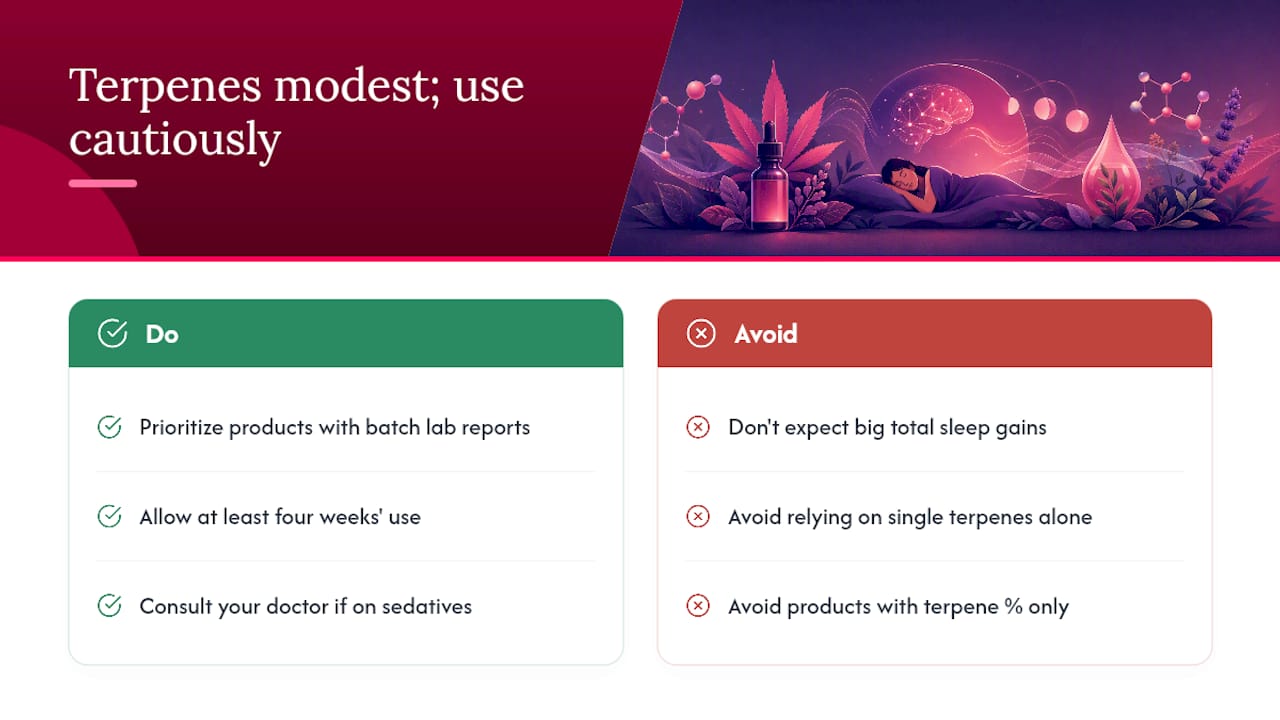
Conventional wellness content oversells single terpenes as standalone cures, and that’s where I’d push back hardest. If you’re chasing better sleep, prioritize products with transparent, batch-specific lab data over anything promising a specific high terpene percentage. Percentage numbers without a compound breakdown are close to meaningless. Give any regimen at least a few weeks before judging it, since the clinical signal took four weeks to appear, and talk to a doctor first if you’re on any sedating medication.
— Michael
Try a Terpene-Forward Option: Deep Space THCa Blunt
This provider sells flower and formats discussed in this guide, tested and sourced with transparency as described in the checklist above. If you want to try a terpene-forward flower product rather than starting with an oral blend, the Deep Space 32.19% THCa Blunt, 1 Gram, is a high-potency, terpene-rich option worth a look, particularly if pain or muscle tension is part of what’s keeping you up.
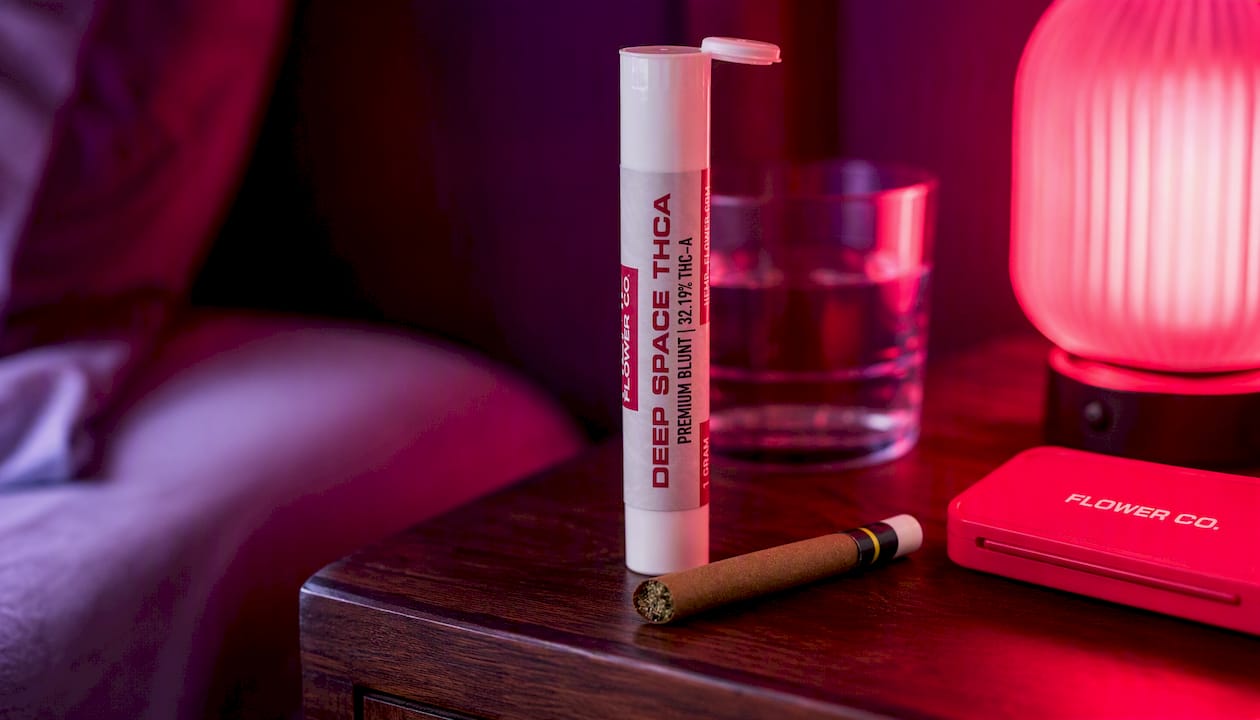
Before buying, verify the batch’s certificate of analysis, check the terpene and cannabinoid breakdown against your specific sleep concern, and confirm THCa products are legal in your state. Consider serving size carefully, since a full blunt delivers a much larger dose than the milligram amounts used in clinical trials. If you’d rather try a controlled-dose format instead, Hemp-flower’s pre-roll collection and vape products offer smaller, more measurable servings, and the concentrates collection suits anyone wanting a stronger, more targeted dose. Browse the full product lineup to compare formats side by side before you order.
This article is general information, not a substitute for advice from a qualified doctor. Consult a qualified healthcare professional about your own circumstances before acting on anything here.
Sources
- 3-Carene, a Phytoncide from Pine Tree Has a Sleep‑enhancing Effect by Targeting the GABAA‑benzodiazepine Receptors
- Beta-myrcene produces sedative–hypnotic effects in an insomnia mouse model (preclinical study)
FAQ
Does Myrcene or Another Terpene Actually Make You Sleepy?
Preclinical research on beta-myrcene shows sedative-hypnotic effects in mice, and pine terpenes like 3-carene act at the same brain receptor site targeted by prescription sleep drugs, so yes, several terpenes have a plausible sedating effect, though human evidence is still limited to blended formulations.
Does a Higher Terpene Percentage Mean a Stronger Effect?
Not reliably. A high total percentage without a compound-specific breakdown tells you very little; a certificate of analysis showing exact terpenes and milligram content is a far better predictor of effect than the raw percentage on the label.
What Terpenes Can Trigger Anxiety Instead of Calm?
Some terpenes, particularly certain limonene-dominant or highly stimulating profiles, are more associated with alertness than calm, which is why matching the terpene profile to your goal matters more than picking the highest-potency option available.
What Is the Strongest Natural Option for Insomnia?
No single terpene qualifies as the strongest standalone option based on current evidence. The most credible clinical result came from a blend of CBD plus multiple terpenes, including myrcene, linalool, and pinene, taken consistently over four weeks.
Is Terpene-Rich THCa Flower Available Through Hemp-flower?
Yes. Hemp-flower carries lab-tested, terpene-forward flower and pre-roll options, including the Deep Space 32.19% THCa Blunt, with current pricing listed on the product page.


