


The History of THCA: How Scientists Discovered This Cannabinoid
What Is THCA and Why Does It Matter
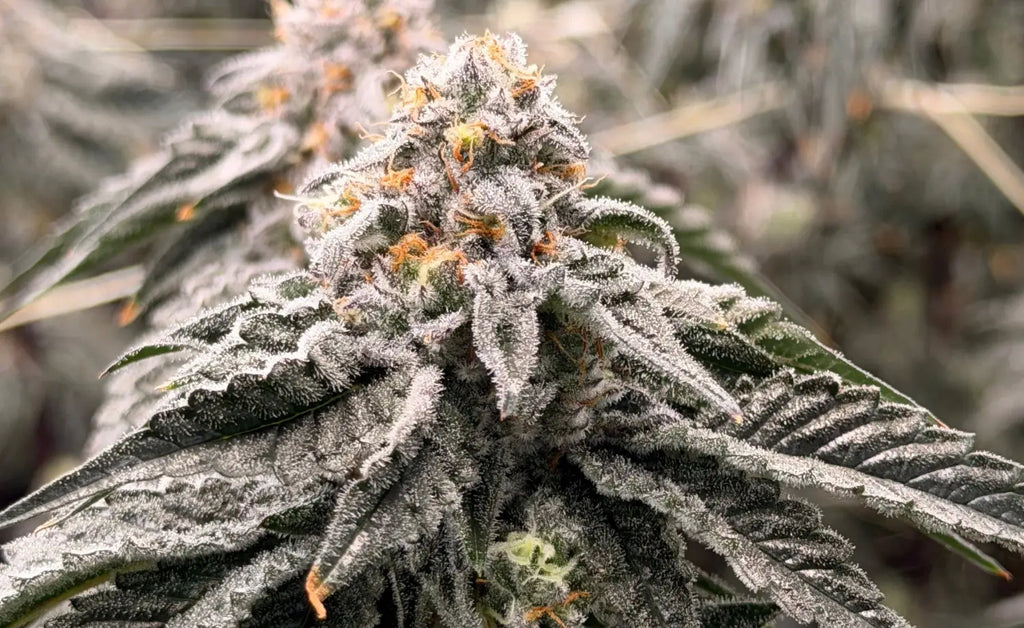
If you've searched what is THCA, the short answer is this: THCA is the acidic form of THC found naturally in raw, unheated cannabis and hemp plants. Before a flower is dried, cured, or smoked, almost all of the "THC" inside it actually exists as THCA. It's only when THCA is exposed to heat — through smoking, vaping, cooking, or dabbing — that it converts into THC through a chemical process called decarboxylation.
This distinction is the entire reason THCA has become such a significant part of the modern hemp conversation. In its raw form, THCA does not produce an intoxicating effect. That single chemical fact has enormous legal, agricultural, and commercial implications, especially in a market shaped by the 2018 Farm Bill's definition of hemp based on delta-9 THC content measured before decarboxylation.
Structurally, the THCA molecule is almost identical to THC, but with one key difference: an extra carboxyl group (COOH) attached to it. That carboxyl group prevents THCA from binding efficiently to the CB1 receptors in the endocannabinoid system responsible for intoxication. Once heat strips away that group, the molecule reshapes into THC, which binds to those receptors far more readily.
Understanding this molecular relationship is essential to understanding the entire arc of THCA discovery. Scientists didn't stumble onto THCA and immediately understand its significance — they had to first understand THC, then work backward to figure out what was actually present in the living, unheated plant. That backward-engineering process took decades, several countries, and more than a few false starts.
The Origins of Cannabinoid Science
To trace THCA history, you have to start well before THCA itself was ever named. Cannabis had been used medicinally and industrially for centuries, but the chemistry inside the plant remained a mystery until the tools of modern organic chemistry caught up with it.
Early cannabinoid isolation attempts began in the late 1800s and early 1900s, as chemists tried to identify the "active resin" responsible for cannabis's effects. Progress was slow. Cannabis extracts are chemically messy — dozens of related compounds with nearly identical structures, many of which degrade or convert into one another depending on light, heat, and age. Without modern separation techniques like chromatography, researchers were essentially working with a shifting target.
The real breakthrough in cannabinoid research history came in the 1960s, when Israeli chemist Dr. Raphael Mechoulam and his team at the Weizmann Institute of Science successfully isolated and characterized delta-9-tetrahydrocannabinol (THC) as the primary psychoactive compound in cannabis. This was a watershed moment. For the first time, science had a clear molecular target to study — and that target opened the door to identifying the dozens of related compounds that exist alongside it, including its acidic precursor.
Mechoulam's work didn't stop at THC. His lab and others working in parallel began mapping out the broader cannabinoid family: CBD, CBN, CBC, and eventually the acidic forms of these compounds that exist naturally in the raw plant before any heat is applied. It was during this expanded wave of cannabinoid research history that THCA was formally identified and named as the raw, non-intoxicating parent molecule of THC.
Isolating the THCA Molecule
Identifying the THCA molecule specifically required more refined analytical chemistry than isolating THC alone, because THCA is thermally unstable — it degrades into THC under conditions that are easy to accidentally introduce during extraction and analysis. Early researchers studying cannabis resin often unknowingly decarboxylated their samples simply by using heat during extraction, which meant they were measuring THC levels without realizing a significant portion of it had originally existed as THCA in the living plant.
It wasn't until gas chromatography and later high-performance liquid chromatography (HPLC) became standard laboratory tools that scientists could reliably distinguish THCA from THC in a sample without accidentally converting one into the other. HPLC, in particular, could be run at lower temperatures, preserving the acidic form long enough to measure it accurately. This technical leap is a critical and often overlooked chapter in THCA history: without the right instruments, THCA was essentially invisible to science, masquerading as THC in every measurement.
By the 1970s, researchers had confirmed that THCA — not THC — is the dominant cannabinoid present in living, unheated cannabis and hemp plants. THC, in other words, barely exists in the plant until it's created through heat, aging, or curing. This finding reshaped how botanists and chemists thought about the plant's chemistry altogether, and it remains the foundational science behind every raw THCA flower product sold today.
Researchers also began studying THCA's biosynthesis — how the plant actually produces it. THCA is synthesized in the plant's trichomes from cannabigerolic acid (CBGA), often described as the "mother cannabinoid," through the action of an enzyme called THCA synthase. This enzymatic pathway is part of what makes THCA science so central to modern hemp cultivation — breeders selecting for high-THCA cultivars are, whether they realize it or not, selecting for plants that express high levels of THCA synthase activity.
Why THCA Stayed in the Shadows
Given how foundational THCA is to the plant's chemistry, it's worth asking why it took so long for THCA to become a household term. The answer lies in what researchers and regulators actually cared about.
Since THCA isn't intoxicating in its raw form, early cannabinoid researchers — and the regulators who funded or restricted their work — focused almost exclusively on THC. THC was the compound responsible for the effects that made cannabis a controlled substance, and it was the compound governments wanted measured, restricted, and studied for both harm and therapeutic potential. THCA, as a "non-active" precursor, simply wasn't seen as scientifically or legally urgent.
This focus is reflected clearly across cannabinoid research history. Decades of academic literature, government-funded studies, and pharmaceutical research prioritized THC's pharmacology, its interaction with CB1 and CB2 receptors, and its therapeutic applications for conditions like nausea, appetite loss, and chronic pain. THCA appeared mostly in analytical chemistry papers focused on plant composition and testing methodology — useful, but far from the spotlight.
There's also a practical reason THCA stayed obscure for so long: for the vast majority of cannabis's cultural and legal history, nobody consumed it in its raw, unheated form. Cannabis is traditionally smoked, vaporized, or cooked — all processes that decarboxylate THCA into THC almost immediately. If nobody was consuming THCA directly, there was little commercial or clinical incentive to study it as its own distinct compound.
That began to change only when the legal definition of cannabis and hemp shifted the incentives entirely.
The Legal Turning Point: Hemp and the Farm Bill
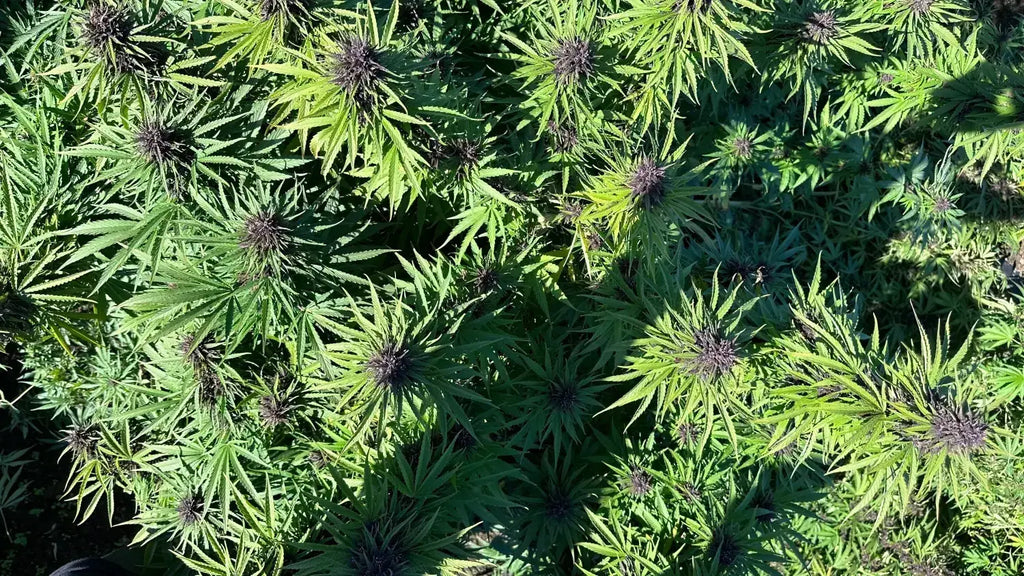
The single biggest catalyst in modern THCA history wasn't a scientific discovery at all — it was a legal one. The 2018 Farm Bill legalized hemp at the federal level, defining it as cannabis containing no more than 0.3% delta-9 THC by dry weight.
Critically, that legal threshold applies specifically to delta-9 THC — not to THCA. Because raw, unheated hemp flower can contain very low delta-9 THC while still containing substantial levels of THCA (which only converts to THC upon heating), an entire new product category became legally viable: hemp flower that is technically compliant at the point of testing and sale, while still containing significant total THC potential once decarboxylated by the consumer.
This regulatory nuance is exactly why THCA moved from a footnote in analytical chemistry papers to the center of the hemp industry almost overnight. Cultivators, brands, and retailers suddenly had a powerful commercial reason to understand THCA precisely — its biosynthesis, its conversion rate, its stability, and how to test for it accurately. What had been a slow-moving academic curiosity for fifty years became, within a few short years of the Farm Bill, one of the most economically important cannabinoids in the entire hemp supply chain.
THCA's Modern Moment
Today, THCA flower represents one of the fastest-growing categories in the hemp industry, built entirely on a cannabinoid that spent decades as a scientific footnote. What began as a technical curiosity in 1960s and 70s chromatography labs is now a driving force behind cultivar selection, extraction innovation, wholesale purchasing decisions, and retail marketing across the entire hemp sector.
Modern breeders now cultivate hemp cultivars specifically selected for high THCA expression, often reaching total THCA percentages that rival traditional high-THC cannabis strains grown in state-licensed cannabis markets. This has blurred — and in some cases directly challenged — the practical distinction between "hemp" and "marijuana," a tension regulators are still actively working through state by state.
Testing labs have also had to modernize in response. Because THCA discovery history taught the industry that heat-based testing methods artificially inflate delta-9 THC readings by decarboxylating THCA during analysis, accurate potency testing today requires careful methodology to distinguish between raw THCA content, existing delta-9 THC content, and "total THC" (a calculated figure representing what the product would become after full decarboxylation). Wholesale buyers and brands now routinely request certificates of analysis that break out all three figures separately — a level of analytical precision that simply didn't exist when THCA was first characterized decades ago.
THCA Science Today: Research Catching Up to the Market
Interestingly, commercial demand for THCA flower has now outpaced academic research in some respects, creating a feedback loop where the market is driving renewed scientific interest rather than the other way around. Contemporary THCA science is increasingly focused on questions that matter directly to producers and consumers: How stable is THCA in storage over time? What environmental conditions accelerate unwanted decarboxylation? Does the decarboxylation curve differ meaningfully between cultivars? How does THCA interact with the broader entourage of terpenes and minor cannabinoids present in a given cultivar?
Researchers are also revisiting THCA's own potential biological activity, independent of its conversion to THC. Some preliminary studies have explored anti-inflammatory and neuroprotective properties of THCA itself, distinct from THC's psychoactive pharmacology — though this research remains far less developed than the decades of work behind THC, and much more study is needed before firm conclusions can be drawn.
What's clear is that the arc of THCA history has come full circle: a compound first identified almost as a byproduct of THC research is now driving its own dedicated body of scientific inquiry, funded in large part by the commercial success of the hemp flower category itself.
Frequently Asked Questions
What is THCA, in simple terms?
THCA is the raw, non-intoxicating form of THC found naturally in unheated cannabis and hemp flower. It converts into THC when exposed to heat through smoking, vaping, or cooking.
When was THCA discovered?
THCA was formally characterized as part of the broader wave of cannabinoid research in the 1960s and 70s, following Dr. Raphael Mechoulam's landmark isolation of THC in 1964. Advances in chromatography later confirmed THCA as the dominant cannabinoid present in the living plant.
Is THCA the same as THC?
No. THCA and THC are structurally very similar, but THCA contains an extra carboxyl group that prevents it from binding efficiently to CB1 receptors. That structural difference is why THCA doesn't produce intoxicating effects until it's decarboxylated into THC.
Why is THCA legal when THC often isn't?
Federal hemp law defines legality based on delta-9 THC content, not THCA content. This means hemp flower can be high in THCA while still testing compliant for delta-9 THC at the point of sale, since THCA hasn't yet converted into THC.
Does THCA show up on a drug test?
Because THCA converts to THC when heated (including during smoking or vaping) and metabolizes similarly in the body afterward, consuming THCA products can result in a positive THC drug test, even though the raw compound itself is non-intoxicating.
Why did it take so long for THCA to become well known?
Since THCA has no intoxicating effect in its raw form, decades of cannabinoid research history prioritized studying THC instead. THCA only became commercially and legally significant after hemp legalization created a market incentive to understand it in detail.
Conclusion
The story of THCA discovery is really a story about how science follows demand. For fifty years, THCA sat quietly in the background of cannabinoid research history, understood well enough by analytical chemists but overlooked by an industry and regulatory system focused almost entirely on THC. It took a shift in federal law — not a new lab breakthrough — to turn this once-obscure precursor molecule into one of the most commercially important cannabinoids in hemp today. As THCA science continues to evolve, the compound's next chapter is being written not just in journals, but in the wholesale hemp flower market it now helps define.


