


How Is THCa Distillate Made for Vapes? From Plant to Disposable Vape
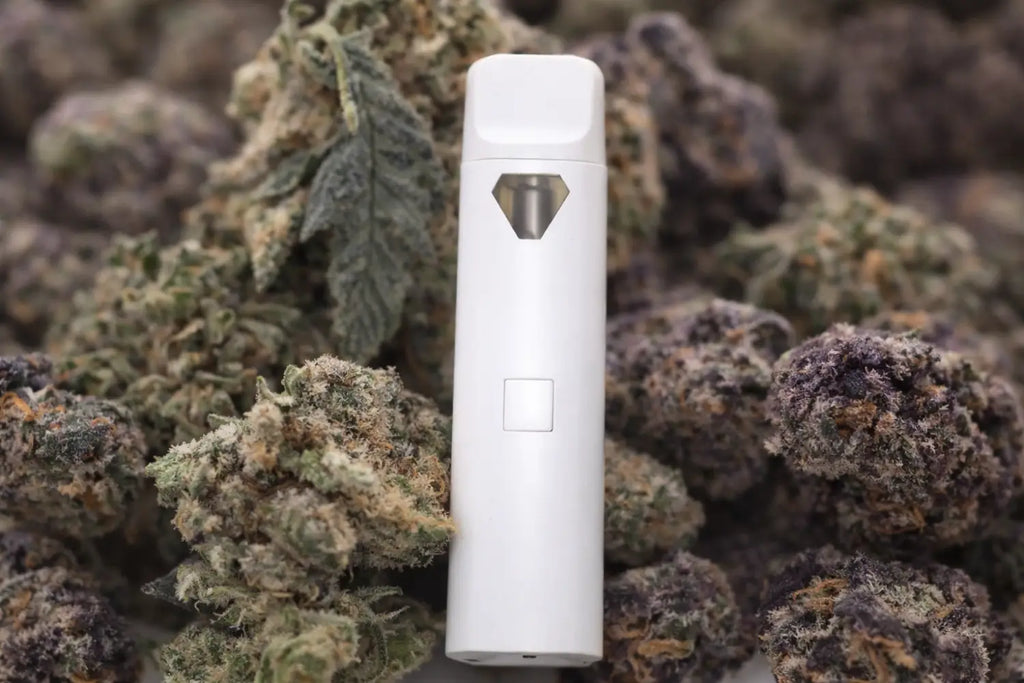
The Banana Kush 98.01% THCa Disposable Vape by Hemp Flower Co. starts as a hemp plant in a cultivated field — and goes through a complex, multi-stage process before it becomes the ultra-pure, ready-to-vape oil in your device. Understanding how THCa distillate is made not only gives you confidence in the quality of what you're consuming, it also explains why 98% purity is such a significant achievement and why not all THCa vapes are created equal.
Most consumers think about vapes in terms of flavor, potency, and battery life. Those things matter — but the real story of a high-quality THCa disposable vape is what happened long before it was packaged on a shelf. It starts with a carefully selected hemp cultivar, moves through multiple rounds of extraction and refinement, and ends with a final product that represents one of the most technically demanding processes in the hemp industry.
This guide breaks down every stage of that journey — from the hemp farm to the filling line — so you understand exactly what goes into every puff. Whether you're a first-time THCa vape user or someone who's been vaping for years, understanding the THCa extraction process for vapes will permanently change how you evaluate what you buy.
Stage 1: It Starts With the Plant — Sourcing High-THCa Hemp
The entire process begins with a decision most consumers never think about: which plant?
The hemp extraction THCa process is only as good as the biomass going into it. High-quality THCa distillate doesn't start at the lab — it starts in the field, with hemp cultivars specifically bred for high THCa expression in their trichomes. These are not generic industrial hemp plants grown for fiber or seed. They are genetically selected strains with cannabinoid profiles engineered to produce abundant, concentrated THCa in the resinous glands that coat the flowers and sugar leaves.
The genetic selection process matters more than most people realize. Two hemp plants grown in the same field, with the same soil and the same water, can produce dramatically different levels of THCa depending entirely on their genetics. Cultivators breeding for extract production specifically select for traits like dense trichome coverage, high resin production, and elevated THCa-to-total-cannabinoid ratios. Strains like Banana Kush, used in Hemp Flower Co.'s 98.01% disposable, are chosen not just for their terpene profiles but for how well they express THCa at scale.
Beyond genetics, cultivation conditions directly influence extract quality. Reputable brands source exclusively from licensed hemp farms with documented cultivation practices, integrated pest management, and rigorous pesticide controls. Pre-harvest testing — pulling samples before cutting the crop — confirms that the incoming biomass meets the THCa threshold and passes contaminant screens before a single extraction begins. The integrity of that starting material sets a ceiling that no amount of downstream refinement can raise.
What this means for you: When a THCa vape brand references its hemp sourcing, that's not marketing language — it's a direct indicator of extract quality. Brands that can't tell you where their hemp comes from, how it was grown, or whether it was tested pre-harvest are starting with an unknown variable.
Stage 2: Harvest and Biomass Preparation
Once the hemp crop reaches peak THCa expression — typically timed by monitoring trichome maturation and cannabinoid percentages via HPLC testing — it's harvested and prepared for processing. Timing matters: harvest too early and THCa levels haven't fully developed; harvest too late and some of that THCa may begin degrading or converting.
After harvest, the biomass is dried and cured under controlled temperature and humidity conditions. Proper drying is critical — excess moisture in biomass creates serious problems during extraction, including emulsification in ethanol systems and inconsistent yields across hydrocarbon runs. Biomass is typically either used whole-flower or milled for more efficient solvent contact, depending on the extraction method being used downstream.
The trichome-dense flowers and sugar trim carry the highest concentration of THCa and are the primary input for THCa distillate production. Fan leaves and stalks — which contain minimal cannabinoids — are generally separated and excluded from extract-grade biomass. The ratio of flower-to-trim in the input biomass is another quality variable that separates premium producers from lower-tier extract operations.
Stage 3: Initial Extraction — Creating the Crude Oil
This is where the THCa extraction process formally begins. The goal of initial extraction is to pull the cannabinoids, terpenes, and other valuable compounds out of the plant material and into a concentrated liquid form.
The three primary extraction methods used in commercial THCa production are:
Hydrocarbon Extraction (Butane/Propane) Hydrocarbon solvents — particularly butane, propane, or blended BHO — are highly effective at extracting cannabinoids and terpenes simultaneously. Closed-loop hydrocarbon systems allow processors to fine-tune temperature and pressure to selectively extract different fractions of the plant's chemistry. Hydrocarbon extraction tends to preserve more of the original terpene profile compared to other methods, which is particularly valuable when the end goal includes authentic strain-specific flavor in the final vape oil. It does require significant safety infrastructure and regulatory compliance, which limits its use to professional extraction facilities.
Ethanol Extraction Ethanol is one of the most widely used solvents in large-scale hemp processing due to its relatively low cost, scalability, and safety profile compared to hydrocarbons. Ethanol extraction is efficient and can process large volumes of biomass quickly. The tradeoff is that ethanol is a polar solvent — it extracts not just cannabinoids and terpenes but also chlorophyll, plant pigments, and water-soluble compounds that must be removed in subsequent refinement stages. Cold ethanol extraction (cryo-ethanol) at temperatures of -40°F or below reduces the pickup of unwanted polar compounds while improving extract selectivity.
CO2 Extraction Supercritical CO2 extraction uses carbon dioxide at elevated pressure and specific temperature ranges where it behaves simultaneously as both a liquid and a gas. CO2 is highly tunable — different pressure/temperature settings extract different fractions of the plant. It's solvent-free in the traditional sense and leaves no residual solvent in the extract. CO2 extraction is more capital-intensive and slower than hydrocarbon or ethanol methods, but produces a very clean crude with good cannabinoid preservation.
Regardless of method, the output of initial extraction is crude oil — a thick, dark, aromatic extract that contains a wide spectrum of cannabinoids, terpenes, plant waxes, chlorophyll, and other compounds. Crude oil typically tests at 50–70% total cannabinoids. It's the raw foundation that all subsequent refinement builds on, but it's nowhere near ready to be used in a THCa distillate vape oil.
Stage 4: Winterization — Removing Fats, Waxes, and Lipids
Before crude oil can enter the distillation system, it needs to be cleaned. Winterization is the first major refinement step in the THCa refinement process and targets the waxy, lipid-heavy compounds that would otherwise interfere with downstream processing and reduce the final product's purity and clarity.
The process works like this: crude oil is dissolved in cold ethanol — typically at a ratio of around 10:1 (ethanol to oil) — and the mixture is placed in a freezer at -20°C to -40°C for anywhere from 24 to 48 hours. At these sub-zero temperatures, the fats, waxes, and lipids that were solubilized during extraction precipitate out of solution and form visible solids or cloudiness in the liquid.
The chilled mixture is then filtered — usually through a series of progressively finer filter media — to physically remove those precipitated solids. The result is a significantly cleaner, lighter-colored oil with improved clarity, reduced impurities, and a better baseline cannabinoid concentration for the next stage.
After filtration, residual ethanol is removed through rotary evaporation or falling-film evaporators, which apply mild heat and vacuum to evaporate the solvent without damaging the cannabinoids. What remains is a defatted, winterized crude oil — still not at distillate-grade purity, but meaningfully cleaner than what came off the extraction system.
Why winterization matters for vapes specifically: Waxes and lipids in vape oil can cause clogging, inconsistent viscosity, and reduced vapor production. Thorough winterization is a prerequisite for producing a vape-grade oil that performs reliably across the full range of operating temperatures a consumer might encounter.
Stage 5: Distillation — The Core of THCa Distillate Production
Distillation is the centerpiece of making THCa vape oil at high purity. It's also the most technically demanding step and the one that most directly determines the final cannabinoid percentage of the product.
The two primary distillation technologies used in commercial THCa production are short-path distillation and wiped-film distillation (also called thin-film distillation). Both operate on the same principle — applying heat under vacuum to separate compounds based on their individual boiling points — but differ in throughput, efficiency, and scalability.
How Distillation Works
Under vacuum, the boiling points of cannabinoids are significantly reduced, allowing them to be vaporized at temperatures that won't cause thermal degradation. As the winterized crude oil is heated on the distillation unit's evaporating surface, different compounds vaporize at different temperatures and travel to a condenser where they're collected separately as distinct "fractions."
The first fractions collected — at lower temperatures — are the heads: residual solvents, terpenes, and lighter volatile compounds. The main body fraction is where the bulk of the THCa distillate is collected. The final tails fraction contains heavier compounds, plant pigments, and degraded cannabinoids.
First Pass vs. Multiple Passes
A single distillation pass typically yields a cannabinoid distillate in the range of 75–90% purity. To reach 90%+, most producers run the distillate through a second pass — taking the main body fraction from the first run and running it through the system again with tighter collection parameters. Each additional pass increases purity but also reduces yield, which is part of why high-purity THCa distillate costs more to produce.
The THCa distillate purity achievable through distillation alone typically plateaus around 90–95%. Getting above that threshold requires an additional step.
Stage 6: Decarboxylation Considerations in Vape Oil Production
Here's a nuance that matters for THCa manufacturing — and for understanding what you're actually consuming when you vape.
THCa (tetrahydrocannabinolic acid) is the non-psychoactive, acidic precursor to THC. In its raw state, THCa does not produce intoxicating effects. The conversion of THCa to THC requires decarboxylation — the application of heat that removes a carboxyl group from the molecule, releasing CO2 and leaving THC behind.
When you vape a THCa disposable, the heating element in the device decarboxylates the THCa in real time as you inhale. The heat from the coil converts THCa to THC during vaporization, which is why decarboxylation in vape oil production is a critical process consideration. Producers must preserve the THCa in its acidic form during extraction and refinement — avoiding excessive heat that would prematurely convert it to THC and push the total THC content above the 0.3% federal threshold.
This is one reason why distillation temperature control is so precise. The goal is to purify the THCa without decarboxylating it. This is also why THCa crude oil refinement requires equipment specifically calibrated for acidic cannabinoid processing, not just repurposed THC distillation systems.
Stage 7: Crystallization — Achieving 95–98%+ THCa Purity
To reach the 95%+, 97%+, or 98%+ purity levels seen in premium THCa vape products like the Banana Kush 98.01% Disposable, producers use a crystallization process that takes refinement beyond what distillation alone can achieve.
The THCa isolation process through crystallization works by exploiting THCa's natural tendency to form solid crystals under the right conditions. The high-purity distillate is dissolved in a suitable solvent — typically a hydrocarbon — and the solution is cooled slowly under controlled conditions. As the temperature drops gradually over an extended period, THCa molecules begin to organize into crystalline lattice structures, separating from the remaining solution (called the "mother liquor") which contains residual minor cannabinoids, terpenes, and other compounds.
The resulting THCa crystals are mechanically separated, washed to remove surface impurities, and dried. At this stage, the THCa is in an extremely pure, solid crystalline form — often testing at 97–99%+ THCa with minimal other cannabinoids present. This is sometimes called THCa isolate or THCa diamonds (though true diamonds are typically produced directly from fresh frozen biomass via a slightly different process).
Crystallization is labor-intensive, requires significant technical expertise, and produces lower yields than distillation — but it's the only reliable path to the sub-1% impurity levels that define true premium THCa vape oil. When a disposable vape product shows 98.01% THCa on its COA, crystallization is almost certainly part of how that number was achieved.
Stage 8: Terpene Reintroduction — Building the Strain Profile
Pure THCa distillate or isolate, on its own, is essentially flavorless and odorless. A 98% THCa product with nothing else added would produce harsh, characterless vapor. This is where terpene reintroduction transforms a technically impressive but functionally incomplete extract into a full vape experience.
In the final blending stage of how THCa vape is made, the purified THCa oil is combined with a precisely measured terpene formulation. For strain-specific products like Banana Kush, the terpene blend is formulated to recreate the aromatic and flavor profile associated with that cultivar — in Banana Kush's case, that's sweet banana, tropical fruit, and creamy vanilla top notes layered over an earthy, kushy base.
Terpenes serve two roles in the final vape oil. First, they provide flavor and aroma — the part of the experience that makes each strain distinct. Second, terpenes influence viscosity and flow characteristics of the oil, affecting how it performs in the hardware. Formulators balance both considerations when designing the final blend.
The terpene-to-THCa ratio, the quality and origin of the terpenes used (cannabis-derived vs. botanical), and the blending process itself all affect the final product's quality. High-end producers use cannabis-derived terpenes or high-fidelity botanical terpene profiles rather than synthetic approximations, and blend under conditions that prevent terpene degradation.
Stage 9: Hardware Filling, Quality Testing, and COA Verification
With the final oil formulated and quality-verified, the filling process begins. This stage of THCa extraction for disposable vapes is more technically demanding than it might appear. THCa oil must be filled at specific temperatures to achieve proper viscosity for accurate fill weights. Air pockets, inconsistent fill levels, or improper sealing can affect performance and shelf life.
Once filled, the devices are sealed and labeled with full batch coding for traceability. Every batch is then sent to an independent, accredited third-party laboratory for final COA (Certificate of Analysis) testing. This testing verifies:
- THCa percentage and total cannabinoid profile — confirming the stated purity
- Total THC compliance — confirming the product is within Farm Bill limits
- Residual solvent testing — verifying that all extraction solvents have been fully removed to safe levels
- Pesticide and heavy metal screens — ensuring the hemp source was clean
- Microbial testing — confirming the product is free of mold, yeast, and bacterial contamination
Only batches that pass all panels are released for retail. The COA is published and linked to the product so consumers can verify the results independently. This is the final checkpoint in the THCa distillate production chain — and the proof that the entire upstream process was executed correctly.
Why THCa Purity Levels Matter — And What 98% Actually Means
It's worth pausing to put the 98.01% figure into context. Cannabinoid distillate is measured as a percentage of the total oil weight. A product at 98.01% THCa means that of every 100mg of oil in the device, approximately 98mg is pure THCa. The remaining ~2% is a combination of minor cannabinoids, terpenes, and any other measurable compounds.
For context, a well-produced first-pass distillate typically sits around 75–85%. A high-quality double-pass distillate might reach 88–92%. Getting to 95%+ requires either additional distillation passes with tight fractionation or the crystallization process described above. Reaching 98%+ consistently represents a meaningful technical achievement — it signals that every stage of hemp to THCa oil conversion was executed with precision.
Higher purity also means a cleaner vapor profile. Lower-purity distillates carry more residual compounds that can affect flavor, burn characteristics, and the overall experience. A 98% product delivers a cleaner, more consistent hit from the first draw to the last.
What Separates Premium THCa Vapes From Low-Quality Products
Now that you understand the process, you can evaluate any THCa vape product with informed eyes. Here's what to look for:
Transparent sourcing. Does the brand disclose where its hemp is grown? Is it licensed? Is it domestically sourced? These are non-negotiable quality indicators for anyone serious about what they're consuming.
Published COAs from accredited labs. Every reputable product should have a current, publicly accessible Certificate of Analysis from an ISO-accredited third-party laboratory. If a COA is missing, outdated, or only available "on request," treat it as a red flag.
Realistic purity claims. A product claiming 99.9% THCa with no supporting documentation should be viewed with skepticism. Extraordinary purity claims require extraordinary evidence.
No cutting agents. Low-quality vape oils are sometimes diluted with MCT oil, vitamin E acetate, or other fillers to reduce cost. A high-quality THCa distillate product is pure THCa oil and terpenes — nothing else.
Hardware quality. The best oil in the world will underperform in cheap hardware. Premium disposables use ceramic core heating elements, proper airflow design, and consistent coil resistance for even, smooth vapor production.
Frequently Asked Questions
Is THCa distillate the same as THC distillate? No. THCa distillate contains tetrahydrocannabinolic acid — the non-psychoactive precursor to THC. When you vape it, the heat from the device converts (decarboxylates) the THCa into THC in real time. In its bottled form, THCa distillate is federally compliant under the 2018 Farm Bill when derived from hemp with less than 0.3% delta-9 THC.
What does 98% THCa purity mean on a COA? It means that 98% of the measured oil content is THCa. The remaining 2% includes minor cannabinoids, terpenes, and other trace compounds. Reaching 98% purity requires high-quality starting material, multiple refinement stages, and often crystallization.
Why does THCa vape oil look different from regular distillate? THCa oil tends to be lighter in color than delta-9 THC distillate, often ranging from clear to very light amber. This is partly a function of the refining process — highly purified THCa contains fewer colored pigments — and partly because THCa oil hasn't been through high-temperature decarboxylation, which can darken distillate.
How do I know if my THCa vape has been properly tested? Look for a current COA (within the last 12 months, ideally matching the specific batch) from a third-party, ISO-accredited laboratory. The COA should show THCa percentage, total THC compliance, residual solvent results, and ideally pesticide and heavy metal panels.
Does the extraction method affect the vape experience? Yes, meaningfully. Hydrocarbon-extracted oils tend to preserve more of the native terpene profile, which can affect flavor complexity. CO2-extracted oils are clean but can lose delicate terpenes during the process. Regardless of initial extraction method, the terpene reintroduction stage has the biggest impact on final flavor in a high-purity distillate product.
Is THCa vaping legal? THCa vape products derived from hemp containing less than 0.3% delta-9 THC are federally legal under the 2018 Farm Bill. State-level regulations vary, so it's important to check your local laws before purchasing.
Can THCa distillate crystallize in the vape cartridge? In some formulations and at lower temperatures, THCa can begin to crystallize in hardware. Premium formulators account for this in their terpene blending process, adjusting viscosity and formulation to maintain a stable liquid state across normal operating temperatures. If you notice crystallization, gently warming the device can resolubilize the oil.
What terpenes are in the Banana Kush 98.01% THCa Disposable? The Banana Kush terpene profile is built around myrcene, limonene, and linalool — producing the characteristic sweet banana, tropical citrus, and creamy notes the strain is known for. The earthy, kushy base comes from beta-caryophyllene and other sesquiterpene contributors.
Final Thoughts: The Science Behind Every Puff
The THCa distillate production process is one of the most technically demanding in the hemp industry. From selecting the right hemp genetics, through initial extraction, winterization, multi-pass distillation, crystallization, and terpene blending, every stage of how THCa vape is made requires precision, expertise, and a commitment to quality that goes well beyond simply running plant material through a machine.
When you understand what it takes to produce a 98.01% pure THCa distillate vape oil, you understand why product quality varies so dramatically across the market — and why sourcing, testing, and purity claims deserve serious scrutiny.
Now you know what goes into every puff. The Banana Kush 98.01% THCa Disposable Vape by Hemp Flower Co. is the result of that entire process — from premium hemp plant to 98% pure distillate. Every batch is third-party tested, COA-verified, and built to the standard that process demands.


