


THCA Concentrate Percentages Explained: What Does 90%+ THCA Mean?
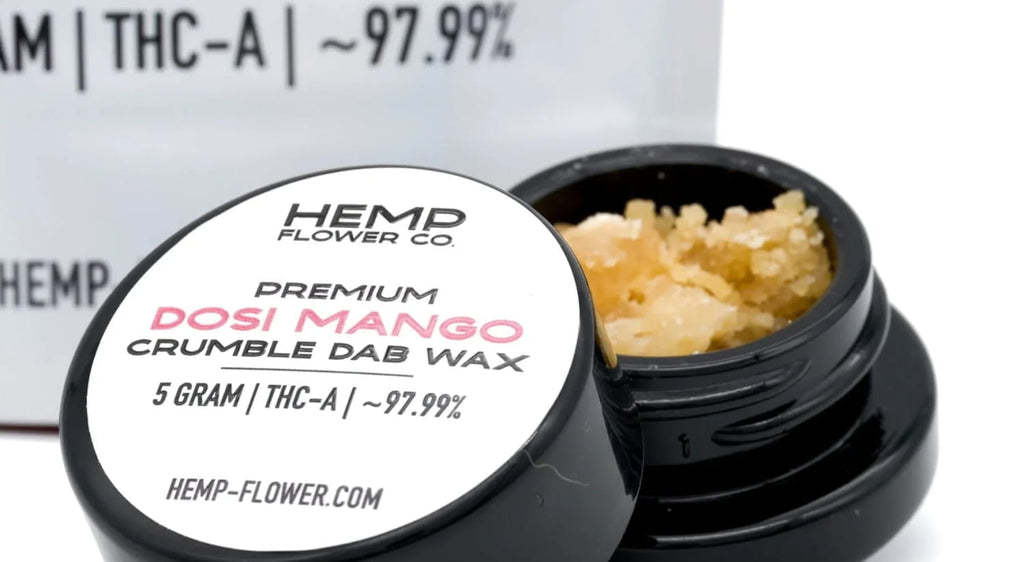
If you've spent any time shopping for concentrates, you've probably noticed something confusing: one product is labeled 78% THCA, another says 95%, and a third claims "99% pure." Naturally, the instinct is to assume higher is always better — but that assumption leaves a lot of shoppers disappointed, overpaying, or missing out on a better experience entirely.
The truth is that THCA concentrate percentages are one of the most misunderstood numbers in the hemp industry. Lab-reported potency tells you something real and important, but it doesn't tell you the whole story. A 99% diamond and an 85% sauce aren't competing products in a simple hierarchy — they're different expressions of the same plant, built for different priorities.
In this guide, we're breaking down exactly how THCA percentages are measured, what counts as "normal" versus "high" for different concentrate types, whether a bigger number actually means a better product, and how to read a Certificate of Analysis (COA) like someone who actually knows what they're looking at. By the end, you'll be able to look at any lab result and understand what does 90% THCA mean for your experience — not just what it means for the marketing copy on the label.
You can browse verified, lab-tested options for yourself anytime in the THCA concentrates collection, where every product is sold with its COA available.
How THCA Percentage Is Measured
Before you can evaluate whether a percentage is "good," you need to understand where that number actually comes from. THCA lab testing percentages aren't guesses, marketing estimates, or ballpark figures — they're the output of a specific analytical process, and understanding that process is the difference between reading a COA and actually understanding one.
The Testing Method: HPLC
Almost all cannabinoid potency testing — including THCA testing — is done using a method called High-Performance Liquid Chromatography, or HPLC. Here's the simplified version of how it works:
- A small sample is taken from the concentrate batch.
- The sample is dissolved in a solvent and injected into the HPLC machine.
- The machine separates the individual compounds in the sample — THCA, Delta-9 THC, CBDA, CBGA, and so on — based on how they interact with a chromatography column.
- Each compound is detected and measured separately, then reported as a percentage of the total sample weight.
Unlike gas chromatography (GC), which applies heat and can inadvertently decarboxylate THCA into Delta-9 THC during testing (skewing results), HPLC tests at lower temperatures and preserves THCA in its natural acidic form. This is why HPLC is the industry-preferred method for accurate THCA reporting — it measures what's actually in the product, not what the product turns into after heat is applied.
Why the Number Is a Weight Percentage, Not a "Purity Score"
This is where a lot of confusion starts. When a label says "90% THCA," it means that 90% of the total measured weight of that sample is THCA. It is not a subjective purity or quality score — it's a literal weight-based measurement.
That distinction matters because concentrates naturally contain other compounds beyond THCA: terpenes, minor cannabinoids (CBGA, THCVA, CBCA), residual moisture, and in some product types, plant lipids or waxes. Every percentage point of terpene content, moisture, or other cannabinoids is a percentage point that isn't showing up as THCA — even in an extremely high-quality, well-made product.
This is a critical concept because it means the ceiling for THCA percentage is influenced heavily by what else is present in the concentrate, not just by extraction skill.
Total THC vs. THCA: Reading the Math Correctly
Most COAs report several related numbers, and it's worth understanding the difference:
- THCA — the raw, acidic cannabinoid found in the hemp plant before heat is applied. This is what's federally regulated for hemp compliance purposes.
- Delta-9 THC — the small amount of already-decarboxylated THC present before you ever heat the product.
-
Total THC (calculated) — a formula-based estimate of what your total THC content will be after decarboxylation (smoking, dabbing, vaping), calculated as:
(THCA × 0.877) + Delta-9 THC
The 0.877 multiplier exists because converting THCA to Delta-9 THC involves losing a carboxyl group, which reduces the molecule's overall weight. So a product that tests at 90% THCA will yield a "Total THC" figure closer to 79-80% once you factor in that conversion math. This isn't a flaw or a discrepancy — it's simply chemistry, and it's the same for every product on the market. Understanding this formula helps explain why you'll sometimes see two different potency numbers listed for the same product and shouldn't assume one is wrong.
Sample Variability Within a Batch
One more testing nuance worth knowing: potency can vary slightly even within the same production batch, depending on which portion of the batch was sampled. Reputable brands test representative samples and, ideally, retest periodically — but a single COA reflects a snapshot of that specific tested sample, not an absolute guarantee for every gram in every jar. This is normal in the industry and not a red flag on its own, but it's another reason percentages should be read as a strong indicator, not a precise universal constant.
Understanding the mechanics behind THCA concentrate percentages puts you in a much stronger position to evaluate the products in front of you — which brings us to the next question: what actually counts as high?
What's a "Normal" vs. "High" Percentage? Ranges by Product Type
This is where most of the confusion in the market actually lives. Shoppers often compare percentages across totally different concentrate categories, as if a THCA diamond and a THCA sauce are competing on the same scale. They're not — and understanding what does 90% THCA mean requires knowing which product category you're even looking at.
THCA Diamonds: The Purity Benchmark
Diamonds are crystalline structures of nearly pure THCA, formed through a slow crystallization process after extraction. Because diamonds are, by definition, isolated THCA crystals with minimal terpene content, they represent the ceiling of what's achievable in high THCA percentage concentrate products.
- Typical range: 90–99%
- What's considered high: 95%+
- What's considered exceptional: 98–99%+
Diamonds get closest to a "pure" number because the crystallization process is specifically designed to isolate THCA molecules from the surrounding terpene-rich liquid. The tradeoff is aroma and flavor complexity — more on that in the next section.
THCA Sauce: Flavor-First, Lower Percentage by Design
Sauce (sometimes called "diamonds and sauce" when sold together) is a terpene-rich liquid that surrounds THCA crystals, or is sold on its own as a viscous, aromatic concentrate. Sauce is intentionally lower in raw THCA percentage because a significant portion of its weight comes from preserved live terpenes.
- Typical range: 65–85%
- What's considered high for this category: 80%+
- Why it's lower: Terpenes can make up 10-20%+ of total sample weight in a well-made sauce, which mathematically pulls the THCA percentage down even in an excellent product.
This is a crucial point for anyone evaluating THCA concentrate percentages honestly: an 80% sauce is not a "worse" product than a 95% diamond. It's a different product built around a different priority — flavor and aromatic complexity over raw potency density.
Badder/Budder and Crumble: The Middle Ground
These whipped or crumbly textures fall in a middle range because they retain more moisture and terpene content than diamonds but less liquid-state terpene volume than sauce.
- Typical range: 75–90%
- What's considered high: 85%+
Shatter: Glass-Like and Moderately High
Shatter's glass-like consistency comes from minimal agitation during purging, which tends to preserve a slightly higher THCA density than badder while still retaining notable terpene content.
- Typical range: 75–88%
Live Resin and Live Rosin: Terpene-Forward by Design
Live resin (solvent-based, extracted from fresh-frozen plant material) and live rosin (solvent-less, pressed from fresh-frozen material) are prized specifically for terpene preservation, which means their THCA percentages are almost always lower than diamonds or standard extracts.
- Typical range: 55–80%
- Why lower is expected here: These extraction methods are chosen specifically to protect the plant's original terpene profile, not to maximize raw cannabinoid density. A "low" percentage in this category is often a sign the product was made correctly, not a sign of poor quality.
Quick Reference: Typical THCA Percentage Ranges by Category
| Concentrate Type | Typical Range | Considered "High" |
|---|---|---|
| THCA Diamonds | 90–99% | 95%+ |
| THCA Sauce | 65–85% | 80%+ |
| Badder/Budder | 75–90% | 85%+ |
| Crumble | 75–90% | 85%+ |
| Shatter | 75–88% | 85%+ |
| Live Resin | 55–80% | 75%+ |
| Live Rosin | 55–75% | 70%+ |
The key takeaway: context is everything. A strongest THCA concentrate claim only means something once you know which category you're comparing it against. Comparing a live resin's 68% to a diamond's 96% and concluding the diamond is "better" misunderstands what each product is trying to do. You can compare verified percentages across categories yourself in the THCA concentrates collection, where each listing includes its COA for direct comparison.
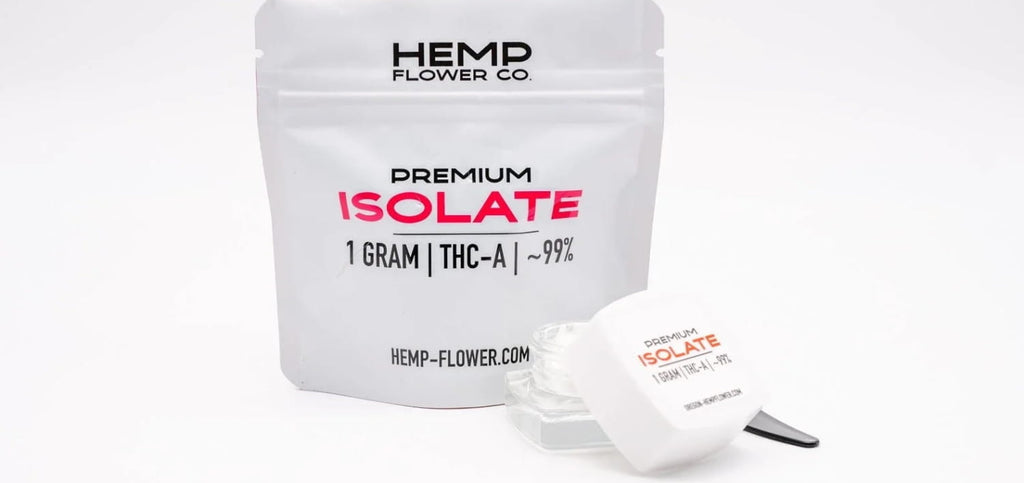
Does Higher Percentage Mean a Better Product?
This is the question at the heart of nearly every concentrate purchase decision, and the honest answer is: not necessarily. THCA potency explained properly requires looking past the headline number and understanding what a raw percentage actually predicts — and what it doesn't.
What a High Percentage Does Tell You
A high THCA percentage is a reliable indicator of:
- Extraction and purification skill. Getting a concentrate to 95%+ requires precise post-processing, clean extraction technique, and careful crystallization or purging.
- Low residual solvent and contamination risk (when paired with a passing COA). High-purity products, by nature, tend to have less "room" for residual solvents, though this should always be confirmed on the COA's solvent panel, not assumed from potency alone.
- Predictable, strong effects per milligram. If you know your tolerance and want a concentrated, no-frills dose, a higher percentage product delivers more THCA per gram, plain and simple.
What a High Percentage Doesn't Tell You
Here's where the nuance comes in — and where a lot of marketing conveniently stops the conversation:
1. It doesn't measure flavor or aroma. Terpenes are the aromatic compounds responsible for a concentrate's smell and taste, and they're largely stripped away in the pursuit of maximum THCA isolation. A 99% diamond is often nearly flavorless on its own, which is why many diamond products are sold alongside a terpene-rich sauce for dabbing together.
2. It doesn't measure the "entourage effect." The entourage effect refers to the theory that cannabinoids and terpenes work synergistically, producing a more rounded, nuanced experience than an isolated cannabinoid alone. A concentrate that's 70% THCA but rich in a full terpene and minor cannabinoid profile may produce a more complex, layered effect than an isolated 98% product — even though the number is objectively lower. This is a widely discussed concept in cannabis and hemp science, though research is still developing, and individual experiences vary.
3. It doesn't measure texture, workability, or dabbing experience. Higher-purity diamonds can be harder to break down and dab evenly compared to a softer badder or sauce, which affects the practical, hands-on experience of using the product.
4. It doesn't measure onset speed or duration on its own. These factors are influenced more by consumption method, individual metabolism, and terpene profile (some terpenes are associated with different subjective effects) than by raw THCA percentage alone.
Purity vs. Experience: A Framework for Choosing
Rather than asking "which product has the highest percentage," a more useful framework is asking two separate questions:
- Am I prioritizing raw potency and predictability? → Lean toward diamonds and other high-purity products.
- Am I prioritizing flavor, aroma, and a fuller-spectrum experience? → Lean toward sauce, live resin, or live rosin, even at a lower percentage.
Many experienced consumers actually combine the two — dabbing a diamond alongside a terpene sauce to get both maximum potency and full aromatic complexity in the same session. This "diamonds and sauce" combination has become one of the most popular formats in the category specifically because it resolves the purity-vs-experience tradeoff.
The bottom line: a high THCA percentage concentrate is a great choice for a specific kind of consumer and a specific kind of experience — but it is not automatically the "best" concentrate on the market. The best concentrate is the one that matches what you're actually looking for. You can compare full profiles, including terpene content where listed, across the THCA concentrates collection to find the right match for your priorities.
How to Read a Certificate of Analysis (COA)
Once you understand what percentages mean, the next skill is knowing how to verify them yourself. A Certificate of Analysis is the single most important document behind any concentrate purchase — here's how to actually read one, step by step.
Step 1: Confirm It's the Right COA for the Right Batch
Every legitimate COA should reference a specific batch number or lot number that matches the packaging of the product you're holding (or viewing online). If a brand posts a single "sample" COA that doesn't correspond to batch-specific testing, that's a red flag. Check that the batch number on the COA matches the batch number on the product label.
Step 2: Check the Testing Lab and Accreditation
Look for the name of the third-party testing laboratory — it should be an independent lab, not an in-house test. Reputable labs are typically ISO 17025 accredited, which means they meet recognized standards for testing competence. This information is usually listed at the top of the COA alongside the lab's contact information and license number.
Step 3: Locate the Cannabinoid Potency Panel
This is usually the first major data table on the report. Look for:
- THCA (%) — the raw cannabinoid percentage
- Delta-9 THC (%) — the already-active THC content
- Total THC (calculated) — using the formula discussed earlier
- Minor cannabinoids (CBGA, CBCA, THCVA, etc.) — present in smaller amounts but worth noting for full-spectrum products
Confirm the Total THC figure aligns with hemp-compliant thresholds where applicable, and cross-check that the math roughly matches the formula: (THCA × 0.877) + Delta-9 THC.
Step 4: Review the Terpene Panel (If Included)
Not every COA includes terpene testing, since it's an additional service labs charge for separately. If it's present, this panel breaks down individual terpenes (myrcene, limonene, caryophyllene, etc.) as a percentage of the total sample. This is especially useful for comparing sauce, live resin, and live rosin products, where terpene content is a major part of the product's identity.
Step 5: Check the Contaminant Panels
This is arguably more important than the potency number itself. A trustworthy COA should include testing for:
- Residual solvents (for solvent-based extracts like BHO, live resin, or diamonds) — confirming butane, propane, or other extraction solvents fall below actionable limits
- Pesticides — confirming the source material was grown without exceeding allowable pesticide residue
- Heavy metals — lead, arsenic, cadmium, and mercury testing
- Microbials — mold, yeast, and bacteria testing, particularly important for any product that will be inhaled
- Mycotoxins — a check for toxic byproducts of certain mold species
Every one of these panels should show a "Pass" result. A high THCA percentage next to a failed contaminant panel is not a product worth buying, regardless of how impressive the potency number looks.
Step 6: Verify the QR Code or Verification Link
Most modern COAs include a QR code or a direct link to the testing lab's database, allowing you to verify the report hasn't been altered or reused from a different batch. Always use this verification step when available — it's the single best way to confirm a THCA lab testing percentages report is legitimate rather than recycled marketing material.
A Quick COA Red-Flag Checklist
- ❌ No batch number, or batch number doesn't match the product
- ❌ No named third-party lab, or lab has no verifiable accreditation
- ❌ Missing contaminant panels entirely
- ❌ A "Pass/Fail" result that's been cropped out of the visible document
- ❌ No verification link or QR code
Learning to read a COA turns you from a passive shopper into an informed one — and it's the best defense against inflated or misleading potency claims anywhere in the hemp market. Every product in the THCA concentrates collection is sold with lab documentation available so you can apply exactly this process before you buy.
Frequently Asked Questions
What does 90% THCA mean, exactly?
It means that, according to third-party lab testing (typically via HPLC), 90% of the total measured weight of that sample is raw THCA. The remaining 10% is made up of terpenes, minor cannabinoids, moisture, and other trace compounds, depending on the concentrate type.
Is a 90% THCA product strong?
Yes — a 90% THCA concentrate is on the high end of the potency spectrum and will deliver significant effects per dose. For reference, diamonds in the 90–99% range represent some of the most concentrated THCA products available.
What's the strongest THCA concentrate you can buy?
In terms of raw percentage, THCA diamonds tend to top out the category, with the highest-purity products reaching 98–99% THCA. However, "strongest" in terms of overall experience can also depend on terpene content and how the product is consumed, not potency alone.
Why do some concentrates have lower percentages even though they're high quality?
Products like live resin, live rosin, and sauce are intentionally made to preserve terpene content, which naturally lowers the THCA percentage relative to isolated diamonds. A lower number in these categories often reflects a deliberate flavor-focused production choice, not lower quality.
Do THCA percentages tell you how strong the effects will feel?
They give a strong indication of potency per milligram, but individual experience is also shaped by tolerance, consumption method, terpene profile, and total dose consumed — not the percentage number alone.
How can I verify a THCA percentage is accurate?
Look up the COA associated with the specific batch number on your product, confirm it comes from an accredited third-party lab, and use the report's QR code or verification link to check it against the lab's database.
Is Total THC the same number as THCA percentage?
No. Total THC is a calculated figure that estimates what your THC content will be after decarboxylation, using the formula (THCA × 0.877) + Delta-9 THC. It will always be somewhat lower than the raw THCA percentage.


