


THCA Flower Colors Explained: What Each Shade Tells You About Quality
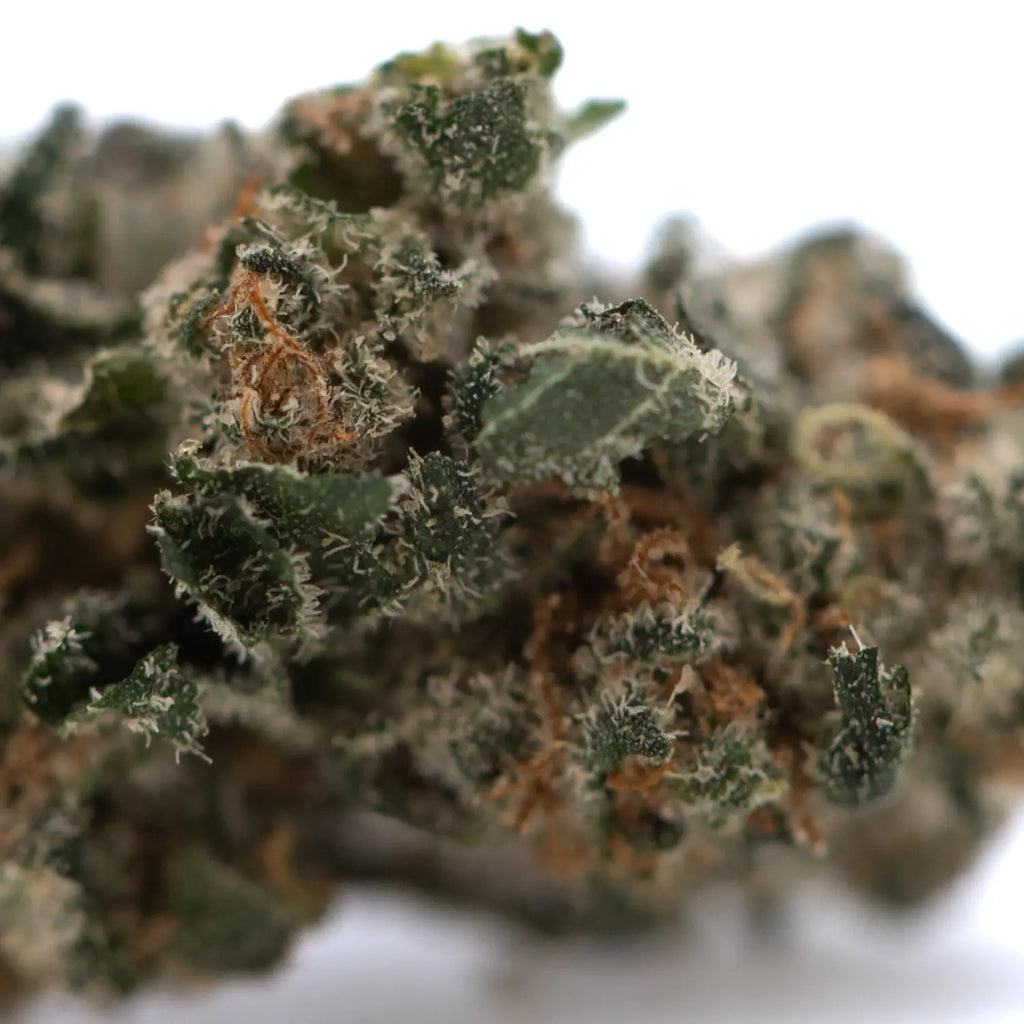
If you've ever held a bag of THCA flower up to the light and wondered what you were actually looking at, you're not alone. Most consumers know to sniff for aroma, feel for density, or scan a COA for cannabinoid percentages — but color is one of the most immediate, information-rich visual cues available, and it's one that even experienced buyers frequently overlook.
Here's the reality: a knowledgeable buyer can assess a significant amount about a batch of THCA flower from its color profile alone — before they ever break it open, run it under a loupe, or check lab results. Color communicates cultivation health, genetic quality, harvest timing, curing technique, and storage conditions all at once. It's a language written in pigments, and once you learn to read it, you'll never look at a bud the same way again.
In this guide, we're breaking down every major color you'll encounter in hemp flower — from the deep greens of well-fed plants to the alarming browns and blacks that signal problems. We'll cover what green shades tell you about nutrition and maturity, why purple buds command premium prices, what those vivid orange hairs are actually communicating, and how that frosty white coating is the single most reliable visual indicator of cannabinoid density. We'll also address yellow and gold tones, when brown becomes a problem, and what black patches mean (hint: stop there immediately).
By the end, you'll have a comprehensive THCA flower visual guide that makes evaluating THCA bud appearance as intuitive as reading a menu.
The Baseline: Why Green Is the Foundation of Healthy THCA Flower
Before we get into the exciting secondary colors — the purples, the oranges, the icy whites — it's important to establish the baseline. Healthy THCA flower is, fundamentally, green. That's not a simplification; it's plant biology.
Cannabis, like all photosynthesizing plants, is dominated by chlorophyll — the pigment responsible for absorbing light and converting it into the energy the plant uses to grow, develop trichomes, synthesize cannabinoids, and produce terpenes. Chlorophyll produces green. A plant that's receiving proper light, water, and nutrients throughout its life cycle will be, at its core, a green plant. That green is the foundation upon which every other quality indicator builds.
The question isn't whether your THCA flower is green — it's which shade of green, and whether that green looks vibrant or stressed.
Bright Lime Green
Lime green buds have an almost neon, electric quality that looks appealing but can actually indicate a less-than-ideal situation. Very bright lime green often signals a young plant or an early harvest — one where the flower didn't have sufficient time to fully develop its cannabinoid and terpene profile. Early-harvested THCA flower frequently lacks the density, aroma complexity, and potency of flower that's been allowed to reach full maturity. It can also indicate that the plant was grown under high-intensity lighting without sufficient feeding to deepen the green pigmentation.
That said, some phenotypes and cultivars naturally express lighter, more lime-toned greens even at peak maturity — which is why this cue should be read alongside other indicators, not in isolation.
Medium Forest Green
This is the sweet spot. A rich, medium forest green — not too light, not too dark — is the hallmark of a plant that hit its ideal harvest window. This tone suggests a plant that was well-fed, properly watered, given adequate light spectrum, and harvested at or near peak maturity. When you're evaluating THCA flower quality, a consistent, deep forest green base is one of the most reassuring things you can see.
Dark Olive Green
Dark olive or military green buds can be perfectly fine, but they warrant a closer look. Overly dark green tones sometimes indicate nitrogen excess in the late stages of the plant's life. Cannabis plants naturally "fade" as they enter late flower and the plant draws nutrients back from fan leaves — a plant that stays aggressively dark green through late flower may have been overfed with nitrogen, which can affect flavor and smoothness. Again, olive green isn't a dealbreaker, but pair it with the aroma and trichome inspection before concluding on quality.
Faded, Pale, or Yellowing Green — The Warning Signs
Pale, washed-out, or heavily yellowing green bud is where the color starts telling you something has gone wrong. Faded green can indicate nutrient deficiencies during the grow, particularly nitrogen or magnesium deficiency during mid-flower. It can also result from light stress, overwatering-induced root problems, or improper curing that didn't preserve the chlorophyll properly. While some yellowing of leaves during late flower is normal (and actually indicates the plant is flushing correctly), widespread yellowing of the buds themselves is a red flag.
The Big Picture on Green
The color of good THCA flower always starts with a healthy green base. Secondary colors — purple, orange, white — should appear as accents layered over that green foundation, not as replacements for it. A bud that's lost its green entirely and replaced it with another color has almost always undergone some form of degradation. Keep that baseline in mind as we move through the rest of the spectrum.
Purple and Blue Hues: Anthocyanins and What They Signal
Few things in the cannabis bud color guide generate more excitement — or more confusion — than purple flower. Purple THCA flower consistently commands premium prices, generates more visual content on social media, and gets marketed as elite-tier product. So what's actually going on when a bud turns purple?
The answer is anthocyanins — a family of water-soluble pigments found throughout the plant kingdom that produce red, purple, and blue colors depending on pH. In cannabis, anthocyanin production is primarily genetic, triggered by cooler nighttime temperatures during the late flowering phase. When nighttime temps drop into the 50s°F range (10–15°C), certain strains with the right genetic background will shift their pigmentation from green toward violet, indigo, and deep blue.
This is why purple expression is broadly associated with quality: it requires specific genetics (not just any plant will turn purple regardless of conditions), intentional cultivation practices (maintaining temperature differentials takes effort and environmental control), and a grower who is paying close attention to their environment throughout the grow cycle. The purple you see in best looking THCA flower is evidence of all three.
What Good Purple Looks Like
Premium purple THCA flower will show deep violet or indigo tones concentrated in the calyxes — the small pod-like structures that make up the bulk of the bud — and in the sugar leaves (the small leaves embedded within the flower). The underlying stem structure and primary leaf tissue should still show healthy green. Purple that's distributed throughout the bud in vivid, even tones against a green backdrop is the signature of a genuinely purple-expressing strain.
The Potency Question
It's worth addressing directly: purple color does not inherently indicate higher THCA potency. Anthocyanins are pigments, not cannabinoids. A purple bud with sparse trichome coverage can easily have lower total THCA than a forest-green bud that's absolutely blanketed in resin glands. Purple is a quality signal related to genetics and cultivation — not a direct proxy for cannabinoid concentration. Always cross-reference with COA data and trichome density.
Beware of Artificial Purple
A less-discussed issue: some producers have been known to induce purple coloration through artificial stress — cold shocking plants late in flower beyond what's ideal, or through other manipulative techniques. Artificially stressed purple flower can look similar to the real thing but may have compromised terpene profiles. This is another reason why COA verification and sourcing from reputable brands matters even when the THCA flower color meaning seems immediately positive.
Orange and Red Pistils: What Those Hair-Like Structures Tell You
If you've ever looked at a well-developed THCA flower and noticed the vivid, flame-colored hairs woven throughout the bud, you've been looking at pistils. Formally called stigmas, these thread-like structures are part of the female cannabis plant's reproductive anatomy — their biological purpose is to catch pollen. For growers producing sinsemilla (unseeded flower), pistils never complete that mission, but they remain as some of the most readable maturity indicators available to the naked eye.
Pistils begin their life white — nearly translucent, fine hairs that extend outward from the calyx early in the flowering phase. As the plant matures, those pistils progressively darken, moving from white through yellow, orange, and finally into amber, red, and brown. This progression happens because the plant is signaling that the flowering window is advancing. Tracking pistil color across the flowering cycle is one of the traditional ways growers estimate harvest timing.
Reading Pistil Color as a Consumer
Here's how to interpret what you're seeing when you examine THCA bud appearance through the lens of pistil color:
- Mostly white pistils: The plant was harvested early. White pistils indicate the flower is still in an active growth phase, and harvesting at this stage typically means underdeveloped cannabinoid and terpene profiles. THCA content may be lower than it would have been at full maturity.
- 50–70% orange pistils: The plant is approaching its peak harvest window. Flower at this stage is maturing nicely and will have a developing terpene profile, though a slightly longer wait might produce even more complex results.
- 70–90% orange to red pistils: This is the optimal harvest window for the majority of THCA flower strains. Vivid, evenly distributed orange-to-red pistils covering most of the bud surface indicate a plant that was harvested at or near peak maturity, with fully developed cannabinoid content and a rich terpene expression.
- Nearly all dark red to brown pistils: The plant pushed past its ideal window. Some strains are intentionally harvested at this stage for a different effect profile, but for most consumers, very heavily darkened pistils suggest a late harvest where some terpene volatility may have occurred. The flower is still usable, but pay attention to aroma — if it smells muted or flat, that's confirmation of some degradation.
The Pistil Limitation
One important caveat: pistil color is a supporting indicator, not a definitive harvest signal. The more reliable microscopic indicator is trichome color — but since most consumers aren't evaluating flower under a jeweler's loupe, pistil color gives you a strong, accessible approximation. The best THCA flower quality presents vivid, evenly distributed orange pistils throughout the bud — a visual shorthand for properly timed harvest and careful handling through the curing process.
White and Silver: Trichome Coverage and What Frosty Buds Mean
Ask any experienced cannabis consumer what "top-shelf" looks like, and the first word they'll use is probably "frosty." That frosty, icy, almost sugared appearance is the visual signature of heavy trichome coverage — and it is, without question, the single most important thing you can see on THCA flower with the naked eye.
Trichomes are the microscopic resin glands that coat the surface of cannabis buds, sugar leaves, and even the upper portions of fan leaves on mature plants. They're the factories that produce THCA, CBD, terpenes, flavonoids, and the full spectrum of compounds that define the plant's effect and flavor profile. Dense trichome coverage isn't just beautiful — it's biochemically significant. More trichomes means more of everything you're buying THCA flower for.
The white, silvery, frosted appearance of heavily trichomed THCA flower is the result of millions of these tiny glands — each shaped like a mushroom on a stalk — catching and refracting light. When coverage is dense enough, it creates a visual effect that makes the bud look almost snow-dusted. This is what "frosty," "sticky," "sugary," or "iced" refers to in product descriptions.
Trichome Color Stages
Under magnification (a jeweler's loupe at 30–60x is sufficient), trichomes move through distinct color stages that correspond directly to cannabinoid development:
- Clear/translucent: Trichomes in early development. THCA is still being synthesized and hasn't reached peak concentration. Flower harvested at this stage will be significantly less potent than its genetic potential allows.
- Cloudy/milky white: Peak THCA concentration. The cannabinoid synthesis cycle has reached its apex, and trichomes are fully loaded. This is the harvest window most growers targeting maximum THCA content aim for. The overall visual effect at this stage — which is visible even without magnification on a well-developed bud — is that brilliant, frosted-white appearance associated with premium THCA flower.
- Amber: THCA has begun converting to other cannabinoids through oxidation and degradation. Amber trichomes signal that the harvest window has advanced. Some consumers specifically seek amber-trichome flower for its effect profile, but for consumers prioritizing maximum THCA content, significant amber presence indicates the peak has passed.
What to Look For Without a Loupe
Even without magnification, you can assess trichome density by how the bud catches light. Hold a well-lit bud and rotate it — a heavily trichomed THCA flower will seem to glitter, catching light from multiple angles. The bud will feel sticky to the touch (trichomes are resinous by nature), and the surface will appear visually complex — not flat or smooth. A flat, non-sparkling bud with a smooth surface and no visible resin production is a low-trichome bud, which typically means lower potency and less aromatic complexity.
When evaluating what color THCA flower should be at its best, a rich green or purple base blanketed in a white, crystalline trichome layer is the gold standard. This is the visual profile that consistently corresponds with high-quality test results on COAs.
Yellow and Gold Tones: Reading Between the Lines
Yellow gets a bad reputation in cannabis color discussions — and sometimes, that reputation is deserved. But like most things in the THCA flower colors conversation, context is everything.
When Yellow Is Normal
Properly cured and dried hemp flower will almost always develop some degree of golden or amber-yellow toning. This is a natural consequence of the curing process: as chlorophyll breaks down over the several weeks of controlled curing, the underlying yellow and gold pigments (carotenoids) become more visible. A slight golden cast to a well-cured bud, particularly toward the interior, is a sign of proper curing technique — not degradation. In fact, this kind of color development is often associated with smoother, more flavorful flower, because slow curing allows chlorophyll to break down properly, preventing the harsh green chlorophyll taste associated with quickly dried or undercured product.
When Yellow Is a Problem
Widespread, uniform yellowing throughout a bud — particularly when accompanied by sparse trichome coverage or a flat aroma — is a different story. This kind of yellowing typically indicates one of two issues:
- Nitrogen deficiency during the grow: A plant that ran low on nitrogen during the flower cycle will yellow prematurely, and those nutritional deficiencies can show up in the final product as both color and quality issues.
- Light bleaching: When cannabis plants are grown too close to high-intensity lights, the upper buds can develop a pale yellow-white appearance known as light bleaching or light burn. Light-bleached THCA flower looks washed out, has visibly reduced trichome presence in the affected areas, and tends to underperform on potency testing. The irony is that light-bleached buds can superficially resemble frosty white buds at a glance — but closer inspection reveals sparse, damaged trichomes rather than dense coverage.
The rule of thumb: yellow as a minor accent in cured, dried flower = normal and often desirable. Yellow as the dominant color = investigate further.
Brown Tones: When to Be Concerned
Brown THCA flower is one of the most searched topics in consumer hemp education — and for good reason. Consumers frequently receive older stock or improperly stored product and want to know whether it's still usable. The answer depends heavily on how brown and where the browning appears.
Brown Pistils vs. Brown Buds
This distinction is critical. As we covered in the pistil section, darkening pistils — including those that turn brown — are a completely normal part of cannabis maturation. Brown pistils on an otherwise healthy, green, trichome-coated bud are not a problem. They're actually a sign of proper maturity.
The problem is when the bud material itself — the calyxes, the dense inner structure — turns brown.
Light Brown Flower
Uniformly light-brown THCA flower typically indicates age. Cannabis that's been stored improperly — exposed to air, light, or temperature fluctuations — will gradually lose its green color as chlorophyll degrades and terpenes volatilize. The result is a dull, brownish bud that may still have some THCA content but has lost most of what made it enjoyable. Expect significantly reduced aroma complexity, harsher combustion, and a flat effect profile. It's not dangerous, but it's a diminished product.
Dark Brown or Uniformly Brown Flower
Heavily browned THCA flower suggests significant age, very poor storage, or potentially more serious issues including mold or mildew exposure. At this stage, potency has meaningfully degraded, terpenes are largely gone, and you may be looking at a product that's been sitting in inventory far beyond its ideal window.
Preventing Browning
The most effective prevention is proper storage: airtight containers (glass mason jars are ideal), kept in a cool, dark environment away from direct light and temperature swings. Humidity packs (62% relative humidity is optimal for cured flower) help maintain freshness. Quality brands selling THCA flower properly will also have appropriate packaging and inventory practices that prevent browning before product reaches consumers.
Black Spots or Dark Patches: Immediate Red Flags
There is no ambiguity here. Black or very dark gray patches on THCA flower are among the most serious visual warnings you can encounter, and they warrant immediate action: do not consume it.
Black and dark gray discoloration on cannabis is almost universally associated with mold, bud rot (Botrytis cinerea), or other fungal contamination. Bud rot is particularly insidious because it typically originates inside a dense bud and works outward — by the time you can see dark coloration on the exterior of the flower, the contamination is often extensive throughout the interior. Breaking open a bud with bud rot will reveal dark, gray-brown, mushy or web-like tissue that looks fundamentally different from healthy bud interior.
Associated Signs
Black or dark patches rarely appear alone. They're usually accompanied by:
- A musty, mildewy, or hay-like odor (distinct from the floral, piney, or fuel-like aromas of healthy flower)
- Powdery white deposits on the surface (powdery mildew)
- A soft, mushy texture where the bud should be firm and springy
- Grayish "webbing" inside the bud when broken open
What This Means for Purchasing
The presence of mold and bud rot in commercial THCA flower represents a significant quality control failure. This is precisely why microbial testing is a critical component of a comprehensive COA — and why consumers should always purchase from brands that provide full-panel lab testing, including microbial screening for mold, yeast, and bacteria.
If you receive product with black patches, dark mold spots, or any of the associated signs described above, do not consume it. Contact the retailer for a refund or replacement and report the quality issue. No legitimate THCA flower brand should be sending out mold-compromised product.
FAQ: THCA Flower Colors — Real Questions, Real Answers
Q: What color should THCA flower be at its best?
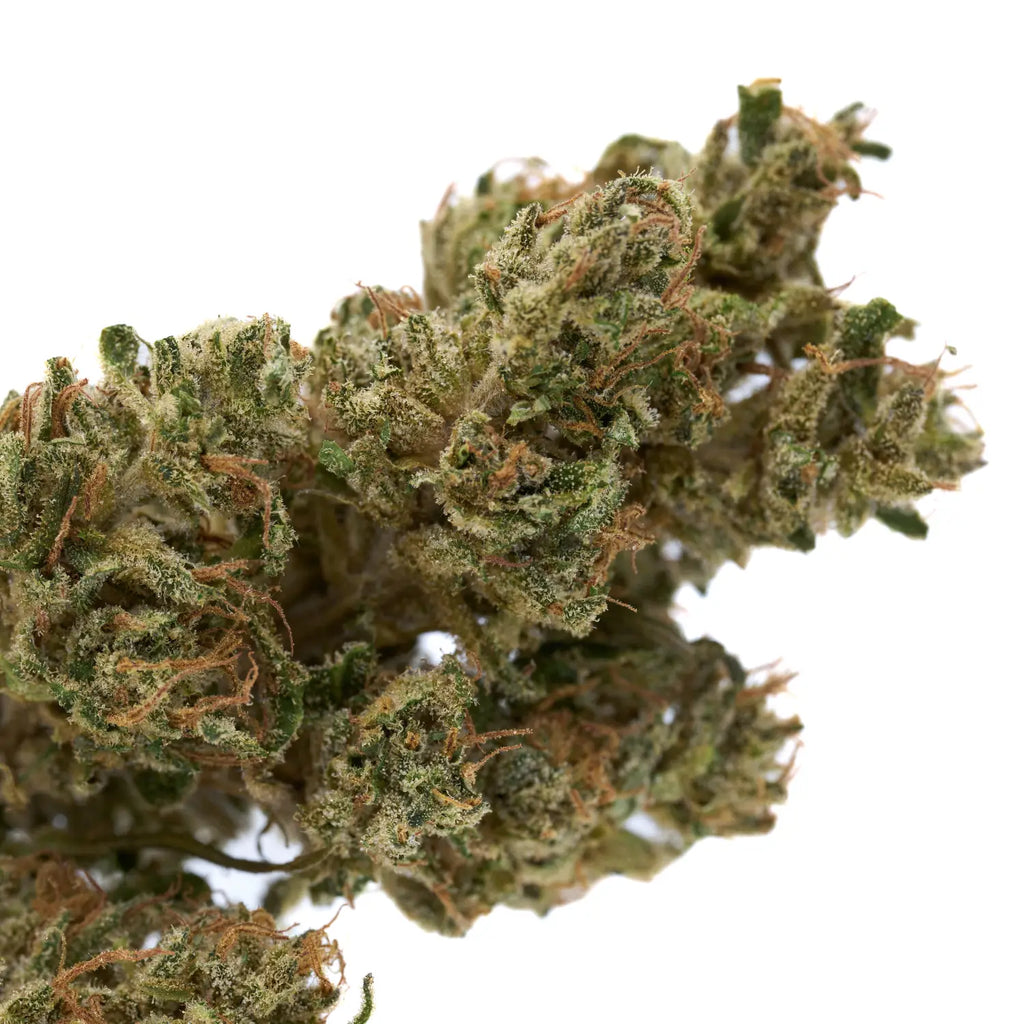
The best looking THCA flower typically presents a rich, medium green base with vivid orange pistils distributed evenly throughout, a heavy white trichome coating that gives the bud a frosted or icy appearance, and potentially secondary purple or blue tones depending on genetics. This color profile — green, orange, white — is the classic visual signature of premium, properly grown and cured flower.
Q: Does purple THCA flower mean it's stronger?
No. Purple color in THCA flower is the result of anthocyanin pigments, which are produced in response to genetic traits and cool temperatures during the grow. Anthocyanins are pigments, not cannabinoids — purple color has no direct relationship to THCA potency. A purple bud can have higher or lower THCA than a green bud; the color alone tells you nothing about cannabinoid concentration. Always verify potency with COA data.
Q: Is brown THCA flower safe to smoke?
Lightly browned hemp flower that simply shows age is generally not dangerous, but it will be significantly inferior in terms of terpene content, aroma, flavor, and potency. Dark brown, mushy, or musty-smelling flower may indicate mold contamination and should not be consumed. When in doubt, err on the side of caution and prioritize products that arrive properly packaged and stored.
Q: What does the frosty white coating on THCA flower mean?
That frosty coating is dense trichome coverage — the resin glands responsible for producing THCA, terpenes, and other cannabinoids. Heavy white trichome coverage is one of the best visual indicators of high-quality, potent THCA flower. More frost generally means more of the compounds that make the flower worth purchasing.
Q: Are orange hairs on THCA flower a good sign?
Yes, in most cases. Orange pistils that cover 70–90% of the bud's surface indicate a properly matured harvest. Mostly white pistils suggest an early harvest with less-developed cannabinoids. Very dark red or brown pistils covering nearly all of the surface suggest a late harvest. Vivid orange is the sweet spot.
Q: What causes black spots on cannabis flower?
Black spots on THCA flower are almost always indicative of mold, bud rot (Botrytis), or other fungal contamination. This is a serious quality and safety issue. Do not consume flower with black or gray patches, and only purchase from brands that provide microbial testing results on their COAs.
Q: Can I tell THCA potency from color alone?
Color is a useful quality indicator, but it cannot tell you precise potency levels. Trichome density (white frost coverage) is the closest visual proxy for cannabinoid concentration, but exact THCA percentages require laboratory testing. Always use a COA from an accredited lab to verify potency — color assessment and COA verification work best as a pair.
Conclusion: Your Color-Based THCA Flower Evaluation Checklist
Learning to read THCA flower colors is one of the most practical skills a cannabis consumer can develop. Every shade you encounter is communicating something about how that plant was grown, when it was harvested, how it was cured, and how it's been stored since leaving the farm.
Here's your quick-reference summary:
Green — the healthy baseline. Deep forest green = well-grown, properly matured. Lime green = possible early harvest. Olive green = possible overfeeding. Faded or pale green = nutritional or curing issues.
Purple/Blue — premium genetic expression combined with intentional cultivation. A quality signal, not a potency guarantee.
Orange Pistils — maturity indicator. 70–90% vivid orange = ideal harvest timing. All white = early harvest. All dark red/brown = possibly past peak.
White/Silver (Trichomes) — the most important visual quality indicator. Heavy frost = high cannabinoid and terpene density. Sparse or absent = lower potency flower.
Yellow/Gold — minor yellow accents in cured flower are normal and expected. Dominant yellowing = nutrient deficiency or light bleaching.
Brown — brown pistils are fine. Brown buds indicate age and degradation. Dark brown = significant quality loss. Avoid.
Black/Dark Gray Patches — immediate red flag. Mold or bud rot. Do not consume.
Color is where your evaluation starts — not where it ends. The THCA flower color meaning is most valuable when read alongside aroma, density, trichome inspection, and lab verification. No visual check replaces a full-panel COA from an accredited laboratory, but color gives you immediate, actionable information before you ever open the bag.
Ready to put this guide to use? Browse our full collection of premium THCA flower — sourced from quality-focused farms, third-party tested, and selected for exactly the visual and chemical profile this guide describes. When you know what to look for, the difference between good and great is immediately visible.


