


The History of 420: Where Did It Come From?
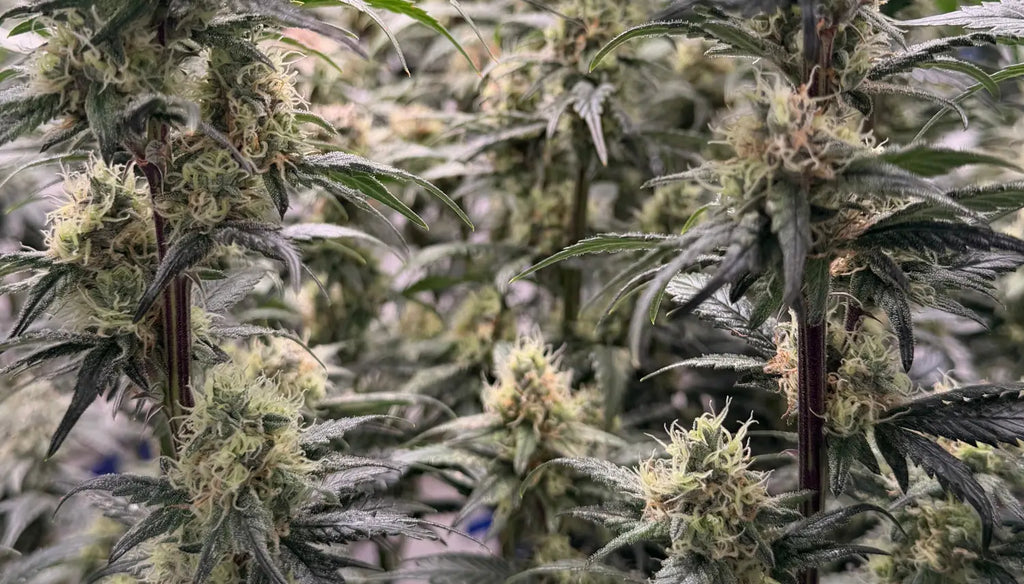
April 20th. 4:20 pm. The number is literally everywhere — on dispensary signs, in song lyrics, tattooed on forearms, printed on lighters, and baked into the DNA of an entire counterculture that has evolved into one of the most commercially significant movements in modern retail history. If you've spent any time in the 420 and THCA culture space, you already know that this number means something. But do you know why?
The origin of 420 is one of the most frequently asked questions in cannabis culture, and it has been surrounded by myths, urban legends, and internet folklore for decades. Ask ten people on the street where 420 comes from, and you'll likely get ten different answers — most of them wrong. The real story, however, is both simpler and more compelling than any of the myths suggest.
It starts with five teenagers in Northern California in 1971, a hand-drawn treasure map, and a phrase that would eventually circle the globe. By the time it landed in the pages of High Times magazine and got carried across the country by a devoted army of music fans, 420 had already evolved from a private code word into a cultural institution. Today, it anchors the single most important commercial moment in the THCA hemp 420 holiday calendar — a day when brands, retailers, and consumers come together in a celebration that is equal parts ritual, community, and commerce.
This is the full story of 420: where it came from, how it spread, what it means today, and why the cannabis 420 tradition shows no signs of slowing down.
Debunking the Myths: What 420 Is NOT
Before we get to the real origin story, we need to clear the air — literally and figuratively. Over the decades, a remarkable number of false origin stories have attached themselves to 420 with stubborn persistence. Some of them are creative. Some of them are absurd. None of them are true.
It is NOT a police radio code for marijuana possession. This is probably the most widespread myth, and it makes a certain intuitive sense — police scanner codes are part of the cultural shorthand around drugs and law enforcement. But no major law enforcement agency in the United States uses or has ever used 420 as a code for marijuana-related offenses. In California, where the term originated, the relevant penal code for marijuana possession was 11357. In many other jurisdictions, there is no connection whatsoever. The police code theory is a myth, full stop.
It is NOT the number of chemical compounds in cannabis. Cannabis is an extraordinarily complex plant, and scientists have identified hundreds of distinct compounds — cannabinoids, terpenes, flavonoids, and more. But the number of those compounds is not 420, and has never been definitively pegged at that figure. Cannabis chemistry is also a moving target as research advances. This theory probably gained traction because it sounds scientific and authoritative, but it has no factual basis.
It is NOT related to Bob Dylan, Bob Marley, or Adolf Hitler's birthday. The Dylan theory involves a creative misreading of a lyric from "Rainy Day Women #12 & 35" — the reasoning being that 12 multiplied by 35 equals 420. While that math is technically correct, it has nothing to do with the origin of the term and there is zero evidence Dylan intended any such connection. The Bob Marley birthday theory is simply false — Marley was born on February 6th, not April 20th. And the Hitler birthday connection (Hitler was indeed born on April 20th, 1889) is not only historically incorrect as an origin story for 420 but is also a theory that cannabis culture rightly wants nothing to do with. The date coincidence is just that — a coincidence.
It did NOT originate from the Grateful Dead, though they played a pivotal role in spreading it. As we'll explore in detail, the Waldos had connections to the Grateful Dead's inner circle, and Deadhead culture was instrumental in taking 420 from a regional inside joke to a national underground code word. But the term was coined years before the Dead connection became relevant to its spread.
With the myths cleared away, we can get to the truth — and the truth, as it turns out, is a genuinely great story.
The Real Origin: Five Teenagers, a Treasure Map, and a Wall
The true origin of 420 traces back to the fall of 1971 in San Rafael, California — a leafy, affluent suburb just north of San Francisco in Marin County. Five students at San Rafael High School, who called themselves "The Waldos" because they liked to hang out against a particular wall outside the school, came into possession of what they believed was a treasure map.
The map, reportedly hand-drawn, purportedly led to an abandoned cannabis plot growing on the Point Reyes Peninsula — land managed by the U.S. Coast Guard. The story, as The Waldos have told it in multiple documented interviews over the years, is that a Coast Guard servicemember had planted the crop but could no longer tend to it for fear of getting caught, and had passed the map along through a mutual acquaintance.
The five friends — Steve Capper, Dave Reddix, Jeffrey Noel, Larry Schwartz, and Mark Gravich — decided to go looking for it. But they needed a time and a meeting place. They settled on 4:20 pm, after school, by the Louis Pasteur statue on the San Rafael campus. Their code phrase became "4:20 Louis" — the time and the landmark compressed into a single, discreet signal they could use in the hallways between classes.
They searched for the crop multiple times over several weeks. They never found it.
But the phrase stuck. Over time, "4:20 Louis" was shortened to simply "420," and its meaning evolved from a specific logistical signal into a broader code for everything cannabis-related. Want to go smoke? "Hey, you want to 420?" Is that person cool? "He's 420 friendly." The phrase began to percolate outward from the original five, spreading first to their immediate social circle, then to the wider San Rafael scene.
What gave 420 its legs was a connection that most inside jokes never get: a direct line into one of the most influential music communities in American history.
How It Went Global: Deadheads, High Times, and the Underground Network
Dave Reddix, one of the original Waldos, had a brother named Patrick who was a close friend of Phil Lesh — the bassist for the Grateful Dead, who were based in the San Francisco Bay Area. Through this connection, Dave eventually began working as a roadie for the Dead's side projects, and the Waldos had backstage access to Grateful Dead shows and gatherings.
The Grateful Dead were not just a band. They were the nucleus of an entire traveling ecosystem — an extended community of fans known as Deadheads who followed the band from city to city, living out of vans and buses, trading bootleg recordings, and sharing a culture built around communal experience, psychedelic exploration, and an ethos of open exchange. Information, slang, and rituals moved through Deadhead culture the way viruses move through a crowded room — fast, invisibly, and thoroughly.
420 entered that ecosystem through the Waldos' connection to the Dead's circle, and Deadheads did what Deadheads do: they carried it everywhere. By the mid-to-late 1980s, 420 was an established code word across the entire traveling Deadhead community, which itself spanned the United States and had outposts internationally.
The next major catalyst came in December 1990, when a group of Deadheads in Oakland distributed a flyer at a Dead show inviting people to smoke "420" on April 20th at 4:20 pm. The flyer made its way to the desk of Steve Bloom, a reporter for High Times magazine, who reprinted it in 1991. High Times — the longest-running and most widely distributed cannabis publication in the world — gave 420 its first mainstream platform, and the term exploded from there.
By the mid-1990s, 420 was no longer underground. It appeared in pop culture, in music, in film dialogue. Pulp Fiction, released in 1994, famously set all its clocks to 4:20 — a detail that director Quentin Tarantino has confirmed was intentional. The cannabis community, which at the time was still operating largely underground due to widespread prohibition, had found a universal signal. You could drive through a new city, spot a car with a 420 sticker, and know you'd found your people.
The 420 origins cannabis community likes to trace back to those first Deadhead gatherings — the early proof that a code word could become a calendar event, that a shared signal could become a shared holiday.
420 Becomes a Holiday: The Commercialization of April 20th
The transformation of 420 from a code word into a full-blown commercial holiday happened gradually, then all at once — a pattern that mirrors the broader legalization movement itself.
Through the 1990s and early 2000s, April 20th gatherings became increasingly large and public. University campuses, public parks, and city squares began hosting events where thousands of people would gather to light up at exactly 4:20 pm as an act of collective civil disobedience and cultural celebration. The most famous of these was the annual gathering on the University of Colorado Boulder's Norlin Quad, which grew from a few hundred participants in the early 2000s to an estimated 10,000 by the late 2000s before the university cracked down with pesticide treatments.
In states where medical marijuana had been legalized — California passed Proposition 215 in 1996, the first medical cannabis law in the U.S. — dispensaries began offering April 20th promotions. These were initially modest: a small discount here, an event there. But as legalization spread and the industry professionalized, the scale of 420 promotions grew dramatically.
By the 2010s, following Colorado and Washington's landmark recreational legalization votes in 2012, April 20th had become the cannabis industry's equivalent of Black Friday. Dispensaries reported sales volumes on 420 that dwarfed any other single day of the year. Brands planned major product launches around the date. Events, festivals, and concerts were organized across legal states to coincide with the holiday.
The cannabis culture 420 history had completed an unlikely arc: from a teenager's private code to a billion-dollar commercial event in roughly fifty years.
420 and the Hemp Industry: THCA Takes Center Stage
The legalization of hemp under the 2018 Farm Bill opened a new chapter in the 420 story — one that is still being written. By establishing that hemp (cannabis plants containing 0.3% delta-9 THC or less on a dry weight basis) is legal at the federal level, the Farm Bill created the conditions for an entirely new retail market built around hemp-derived products.
THCA — tetrahydrocannabinolic acid, the raw, non-psychoactive precursor to THC that converts to THC when heated through decarboxylation — became the centerpiece of this market. Because THCA flower is hemp by legal classification, it exists in a distinct legal space that allows it to be sold, shipped, and celebrated in ways that traditional cannabis cannot in many states.
For hemp brands, the THCA hemp 420 holiday represents the single biggest marketing and sales opportunity of the year. The audience is already primed — millions of consumers who identify with cannabis culture, who observe April 20th as a meaningful date, and who are actively looking for premium products to mark the occasion. The alignment between cannabis culture's most important day and a product category that has exploded in consumer popularity is, from a market perspective, nearly perfect.
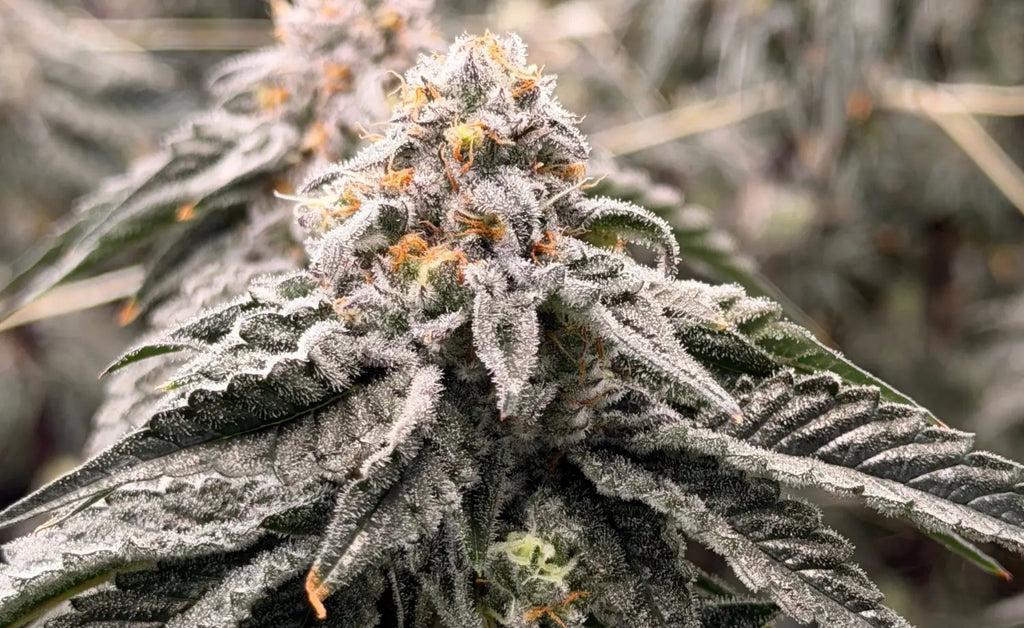
The hemp 420 celebration has its own distinct character in the hemp space. Because THCA flower looks, smells, tastes, and — after combustion or vaporization — feels nearly identical to traditional cannabis, the 420 experience translates directly. Consumers who celebrate April 20th with THCA hemp flower are participating in the same ritual that the Waldos accidentally invented over fifty years ago.
THCA Flower and the Modern 420 Market
The numbers around April 20th in the hemp and THCA space are significant and growing. Retailers across the country report that the weeks surrounding April 20th are their highest-traffic periods of the year, with hemp flower 420 deals driving both new customer acquisition and repeat purchases at higher-than-average cart values.
For wholesale buyers and retail operators, timing inventory around 420 has become a strategic imperative. Strains that are already popular sell through in days rather than weeks during the April 20th window. New releases launched around the holiday get dramatically more visibility than those launched at other times of year. The 420 THCA flower sale season has become a genuine industry event — not just a consumer promotion.
What does the modern 420 shopper look like in the THCA hemp space? Research suggests several consistent patterns. They are intentional buyers who have done their research on strain profiles, cannabinoid percentages, and terpene content. They tend to purchase in larger quantities around the holiday, stocking up on favorites and exploring new offerings simultaneously. They respond to limited-edition releases and exclusive drops. And they are highly social — they share their 420 purchases and experiences across social platforms, making authentic word-of-mouth a particularly powerful marketing channel during this window.
The THCA flower holiday market has also become increasingly sophisticated in terms of product curation. Leading brands now approach April 20th the way fashion houses approach seasonal collections — with coordinated releases, curated bundles, and thematic cohesion that makes the shopping experience feel like an event in itself.
How to Celebrate 420 with THCA Hemp Flower
Whether you're a longtime cannabis culture participant or someone newer to the hemp flower space, April 20th deserves to be celebrated with intention. Here's how to make your THCA sesh April 20 one to remember.
Host a curated THCA flower flight with friends. Just as a wine flight introduces you to different expressions of a grape, a THCA flower flight lets you explore the breadth of what hemp flower can offer. Choose three to five strains with distinct terpene profiles — something citrus-forward, something earthy and piney, something floral — and work through them in sequence. Take notes. Discuss the differences. This is exactly the kind of intentional, communal experience that the original 420 tradition was built on.
Try a strain you've never consumed before. The hemp 420 celebration is an ideal occasion to push past your usual rotation. If you typically gravitate toward indicas, try a sativa-dominant THCA flower. If you always reach for the same reliable strain, let April 20th be the day you take a chance on something new. Many brands release limited drops specifically for this window — strains with exceptional genetics, unusual terpene combinations, or premium indoor grows that aren't available year-round.
Support an independent hemp brand. The hemp flower industry is still young, and the brands driving genuine innovation in genetics, cultivation, and transparency are often smaller operations without the marketing budgets of larger players. April 20th is a great opportunity to redirect some of your spending toward independent, quality-focused brands whose work deserves recognition.
Watch a classic cannabis documentary or film. The cultural history of cannabis is rich, and April 20th is a natural occasion to engage with it. From The Culture High to Grass Is Greener to Reefer Madness as a historical artifact, there's no shortage of compelling viewing. If you prefer fiction, the canon of great cannabis-adjacent cinema is vast.
Take your sesh outdoors if weather permits. April 20th typically falls in early spring in the Northern Hemisphere — a moment when the weather is turning, things are blooming, and being outside feels genuinely good. There's something fitting about celebrating a plant that grows in soil by sitting in it.
Whatever your approach to the THCA sesh April 20, the through line is the same: community, intentionality, and appreciation for a plant and a culture that has persisted despite decades of prohibition and continues to evolve in fascinating ways.
Frequently Asked Questions About 420
Where did the term 420 actually come from? The term originated in 1971 in San Rafael, California, coined by a group of five high school friends who called themselves The Waldos. They used "4:20" as a code for meeting after school to search for an abandoned cannabis crop. The term spread through their social circle and eventually into Deadhead culture before going mainstream via High Times magazine in the early 1990s.
Why is April 20th celebrated as a cannabis holiday? Because 4/20 (April 20th) corresponds to the numeric code, the date became the natural calendar anchor for the tradition. Early cannabis community gatherings on April 20th at 4:20 pm turned it into a recognized observance, which grew into the commercial and cultural holiday it is today.
Is 420 a police code for marijuana? No. This is one of the most persistent myths around 420 but it has no factual basis. No major U.S. law enforcement agency uses or has used 420 as a code for marijuana possession.
What does THCA have to do with 420? THCA is the primary cannabinoid in hemp flower products that convert to THC upon heating. For the legal hemp market, THCA flower is the most direct analog to traditional cannabis flower, and it has become a central product category in the 420 THCA flower sale season. Many hemp retailers plan their biggest launches and promotions around April 20th.
What are the best THCA hemp flower strains for 420? The best strains for a THCA sesh April 20 depend on your preferences, but the occasion typically calls for something with exceptional bag appeal, a complex terpene profile, and strong cannabinoid content. Check your favorite retailer's limited 420 releases — these are often the best of what's available at any given time.
How big is the 420 hemp market? The 420 window has become the single highest-volume retail period in the hemp flower calendar. Brands and retailers report sales volumes during the April 20th window that exceed any other comparable period, with hemp flower 420 deals driving both traffic and average order value above baseline.
Did the Grateful Dead invent 420? No. The Waldos coined the term. However, the Grateful Dead's community — the Deadheads — were instrumental in spreading 420 from a Northern California inside joke into a national and eventually global code word. The Waldos had direct connections to the Dead's inner circle, which gave the term access to one of the most far-reaching countercultural networks in American history.
What is a 420-friendly brand? In the hemp context, a 420-friendly brand is one that participates in the April 20th tradition through special releases, promotions, events, or cultural engagement. Many of the best hemp flower brands time their most anticipated drops of the year to coincide with the THCA flower holiday.
Conclusion: From a School Wall to a Global Holiday
The history of 420 is, at its core, a story about how culture moves. It starts with five teenagers who never found their treasure map but stumbled onto something more valuable: a shared language. It moves through a band's extended community, riding the same underground currents that carried bootleg tapes and handmade zines across a continent. It breaks into the mainstream through a single magazine article, then multiplies across pop culture until the number is literally everywhere.
Today, the cannabis 420 tradition encompasses everything from large-scale public festivals to quiet personal rituals, from billion-dollar dispensary promotions to a single person sitting on their back porch with a well-packed bowl of THCA hemp flower. The Waldos probably could not have imagined any of it. But the instinct that drove them — the desire to gather, to share something, to mark the moment — is exactly the instinct that 420 continues to honor, more than fifty years later.
If you're looking to mark this year's hemp 420 celebration with premium THCA flower, check out the latest wholesale and retail releases at hemp-flower.com — where the best of 420 THCA culture comes together in one place.


