


What Is THCA Diamonds? A Beginner's Guide to Cannabis Concentrates
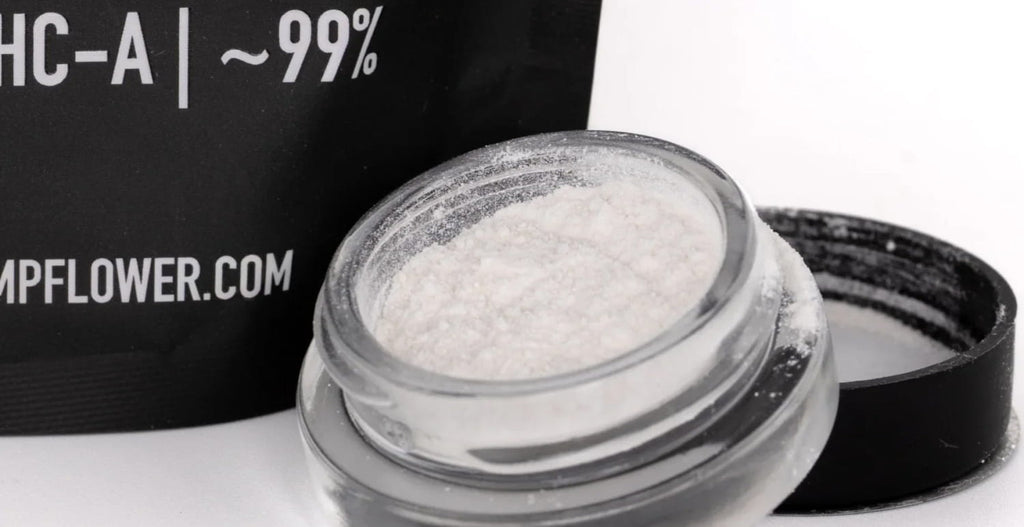
If you've spent any time browsing concentrate menus, you've probably noticed jars filled with glassy, crystal-like formations that look more like something out of a jewelry case than a cannabis product. These are THCA diamonds, and they represent one of the purest, most potent forms of cannabinoid concentrate available on the market today. For newcomers to the world of dabbing and extraction, diamonds can look intimidating — but understanding what they are, how they're made, and how they compare to other concentrates makes them far less mysterious and a lot more approachable.
This guide breaks down everything a beginner needs to know: what diamonds actually are, the science behind how they form, how they stack up against other extract types like wax and shatter, and what to expect the first time you try them.
What Are THCA Diamonds?
So, what are THCA diamonds, exactly? At their core, they're a cannabis concentrate made almost entirely of crystallized THCA (tetrahydrocannabinolic acid) — the raw, non-intoxicating precursor to THC that's naturally present in freshly harvested hemp and cannabis flower. Through a careful extraction and crystallization process, THCA molecules are isolated from the rest of the plant's compounds and allowed to form solid, translucent crystal structures.
The result is a THCA diamond concentrate that can test above 95% THCA purity — a potency level that's simply impossible to achieve with flower alone, since flower always contains a mix of cannabinoids, terpenes, waxes, and plant material. Diamonds strip away nearly everything except the THCA itself, leaving behind a product that looks like quartz or rock candy and delivers an intensely concentrated dose of cannabinoid content.
It's worth noting that "diamonds" refers specifically to the crystalline structure, not a brand or strain. Any sufficiently pure and slow-crystallized THCA extract can form these structures, which is part of why diamond quality varies so much from producer to producer depending on the starting material and the patience of the extraction process.
Cannabis Diamonds Explained: The Basics
When people search for cannabis diamonds explained in simple terms, the easiest comparison is to rock candy or sugar crystallizing out of a saturated syrup. In both cases, a compound dissolved in a liquid slowly comes out of solution as solid crystals once conditions are right — temperature, pressure, and concentration all play a role. With cannabis, the "syrup" is a terpene-rich extract, and the "sugar" is THCA. Given enough time and the right environment, THCA molecules bond together and form a lattice structure, while everything else — mostly terpenes — remains liquid around them.
This is why you'll often see diamonds sold sitting in a pool of golden liquid. That's not a defect or filler; it's a natural byproduct of the same process that created the diamonds in the first place.
How Are THCA Diamonds Made?
Understanding how are THCA diamonds made helps explain why they're prized — and why quality diamonds take real skill and patience to produce.
Step 1: Extraction
The process starts with a solvent-based extraction, most commonly using butane (BHO) or CO2, to pull cannabinoids and terpenes out of raw plant material. This produces a crude oil extract containing THCA, terpenes, and trace amounts of other plant compounds.
Step 2: Winterization and Purging
The crude extract is winterized — chilled and filtered — to remove fats, lipids, and waxes that would otherwise cloud the final product or interfere with crystallization. Residual solvent is then purged off under vacuum and controlled heat, leaving a cleaner, more refined oil behind.
Step 3: Crystallization
This is where the magic happens. The purified oil is placed into a sealed, pressurized container and left to sit — sometimes for days, sometimes for several weeks. During this resting period, THCA molecules gradually separate from the terpenes and begin bonding to one another, forming crystal structures that grow larger over time. Temperature and pressure are carefully monitored throughout, since even small fluctuations can affect crystal size, clarity, and purity.
Step 4: Separation and Packaging
Once crystallization is complete, the solid diamonds are separated from the remaining terpene-rich liquid, known as "sauce." Some producers sell diamonds pure and dry; others reintroduce a portion of the sauce back into the jar for added flavor and a smoother dabbing experience. This is sometimes labeled as "diamonds and sauce" on product menus.
The entire process, from initial extraction to fully formed crystals, can take anywhere from a week to over a month. Producers who rush crystallization typically end up with smaller, less defined crystals — one reason why lab-tested, slow-cured diamonds carry a premium.
THCA Crystalline vs. THCA Diamonds: Is There a Difference?
You may see the term THCA crystalline used interchangeably with "diamonds," and for the most part, that's accurate — both refer to the same crystallized, near-isolate form of THCA. However, there's a subtle distinction worth understanding.
"Crystalline" technically refers to THCA in its most isolated, powder-like or shard form, often reaching 99%+ purity with virtually no terpenes remaining. "Diamonds," by contrast, usually retain a small amount of residual terpene content, either within the crystal structure itself or in the surrounding sauce, giving them more aroma and flavor complexity than fully isolated crystalline.
In practical terms, both are made using similar crystallization techniques, and many consumers use the terms interchangeably. If you're shopping and see either label, know that you're looking at a high-purity, THCA-dominant concentrate — the main variable is how much terpene content remains and how that affects flavor and overall experience.
THCA Diamonds vs. Wax: What's the Difference?
One of the most common questions beginners ask is about THCA diamonds vs wax — since both are popular dabbable concentrates, but they look and behave quite differently.
Texture and Appearance
Wax is soft, opaque, and pliable — often compared to candle wax or crumbly butter, depending on how it was whipped or processed. Diamonds, by contrast, are hard, translucent, and crystalline, resembling rock candy or quartz.
Production Process
Wax is typically made by agitating a cannabis extract while purging it, which introduces air and creates its characteristic cloudy, textured consistency. Diamonds are made through a slow, undisturbed crystallization process that requires no agitation — the opposite production philosophy entirely.
Potency
This is where the two diverge most significantly. Wax generally tests in the 60–80% cannabinoid range, since the whipping process retains more plant lipids and terpenes. Diamonds regularly exceed 90–95%+ THCA, making them substantially more potent per dab.
Flavor and Terpene Content
Because wax retains more of the extract's original terpene profile without separating it out, it often delivers a bolder, more immediate flavor. Diamonds, especially drier ones, can taste more muted unless sold with sauce, though the flavor they do offer tends to be cleaner and less "plant-heavy."
Ease of Use
Wax tends to be more beginner-friendly to handle and dab because of its softer consistency, while diamonds can be trickier to break apart and dose precisely due to their hardness.
For most new concentrate users, understanding this difference is key: wax offers a more moderate, flavorful entry point, while diamonds are the higher-potency option for those ready to go bigger.
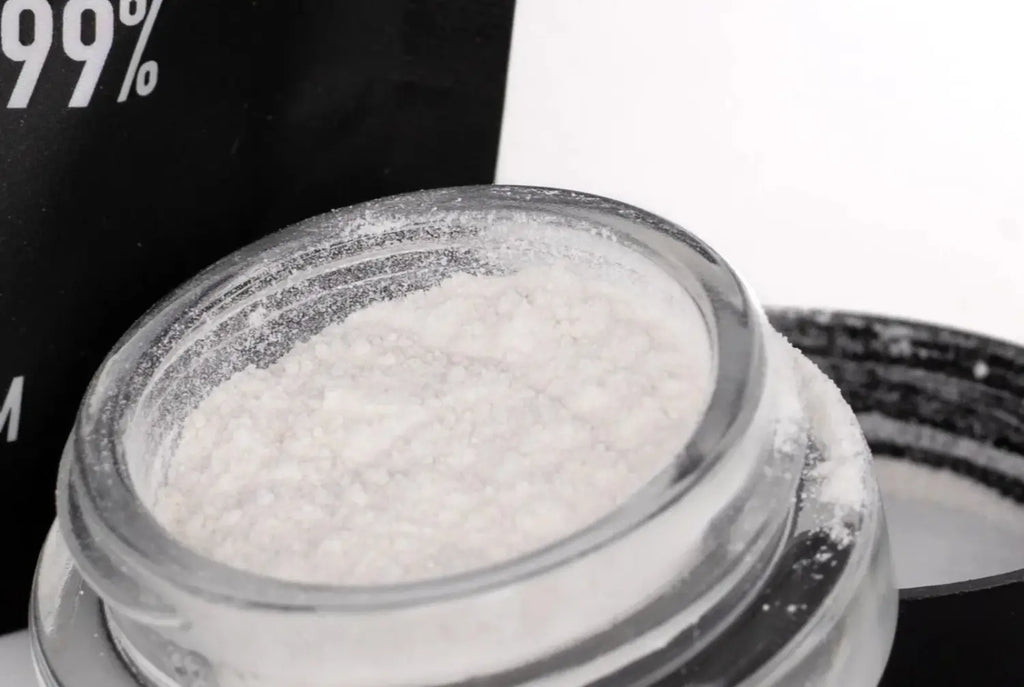
Pure THCA Crystals: What Purity Really Means
When you see pure THCA crystals advertised, purity is typically measured as a percentage of THCA by weight, as verified through third-party lab testing. Reputable producers publish Certificates of Analysis (COAs) showing exact cannabinoid breakdowns, along with screening for residual solvents, pesticides, and heavy metals.
Purity matters for a few reasons:
- Predictability: Higher purity means more consistent effects from dab to dab, since there's less variability from residual plant compounds.
- Cleaner combustion: Purer extracts tend to vaporize more cleanly, producing less plant-derived residue and a smoother inhale.
- Dosing accuracy: Knowing the exact THCA percentage allows more experienced users to calculate their intended dose more precisely.
That said, purity isn't automatically "better" for every user. Some consumers prefer concentrates with more retained terpene content for flavor and the potential entourage effect, even if it means a slightly lower raw percentage. This is a matter of personal preference, not a strict hierarchy of quality.
Always look for lab testing when purchasing crystalline or diamond products — potency claims without a COA to back them up should be treated with skepticism.
THCA Diamond Potency: What to Expect
THCA diamond potency is the single biggest reason experienced users seek these products out. Where high-quality flower might test between 20–35% total cannabinoid content, diamonds routinely test above 90%, with many premium batches reaching 95–99% THCA.
It's important to understand what happens to that THCA once it's heated. THCA itself is non-intoxicating in its raw form — it's the acidic precursor to THC. When exposed to heat, whether through smoking, dabbing, or vaping, THCA undergoes decarboxylation, converting into active Delta-9 THC. This is what produces the well-known effects associated with cannabis.
Because diamonds contain such a concentrated starting amount of THCA, the resulting dose of activated THC after heating is proportionally much higher than what you'd get from an equivalent amount of flower. A dab of diamonds might deliver in a single inhale what would otherwise take several bowls or joints of flower to match.
This is exactly why dosing caution matters so much with this category, especially for anyone still building tolerance.
THCA Diamonds for Beginners: How to Start Safely
If you're exploring THCA diamonds for beginners, a little preparation goes a long way toward a positive first experience.
Start Small
Given their potency, a "dab" of diamonds should be much smaller than you might assume — often just a grain-of-rice-sized piece is enough for a first try. You can always take more; you can't take back an overwhelming dose.
Choose the Right Equipment
Diamonds are typically consumed using a dab rig with a banger, an e-nail for more precise temperature control, or a concentrate-compatible vaporizer. Trying to dab with a torch and rig for the first time without guidance can be intimidating — many beginners start with a lower-temperature "low-temp dab" for a smoother, less harsh hit.
Mind Your Temperature
Dabbing at excessively high temperatures burns off flavorful terpenes and can produce a harsher, less enjoyable experience. Lower, controlled temperatures preserve flavor and tend to be gentler for first-timers.
Give It Time
Effects from dabbing concentrates can come on faster than from smoking flower. Wait several minutes between dabs to gauge how you're feeling before considering more.
Have a Plan
Because diamonds are so potent, it helps to try them in a comfortable, familiar setting, ideally with something to drink nearby and no pressing obligations for the next hour or two.
Who Are THCA Diamonds Really For?
Diamonds are generally best suited to experienced concentrate users who are already comfortable with dabbing and understand how their body responds to high-potency cannabinoid products. Their intensity, fast onset, and minimal plant taste make them appealing to users chasing maximum potency per session, as well as those who appreciate the cleaner vapor that comes from a highly purified product.
That doesn't mean beginners can't try them — it simply means beginners should approach diamonds with extra caution, smaller starting amounts, and realistic expectations about how quickly and strongly the effects can hit compared to flower.
How to Store THCA Diamonds Properly
Because diamonds are a purified, crystallized product, proper storage helps preserve both potency and structure:
- Keep diamonds in an airtight, glass container to prevent moisture exposure, which can degrade crystal quality over time.
- Store in a cool, dark place away from direct sunlight and heat, both of which can cause premature degradation of cannabinoids.
- Avoid excessive handling, as body heat and oils can affect crystal texture over repeated exposure.
- If your diamonds come with sauce, keep the container upright to prevent the liquid terpene layer from shifting or leaking.
Stored properly, diamonds can maintain their potency and quality for many months.
Frequently Asked Questions About THCA Diamonds
Are THCA diamonds the same as THC?
Not exactly. THCA is the raw, non-intoxicating acidic form of the cannabinoid found in the plant. It converts into active Delta-9 THC when heated through decarboxylation — which is exactly what happens when diamonds are dabbed, smoked, or vaped.
Are THCA diamonds legal?
Legal status depends on your state and local regulations, as hemp-derived THCA products exist in a nuanced legal space tied to Farm Bill definitions and total THC testing thresholds. Always check your local laws before purchasing.
How do I dab THCA diamonds if I'm new to concentrates?
Use a dab rig, e-nail, or concentrate vaporizer, start with a very small piece, and use a lower temperature setting for a smoother first experience.
Do THCA diamonds get you higher than flower?
Because of their significantly higher cannabinoid concentration, a given amount of diamonds will generally produce stronger effects than an equivalent amount of flower, once decarboxylated.
Can I smoke THCA diamonds instead of dabbing them?
Some users crumble diamonds onto flower in a bowl or joint to boost potency, though dabbing remains the more common and efficient consumption method for concentrates.
Why do some diamonds come with liquid at the bottom of the jar?
That liquid is "sauce" — the terpene-rich byproduct of the crystallization process. It's often left in intentionally to enhance flavor and smooth out the dabbing experience.
How long do THCA diamonds stay fresh?
When stored properly in an airtight container away from heat and light, diamonds can remain potent and stable for many months.
Final Thoughts
THCA diamonds represent the upper end of cannabis concentrate potency and purity — a product built through patience, precision, and careful extraction science rather than shortcuts. For beginners, they're a fascinating entry point into the world of high-potency concentrates, provided they're approached with the right expectations, proper equipment, and a "start low, go slow" mindset. For experienced users, they remain one of the most efficient, flavorful, and potent ways to experience cannabinoids in their most refined form.
Ready to see the difference purity makes? Explore lab-tested THCA diamonds and concentrates sorted by potency and strain to find the right option for your experience level.


