


Which THCa Trim Has Higher Potency? Gassa Purple vs Candy Pave Greenhouse Breakdown
When wholesale buyers start evaluating THCa trim, potency is almost always the first number they pull up. That makes sense — potency signals consumer experience, extraction yield, and product marketability all at once. But here's what experienced bulk buyers understand that newer entrants often miss: potency in trim is more nuanced than a single percentage printed on a COA.
Two trim lots with identical THCa percentages can perform very differently in production. Two lots with different percentages can deliver nearly identical consumer experiences once terpene profiles, trim composition, and conversion math are factored in. The number matters — but only when you know how to read it in context.
This guide does exactly that. We're breaking down high potency THCa trim wholesale fundamentals — the science behind what drives potency in greenhouse trim, how to accurately interpret lab results, and a head-to-head THCa trim potency comparison between two of the more sought-after greenhouse strains on the wholesale market right now: Gassa Purple and Candy Pave.
By the end of this post, you'll have a working framework for evaluating any trim lot's potency intelligently — not just for these two strains, but for any bulk trim purchase you make going forward.
What Determines THCa Potency in Trim?
Before you can meaningfully compare highest THCa trim strains, you need to understand the variables that drive THCa concentration in the first place. Potency isn't a static trait baked into genetics alone — it's the output of multiple interacting factors that shift from harvest to harvest and lot to lot.
Genetics: The Foundation
Genetics are the ceiling. Some strains are biologically programmed to produce high concentrations of cannabinoids — their resin glands are larger, more numerous, and more productive than lower-resin cultivars. No amount of environmental optimization can push a low-resin strain past its genetic ceiling.
High-resin genetics consistently outperform lower-resin genetics even when growing conditions are identical. This is why strain selection matters so much in wholesale sourcing — you're not just buying a phenotype, you're buying the genetic potential that determines how much resin the plant puts into its sugar leaves.
Trim Composition: The Variable Most Buyers Ignore
Here's the factor that causes more confusion in potency comparisons than any other: not all trim is the same. There's a significant potency gap between sugar leaf trim and fan leaf trim, and most trim lots contain a blend of both.
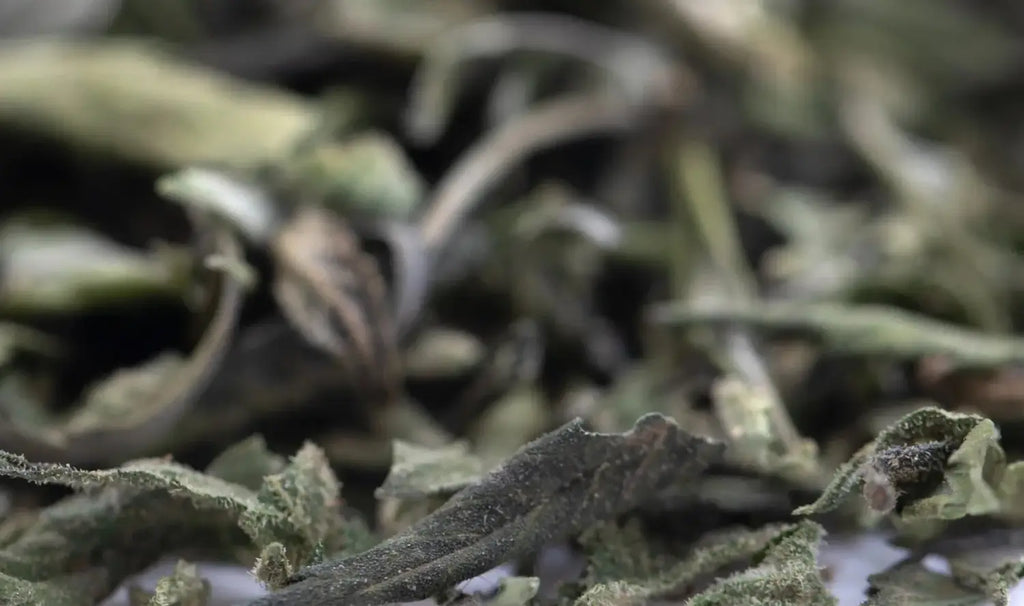
Sugar leaf trim refers to the small leaves that grow directly from the bud sites, coated in trichomes almost to the density you'd find on the flower itself. Fan leaf trim refers to the larger leaves further from the canopy, which carry minimal trichome coverage and very little cannabinoid content.
A trim lot that's 80% sugar leaf will test dramatically higher than a lot that's 40% sugar leaf — even from the same strain, the same harvest, and the same growing conditions. When comparing THCa percentage trim wholesale lots, always ask your supplier what the trim composition looks like. Premium greenhouse operations produce predominantly sugar leaf trim; lower-tier operations mix in substantial fan leaf material to increase pound volume.
Harvest Timing: The Window Is Narrow
THCa concentration peaks at a specific window late in the flowering cycle — typically when trichomes have developed from clear to cloudy, just before amber coloration becomes dominant. Harvesting during this window maximizes cannabinoid content in both flower and the trim that comes with it.
Trim harvested too early (trichomes still mostly clear) will test lower in THCa because the resin glands haven't reached full production. Trim harvested too late (heavy amber trichomes) will also test lower because THCa begins converting to CBN as the plant ages and trichomes degrade. The potency window is real, and experienced cultivators hit it deliberately.
Curing and Storage: Potency You Can Lose After Harvest
THCa is stable compared to many other cannabinoids, but it's not indestructible. Improper curing — too fast, too humid, or at incorrect temperatures — degrades terpenes and can accelerate cannabinoid breakdown. Trim that's stored in non-climate-controlled environments over extended periods loses measurable potency over time.
When evaluating greenhouse THCa trim potency, always check the COA date alongside the potency numbers. A 20% THCa reading from a COA that's 14 months old tells you very little about what that trim tests at today.
Growing Environment: Why Greenhouse Wins
Greenhouse cultivation sits in a productive middle ground between full indoor and outdoor growing. Controlled climate conditions reduce the environmental stress factors that limit resin production — temperature fluctuations, drought stress, light inconsistency — while natural light cycles support robust cannabinoid synthesis in ways that pure artificial light sometimes doesn't replicate exactly.
The practical result: greenhouse trim consistently tests at higher potency than comparable outdoor-grown trim from the same genetics. For wholesale buyers sourcing trim specifically for potency-dependent applications, greenhouse-grown lots represent the better bet between non-indoor options.
How to Calculate Total THC from a THCa COA
One of the most important skills any wholesale buyer can develop is knowing how to read a COA accurately — specifically, understanding the difference between the raw THCa percentage and the total THC figure that actually reflects consumer-facing potency.
THCa is the acidic, non-decarboxylated precursor to delta-9 THC. In raw plant material — whether flower or trim — virtually all of the psychoactive potential is stored as THCa, not as active delta-9 THC. When a consumer smokes or vaporizes the material, heat triggers decarboxylation, converting THCa into delta-9 THC. The experience they have is driven by that converted THC, not by the raw THCa percentage listed on the label.
Here's the critical detail most buyers don't fully account for: the conversion is not 1:1. Decarboxylation removes a carboxyl group from the THCa molecule, and that molecular change results in approximately 12.3% mass loss. Every 100mg of THCa produces roughly 87.7mg of delta-9 THC after full decarboxylation.
The Total THC Formula:
(THCa × 0.877) + delta-9 THC = Total THC
Worked Example:
If a trim lot tests at 18% THCa and 0.2% delta-9 THC:
(18 × 0.877) + 0.2 = 15.786 + 0.2 = 15.99% Total THC
If that same lot instead tests at 22% THCa and 0.2% delta-9 THC:
(22 × 0.877) + 0.2 = 19.294 + 0.2 = 19.49% Total THC
This calculation matters for two distinct reasons:
Farm Bill compliance: Regulatory frameworks vary in how they evaluate THC content. Some use only the pre-harvest delta-9 THC percentage; others use the total THC post-decarboxylation number. Know exactly which standard applies in your state and for any state you're distributing into before purchasing and reselling trim.
Accurate potency communication: When retail customers ask how strong your pre-rolls or infused products are, the honest answer is the total THC figure — not the raw THCa percentage. Consumers who smoke or vaporize your products are experiencing the converted THC, and representing potency accurately builds long-term customer trust.
When reviewing how to read a THCa trim COA for wholesale purchasing, always run this calculation rather than comparing raw THCa figures alone. Two lots that look identical on raw THCa percentage might have slightly different delta-9 readings that shift the total THC comparison.
Gassa Purple: Potency Profile and Wholesale Evaluation
Gassa Purple THCa percentage wholesale buyers encounter a strain built on indica-dominant genetics that have been specifically selected for heavy resin production. The same genetic pathways that trigger anthocyanin pigmentation — producing the purple coloration the strain is named for — tend to correlate with robust trichome development throughout the plant structure, including the sugar leaves that comprise premium trim lots.
This isn't a coincidence. Strains with complex secondary metabolite expression (terpenes, anthocyanins, flavonoids) are often also strong producers on the cannabinoid side — the plant's secondary metabolite machinery is simply running at high capacity.
Trichome Distribution in Gassa Purple Trim
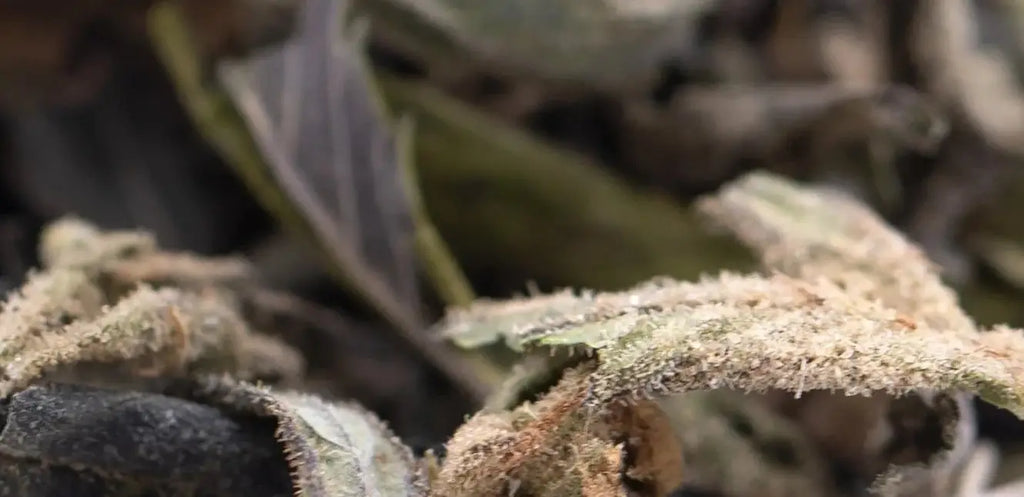
Well-processed Gassa Purple trim displays trichome coverage across sugar leaves that, under magnification, shows mature gland heads with minimal degradation when harvested at peak timing. For wholesale buyers who don't have access to microscopy at point of purchase, the practical visual indicator is a heavy, silvery-white coating on sugar leaf surfaces that gives the trim material an almost frosted appearance even without magnification.
The purple and burgundy coloration that distinguishes Gassa Purple's flower often persists in the trim as well, creating a visually distinctive lot that can be leveraged in retail and pre-roll marketing contexts alongside potency numbers.
Consistency Across Lots
Greenhouse cultivation is a consistency advantage. Because environmental variables are controlled, the same Gassa Purple genetics express more uniformly across sequential harvests than outdoor growing would allow. For wholesale buyers setting up ongoing supply relationships, that consistency matters — you're not guessing at lot-to-lot variance nearly as much as you would with outdoor trim.
Ideal Use Cases for Gassa Purple Trim by Potency
Pre-roll manufacturing: Gassa Purple's indica-leaning profile and competitive THCa content make it a strong candidate for potency-marketed pre-rolls targeting consumers seeking heavy, relaxing effects. The visual character of the trim (coloration + visible frost) also holds up in clear-window packaging.
Infused product production: Indica-profile input material is popular for sleep-oriented and relaxation-focused infused products. Gassa Purple trim sourced for this application delivers both the cannabinoid content and the terpene character (myrcene-forward, with earthy and grape undertones) that aligns with those product categories.
Moon rocks and coated products: High-resin trim with visible trichome density performs well as a coating material for moon rock production, where both visual appeal and cannabinoid contribution matter.
Storage Stability
Indica genetics with high myrcene content tend to cure and store well under proper conditions. Myrcene itself acts as a minor antioxidant in the resin matrix, and the terpene stability of indica-leaning trim is generally good over standard wholesale storage timelines of 60–90 days when stored in climate-controlled, airtight conditions.
Candy Pave: Potency Profile and Wholesale Evaluation
Among Candy Pave THCa potency comparison evaluations, one characteristic comes up consistently from wholesale buyers across different purchase contexts: the trichome density is exceptional. Not just competitive — exceptional. Extraction-focused buyers in particular point to Candy Pave's visible resin coverage as one of the most reliable visual indicators of high resin content they encounter in the greenhouse trim category.
This matters because trichome density is the most direct visual proxy for cannabinoid concentration. Each gland head contains a reservoir of cannabinoid-rich resin — more glands per square centimeter of leaf surface means more resin per pound of input material.
What Drives Candy Pave's Trichome Expression
Candy Pave's genetics produce a heavy crystalline coating on sugar leaves that distinguishes it visually even in an unprocessed trim lot. The strain's hybrid character — balanced between sativa and indica influences — supports trichome production across the full canopy rather than concentrating it only near the colas.
This broader trichome distribution is particularly advantageous in trim contexts. With strains that express trichome density primarily on the flower itself, trim testing can be disappointingly lower than flower testing. With Candy Pave, the sugar leaf trichome coverage is substantial enough that trim potency tracks closer to flower potency than many comparable greenhouse strains.
Extraction Performance
For operations using trim as feedstock for concentrate production — kief, bubble hash, rosin, or hydrocarbon extraction — Candy Pave's trichome density represents a meaningful operational advantage. The relationship between input resin content and output yield is close to linear: more resin per pound of trim input translates directly to more concentrate output per production run.
Wholesale buyers who purchase trim specifically for extraction should calculate their effective cost-per-gram-of-output rather than cost-per-pound of input. At high trichome density, Candy Pave may justify a higher per-pound cost if the extraction yield more than compensates.
Ideal Use Cases for Candy Pave Trim by Potency
Concentrate production: This is where Candy Pave's trichome density advantage is most actionable. Kief collection, ice water hash, and solventless rosin production all benefit directly from high resin input material. Candy Pave regularly delivers extraction yields that make it a preferred feedstock strain among hash makers.
Premium pre-rolls: Candy Pave's heavy frost coverage creates a visual quality signal in milled pre-roll material — even after milling, the cannabinoid-rich resin gives the ground material a texture and appearance that differentiates it from lower-quality trim fill.
Potency-marketed retail trim: For operations selling trim directly to consumers as a flower alternative, Candy Pave's visual character and competitive potency support premium positioning in the retail trim category.
Head-to-Head Potency Comparison
Here's the reality of comparing highest THCa trim strains on a head-to-head basis: lot-level COA data will always be more authoritative than strain-level generalizations. Both Gassa Purple and Candy Pave occupy the higher end of the greenhouse THCa trim potency spectrum — but which specific lot tests higher depends on the harvest, the trim composition, and the timing of testing.
That said, here's a framework for thinking about this comparison across the use cases that drive most wholesale purchasing decisions:
For Pre-Roll Manufacturing
Both strains are competitive. Gassa Purple's indica-dominant profile appeals most strongly to consumers seeking heavy, relaxing effects and will market well in potency-emphasized SKUs. Candy Pave's hybrid character attracts a broader demographic and produces pre-rolls with a slightly more balanced effect profile.
The practical buying approach: request current lot COAs for both strains, run the total THC calculation on each, and let the actual numbers drive the decision. Don't pay a premium for strain reputation when lot data is available.
For Extraction Operations
Candy Pave holds a meaningful edge in this context. Its consistently dense trichome coverage — the visual characteristic extraction buyers mention most often — translates to higher resin yield per pound of input material. For operations where margin is calculated on output-per-pound-of-input, that resin density advantage compounds across production volume.
Calculate this way: if Candy Pave delivers 15% more kief or rosin output per pound versus an alternative trim lot, it can absorb a proportionally higher per-pound input cost and still improve margin. The math favors high-density resin input even at premium pricing.
For Retail Trim Sales
Both strains win here for different reasons. Gassa Purple's purple-to-burgundy coloration creates visual distinctiveness that draws consumer attention and supports marketing stories around exotic genetics. Candy Pave's heavy frost coverage signals potency immediately to experienced consumers who shop on visual quality indicators.
The better retail choice depends on your customer base: consumers who respond to visual novelty and aesthetics may prefer Gassa Purple; consumers who evaluate quality primarily by trichome coverage may prefer Candy Pave.
Bottom Line
On raw THCa trim potency comparison metrics, Candy Pave holds a slight edge in resin density and extraction-context performance. Gassa Purple competes closely on sugar leaf trichome content and brings additional retail value through its visual character.
But the practical answer to "which is higher potency" is: check the current lot COA. Strain reputation is a useful prior. Lot-specific lab data is the actual answer.
How to Read a THCa Trim COA: A Wholesale Buyer's Guide
Learning how to read THCa trim COA documents accurately is one of the highest-value skills a wholesale buyer can develop. Here's a systematic approach:
What to Look for First
Lab accreditation: The lab that ran the analysis should be ISO 17025-accredited. Look for an accreditation number on the COA, or verify the lab's accreditation status independently through the accrediting body's public registry. ISO 17025 accreditation means the lab's testing methodologies and equipment have been independently verified for accuracy — it's the minimum standard for COAs you should rely on.
COA date: Check when the analysis was conducted. COAs older than 6 months are increasingly unreliable for potency claims; COAs older than 12 months should be considered essentially non-representative of what the lot tests at today. For any significant purchase, request a COA dated within the last 90 days.
Lot identification: A legitimate COA should clearly identify the specific lot being tested — not just the strain name, but the harvest batch or lot number. If the COA you're reviewing is for "Gassa Purple" with no lot-specific identifier, you have no way to verify that this COA corresponds to the actual material you're purchasing.
Full panel testing: Potency is only one section of a complete COA. A trustworthy supplier provides testing across cannabinoids, terpenes, pesticides, heavy metals, and microbials. A COA that only covers cannabinoid content — or that conspicuously omits pesticide or heavy metal panels — is a red flag regardless of how impressive the potency numbers look.
The Delta-9 Compliance Number
For Farm Bill-compliant hemp products, the delta-9 THC percentage is the critical compliance marker in most regulatory frameworks. This number must remain below 0.3% by dry weight. For any trim lot you're purchasing, verify this number carefully before buying. A lot testing at 0.28% delta-9 isn't just legally riskier than one at 0.15% — it represents a narrow margin where testing variability between labs could push you into non-compliance territory.
What What THCa percentage is good for trim wholesale?
This is one of the most common questions new wholesale buyers ask. Realistic ranges for quality greenhouse trim lots:
- Below 10% THCa: Below average for premium greenhouse trim; better suited for low-cost filler applications
- 10–15% THCa: Competitive for general pre-roll manufacturing and retail trim
- 15–20% THCa: Strong — suitable for premium pre-rolls, retail trim, and moderate-yield extraction
- Above 20% THCa: Exceptional for trim; extraction operations should prioritize this range when available at reasonable cost
Be appropriately skeptical of trim COAs claiming potency at or above 25% THCa. While not impossible, figures in this range for trim (not flower) warrant scrutiny about trim composition and testing methodology.
Red Flags in THCa Trim COAs
Not all COAs are created equal, and the wholesale market for THCa trim is not immune to testing irregularities. Here's what should raise concern:
No lab accreditation: If the COA doesn't come from an ISO 17025-accredited facility or the lab's accreditation status can't be independently verified, treat the numbers as unverified.
COA is for flower, not trim: Some suppliers will show you a flower COA and represent it as applicable to the trim from that harvest. These are different products with different potency profiles. Request trim-specific testing.
Reluctance to share COA before purchase: Reputable suppliers share COAs proactively. Hesitation or delay in providing lab documentation before a purchase is a significant warning sign.
Delta-9 at or above 0.3%: This is a compliance issue, full stop. Don't purchase trim that tests above the Farm Bill limit regardless of how attractive the THCa numbers look.
Suspiciously inflated potency: Trim that claims flower-level potency (25%+ THCa) without clear documentation of premium sugar leaf composition and an accredited lab result deserves extra scrutiny.
Practical Buying Framework for High Potency THCa Trim Wholesale
1. Always request the current lot COA, not a historical sample. Strain-level COAs or previous-harvest documentation tells you about past lots. You need data on the lot you're actually purchasing.
2. Clarify trim composition before comparing potency numbers. A 20% THCa lot that's 80% sugar leaf and a 20% THCa lot that's 50% sugar leaf are not equivalent products — the first is significantly more valuable for potency-dependent applications.
3. Run the total THC calculation on every lot you're seriously considering. Don't compare raw THCa percentages alone. Calculate total THC using (THCa × 0.877) + delta-9 THC for every lot and compare the outputs.
4. Cross-reference potency with terpene content. High potency paired with a thin or degraded terpene profile delivers a less satisfying consumer experience than slightly lower potency with a rich, intact terpene stack. Balance matters — and terpene content on a COA tells you a great deal about how well the trim was harvested and handled post-harvest.
5. Calculate price-per-milligram of THCa, not just price-per-pound. If Lot A is priced lower per pound at 14% THCa and Lot B is priced higher per pound at 21% THCa, Lot B may represent substantially better value for potency-focused applications. Run the math before comparing sticker prices.
6. Establish ongoing COA verification habits. If you're in a recurring supply relationship, request updated COAs regularly — not just at initial purchase. Potency can shift between lots even within the same strain and supplier.
Frequently Asked Questions
What THCa percentage is good for trim wholesale?
Quality greenhouse trim from high-resin genetics typically tests between 15–22% THCa for premium sugar-leaf-dominant lots. For pre-roll manufacturing and retail trim, 15%+ is a solid benchmark. For extraction-focused purchasing, prioritize 18%+ when available at reasonable cost. Below 10% THCa is generally considered below-standard for premium greenhouse trim applications.
How does greenhouse THCa trim compare to outdoor trim on potency?
Greenhouse trim consistently tests higher than outdoor trim from comparable genetics. Controlled climate conditions reduce environmental stress factors that limit resin production and support more consistent cannabinoid expression across sequential harvests. For potency-focused wholesale purchasing, greenhouse lots are the better option between non-indoor growing environments.
Is Gassa Purple or Candy Pave better for extraction?
Candy Pave holds a general edge for extraction applications due to its notably dense trichome coverage across sugar leaves. Higher trichome density directly correlates with higher resin yield per pound of input material, which is the metric that drives extraction operation margin. That said, always compare current lot COAs — a strong Gassa Purple lot can outperform an average Candy Pave lot.
Can I use a flower COA to estimate trim potency from the same strain?
Not reliably. Flower and trim are different products even from the same plant and harvest. Flower COAs consistently show higher potency than trim from the same lot because flower material is predominantly trichome-dense bud tissue. Always request trim-specific COAs.
What does ISO 17025 accreditation mean on a COA?
ISO 17025 is the international standard for laboratory testing and calibration competency. An accredited lab has had its testing methodologies, equipment calibration, and quality management systems independently verified. For THCa potency claims, you should only rely on COAs from ISO 17025-accredited facilities.
How long is a THCa trim COA valid for?
There's no universal expiration, but potency figures become less reliable over time as THCa gradually degrades in storage. For purchasing decisions, COAs should ideally be within 90 days of the lot you're buying. COAs older than 6 months should be treated with caution, and COAs older than 12 months provide minimal useful information about current lot potency.
Why does the THCa percentage look higher than what I'd expect from the consumer experience?
Because THCa converts to delta-9 THC through decarboxylation with approximately 12.3% mass loss. A trim lot testing at 18% THCa doesn't deliver 18% THC when consumed — it delivers closer to 16% total THC after the conversion. Use the formula (THCa × 0.877) + delta-9 THC to calculate realistic total THC figures.
Conclusion
Both Gassa Purple and Candy Pave represent competitive options in the high potency THCa trim wholesale category. Candy Pave holds a marginal edge in raw trichome density and extraction-context performance — its resin coverage is among the most consistent in the greenhouse trim segment, which matters directly to extraction operations calculating yield per pound. Gassa Purple competes closely on sugar leaf trichome content from its indica resin genetics and brings additional retail value through its distinctive purple coloration and visual market appeal.
The more important takeaway is the framework: potency in trim is not a fixed attribute, it's an output of genetics, trim composition, harvest timing, curing quality, and storage conditions. A COA from a reputable, ISO 17025-accredited lab on the specific lot you're purchasing will always tell you more than strain reputation alone.
Run the total THC calculation. Verify trim composition. Compare price-per-milligram of THCa rather than price-per-pound. And source from suppliers who provide current, third-party documentation before you buy.
Explore Gassa Purple greenhouse THCa trim and Candy Pave greenhouse THCa trim — both available in wholesale quantities with current COA documentation.


