


The Chemistry of THCA Diamonds: How Isolation Produces Near-100% Purity Crystals
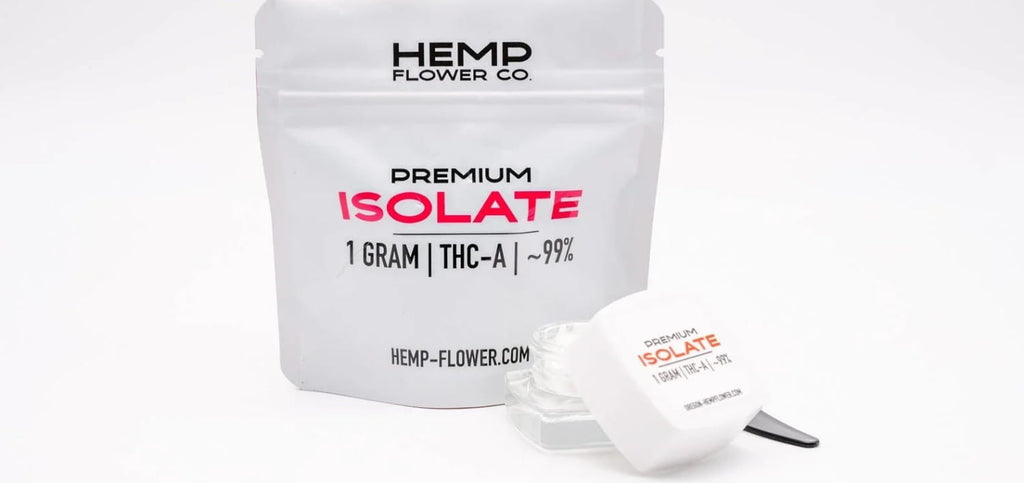
Ask any concentrate connoisseur what sits at the top of the potency pyramid, and they'll point to one thing: THCA diamonds. These translucent, gem-like crystals represent the single most purified form of cannabinoid extraction available on the legal hemp market today, routinely testing between 95% and 99% THCA by weight. That's not a typo — a substance that, once decarboxylated, converts almost entirely into active THC, with almost none of the plant material, chlorophyll, lipids, or residual solvents that dilute lower-grade concentrates.
But what actually are THCA diamonds, and how does a leafy, resinous cannabis plant get transformed into a substance that looks more like quartz than anything botanical? The answer lies in chemistry — specifically, in a process called crystallization, the same fundamental physical phenomenon that turns sugar syrup into rock candy or forms snowflakes out of water vapor. Except in this case, the molecule doing the crystallizing is tetrahydrocannabinolic acid, the raw acidic cannabinoid produced naturally by the hemp plant before it's ever exposed to heat.
This post breaks down the actual chemistry behind THCA crystalline production: what's happening at the molecular level, how extractors refine crude oil into a crystal-ready solution, why the purification process strips away everything except the cannabinoid itself, and how lab testing confirms that purity. We'll also cover how diamonds differ from "sauce," what a Certificate of Analysis (COA) actually tells you, and where this all fits under the 2026 total THC compliance framework.
What Are THCA Diamonds? Defining the Concentrate
Before diving into the chemistry, it's worth being precise about terminology, since "diamonds" gets used loosely across the concentrate world.
What are THCA diamonds, exactly? They are solid, crystalline structures composed almost entirely of isolated THCA molecules that have precipitated out of a cannabinoid-rich solution and organized themselves into a repeating molecular lattice — the defining characteristic of any crystal, whether it's salt, sugar, or a cannabinoid. Unlike shatter, wax, or budder, which are amorphous (meaning their molecules are randomly arranged), diamonds are crystalline, meaning the THCA molecules have aligned into an ordered, repeating geometric structure.
This structural difference isn't cosmetic. It's the reason diamonds achieve such extreme purity levels in the first place. Amorphous concentrates trap everything that was present at the time they solidified — residual terpenes, minor cannabinoids, plant lipids, waxes. Crystals, by contrast, form through a selective process where only molecules that fit the lattice structure get incorporated. Everything else gets excluded and pushed into the surrounding liquid, which is why the leftover liquid in a diamond-and-sauce jar is loaded with terpenes while the crystals themselves are nearly terpene-free.
For consumers browsing THCA isolate products and diamond concentrates, understanding this distinction helps explain both the appeal (extreme potency, flavor-neutral dabbing base) and the tradeoff (minimal aromatic complexity without reintroduced terpenes).
The Molecular Chemistry of Crystallization
To understand how a plant extract becomes a crystal, you have to zoom into the molecular level and look at a concept chemists call supersaturation.
Supersaturation: The Starting Point
Every crystallization process begins with a solution — in this case, a cannabinoid-rich oil dissolved in a solvent — that contains more dissolved solute (THCA) than the solvent can stably hold at a given temperature and pressure. This is called a supersaturated solution. Think of it like dissolving sugar in hot water: as the water cools, it can't hold as much dissolved sugar anymore, and the excess sugar molecules begin separating back out of the solution.
THCA behaves the same way. Cannabinoid molecules dissolved in a solvent (commonly food-grade hydrocarbons, ethanol, or CO2-derived oils that have been further refined) stay in solution as long as the temperature, pressure, and concentration hold steady. When extractors deliberately shift one of those variables — usually by slowly cooling the solution or reducing solvent volume through evaporation — the solution becomes supersaturated, and the THCA molecules have no choice but to come out of solution.
Nucleation and Lattice Formation
The first molecules to separate out don't just clump randomly. Because THCA has a specific molecular geometry — a cannabinoid backbone with a carboxylic acid group attached — the molecules naturally favor aligning with one another in a repeating, energetically stable pattern. This initial alignment event is called nucleation, and it creates a microscopic seed structure that additional THCA molecules then attach to, layer by layer, in the same repeating orientation.
This is cannabinoid crystallization in its purest definition: a slow, thermodynamically driven process where individual THCA molecules find their lowest-energy configuration by locking into a shared lattice with their neighbors. Given enough time — crystallization is typically a slow process measured in days to weeks — the lattice grows larger and larger, eventually forming the visible, faceted crystal structures we call diamonds.
Why Terpenes and Other Cannabinoids Get Left Out
This is the elegant part of the chemistry: crystal lattices are highly selective about geometry. Terpenes are much smaller, structurally different molecules that don't fit into the THCA lattice pattern. Neither do minor cannabinoids like CBD, CBGA, or CBC, which have different molecular shapes than THCA. As the lattice forms, these non-matching molecules are physically excluded and pushed into the remaining liquid — which is exactly why that leftover terpene-rich liquid (called "sauce" or "high terpene extract") separates naturally from the crystals as they grow. It's not filtration or washing that does this initial separation — it's molecular geometry itself.
How Are THCA Diamonds Made? The Step-by-Step Refinement Process
Understanding the chemistry sets up the practical question: how are THCA diamonds made at a production level? The process generally unfolds in five distinct stages.
Step 1: Initial Extraction of Crude Oil
It starts with raw hemp biomass — typically high-resin flower or trim — run through a primary extraction method, most commonly hydrocarbon extraction (using butane or propane) or CO2 extraction. This pulls the full spectrum of cannabinoids, terpenes, waxes, and lipids out of the plant material, producing what's called "crude oil." At this stage, cannabinoid concentration might sit anywhere from 40% to 70%, with the remainder made up of plant fats, chlorophyll, and other botanical compounds.
Step 2: Winterization and Filtration
Crude oil is far too impure to crystallize directly, since the lipids and waxes interfere with lattice formation. Extractors run the crude through a winterization process — dissolving it in ethanol, then freezing it at sub-zero temperatures so plant fats solidify and separate out. The mixture is then filtered to remove the solidified waxes, followed by additional filtration steps (often through activated carbon or silica) to strip out chlorophyll and other pigments.
Step 3: Solvent-Based Purification into a Crystallization-Ready Solution
This is where crude oil becomes what extractors call "high terpene full spectrum extract" — a cleaner cannabinoid-rich oil still carrying its full terpene profile. This oil is then redissolved into a solvent, typically a hydrocarbon blend, at a carefully controlled ratio. Getting this ratio right matters enormously: too concentrated and crystallization happens too fast, producing small, poor-quality crystals or a solid crust rather than clean diamonds; too dilute and the process may not initiate supersaturation at all.
Step 4: Controlled Cooling and Pressure Adjustment to Trigger Growth
The solution is transferred into a sealed, pressurized vessel and placed into a temperature-controlled environment. Extractors slowly reduce temperature and/or pressure over a period of days to weeks, nudging the solution into supersaturation gradually rather than abruptly. This slow, controlled approach is the single biggest factor separating high-quality diamond production from a rushed batch — rapid crystallization produces small, terpene-trapping crystals, while patient, gradual cooling produces large, well-ordered, high-purity lattices.
During this window, nucleation begins, and visible crystal structures start forming at the bottom and sides of the vessel, growing over subsequent days as more THCA molecules drop out of solution and attach to the existing lattice.
Step 5: Solvent Purging, Washing, and Final Isolation
Once crystals reach the desired size, the remaining liquid (the terpene-rich "sauce") is drained off and typically preserved separately. The crystals themselves are then purged of residual solvent, usually through a vacuum oven process that gently heats the crystals under low pressure to evaporate any trapped solvent molecules without degrading the THCA structure.
Many producers add an additional washing step here — rinsing the crystals in a small amount of clean solvent to strip away any last surface-level residue of lipids, pigments, or terpenes clinging to the outside of the crystal structure, then re-purging. This repeated wash-and-purge cycle is a major contributor to how these products reach such extreme purity.
The final product: hard, translucent, often faceted crystal structures ranging from small granules to large, inch-plus formations, composed almost entirely of isolated THCA.
Why Purity Reaches Near-100%: The Role of Solvent Removal and Washing
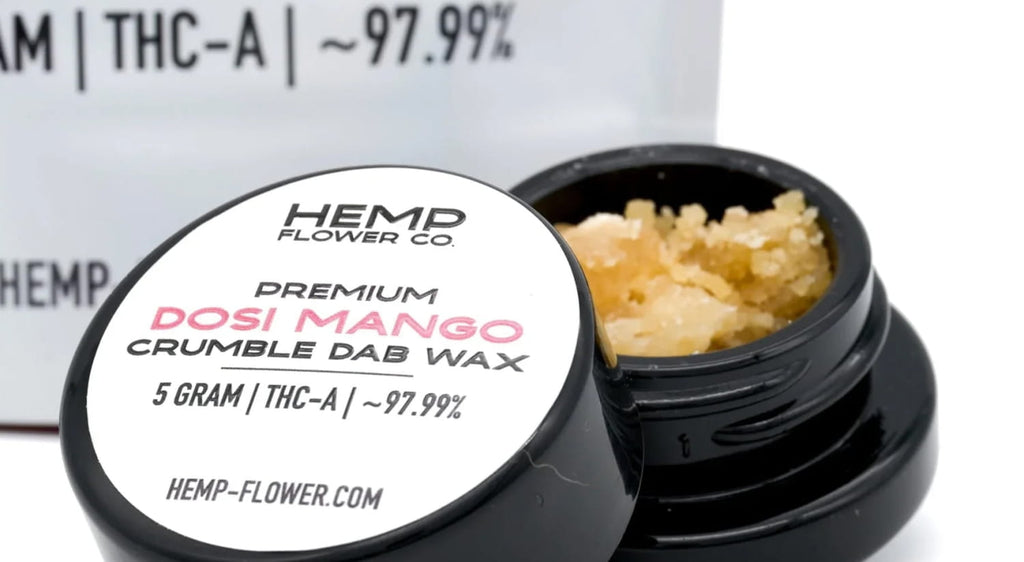
The THCA purity percentage achieved by diamonds — routinely 95-99% — comes down to two compounding factors: the selectivity of crystallization itself, and the repeated purification steps layered on top of it.
As explained above, the crystal lattice naturally excludes molecules that don't share THCA's geometry. But crystallization alone doesn't get you to 99% — there's always some residual mother liquor (leftover solution) clinging to the crystal surface after initial formation, carrying trace terpenes, waxes, or minor cannabinoids along with it.
This is where repeated washing matters. Each wash cycle uses fresh, clean solvent to rinse the crystal surface, dissolving and removing that residual film without disturbing the underlying lattice (since THCA itself has very low solubility in the wash solvent at the temperatures used). Multiple wash-and-purge cycles progressively strip away these surface contaminants, pushing purity higher with each pass.
Solvent purging under vacuum plays an equally important role — not for purity in the cannabinoid sense, but for safety and compliance. Any hydrocarbon or ethanol used during extraction and crystallization must be reduced to trace, regulation-compliant levels (typically parts-per-million) before the product can be sold. Vacuum ovens accelerate solvent evaporation at temperatures low enough to avoid degrading the THCA molecule itself, which begins converting to THC at higher heat exposure.
The end result of this multi-stage refinement — winterization, filtration, selective crystallization, repeated washing, and vacuum purging — is a product where essentially every measurable component other than THCA has been engineered out. It's less like "extracting the good stuff" and more like a process of sequential subtraction, removing everything that isn't THCA until only the cannabinoid crystal lattice remains.
How Diamonds Are Tested: Reading the COA
No purity claim means anything without third-party lab verification, and reputable producers post a Certificate of Analysis (COA) for every batch. Here's what to look for.
Cannabinoid Potency Panel: This is the headline number — the percentage breakdown of THCA, THC, CBD, CBDA, and minor cannabinoids by weight. For diamonds, look for THCA in the 90%+ range, with total THC (calculated using the standard decarboxylation formula) staying compliant relative to whatever regulatory framework applies to the finished product.
Residual Solvent Screening: Since diamonds are produced using hydrocarbon or ethanol solvents, this panel confirms that butane, propane, ethanol, or other processing agents have been purged down to parts-per-million levels well below action limits. This is arguably the most important safety panel on the entire COA, since it directly reflects whether the purging step was done properly.
Pesticide and Heavy Metal Screening: Confirms the starting biomass was clean and that no contaminants concentrated during the extraction process (a real risk, since concentration processes can inadvertently concentrate trace contaminants along with cannabinoids).
Microbial Testing: Less critical for a fully solvent-processed, purged concentrate, but still commonly included as a baseline safety check.
When comparing products, a COA showing high THCA percentage alongside a clean residual solvent panel is the real indicator of quality — a high potency number paired with a vague or missing solvent screen should be a red flag. Reputable THCA diamond mining operations — the industry's informal term for the labor-intensive extraction and crystallization process — will always make full-panel COAs available per batch, not just a generic potency claim.
Diamonds vs. Sauce: Why Pure Crystals Need Terpene Reintroduction
If you've bought a "diamonds and sauce" product, you've already seen this distinction play out in the jar. The crystals sit separately from a viscous, amber liquid — and that separation isn't cosmetic, it's the direct physical result of the crystallization chemistry described above.
Because the crystal lattice selectively excludes terpenes during formation, isolated diamonds are, by nature, nearly flavorless and aroma-neutral. This is actually the entire point from a purity standpoint — but it creates a practical problem for the finished consumer product, since terpenes are what give cannabis concentrates their characteristic flavor and contribute to the "entourage effect" many consumers seek.
Producers solve this in one of two ways:
- Diamonds and Sauce: The terpene-rich liquid separated during crystallization is recombined with the crystals rather than discarded, creating a product that combines the extreme potency of pure pure THCA crystals with the full terpene profile of the original strain.
- Terpene Reintroduction: Some producers isolate diamonds fully, then reintroduce terpenes — either the strain's own terpenes recovered during earlier extraction steps, or botanically-derived terpene blends — to recreate flavor and aroma in an otherwise neutral product.
Pure, unadorned diamonds without any terpene addition do exist and are popular specifically among consumers prioritizing potency and dab clarity over flavor complexity — they tend to vaporize cleanly with minimal residue, since there's nothing in the crystal structure besides THCA to combust or degrade. But for most retail consumers, the diamonds-and-sauce format offers the more complete, enjoyable experience.
THCA Diamonds and the 2026 Total THC Legal Framework
Because THCA diamonds can test at 95%+ THCA by weight, they sit squarely at the center of the federal hemp redefinition taking effect under Section 781 in November 2026. Under the shift to a total THC calculation standard — which accounts for THCA's conversion into active THC upon decarboxylation — a product's compliance is no longer based on measuring delta-9 THC alone. Instead, total THC (calculated using the standard formula that converts THCA weight into its equivalent THC value) must stay within the applicable per-container or per-package limits set by the new framework, including the 0.4mg per-container cap that applies to certain product categories.
This has real implications for a product category defined almost entirely by its THCA content. Producers of diamonds and other high-THCA concentrates need to structure product sizing, packaging, and labeling around total THC math, not just raw cannabinoid percentage — a single gram of 95% THCA diamond, once you run the conversion math, contains far more calculated total THC than a gram of flower testing at a much lower percentage. This is pushing much of the concentrate market toward smaller unit sizes, updated labeling practices, and closer attention to how "total THC" gets calculated and disclosed on the COA itself.
Consumers and retailers browsing THCA concentrates should expect continued evolution in packaging formats and labeling language as the industry adjusts to full implementation of the new standard. This isn't a reason to avoid the category — it's simply the compliance context that now surrounds it.
Frequently Asked Questions
What are THCA diamonds made from?
THCA diamonds are made from cannabis or hemp biomass that's been extracted into crude oil, purified through winterization and filtration, then crystallized through controlled cooling and pressure adjustment. The final crystal structure is composed almost entirely of isolated THCA molecules.
Are THCA diamonds the same as THCA isolate?
They're closely related. THCA isolate typically refers to a fully powdered or crystalline THCA product with no terpenes reintroduced, while diamonds can refer either to the raw crystal structure itself or to a diamonds-and-sauce product where terpenes have been recombined. Both start from the same crystallization chemistry.
How is THCA diamond purity measured?
Purity is measured through third-party lab testing, specifically a cannabinoid potency panel that reports THCA percentage by weight, alongside residual solvent screening, pesticide testing, and heavy metal screening — all documented on the product's COA.
Why don't THCA diamonds have much smell or flavor?
Because the crystal lattice structure selectively excludes terpenes during formation, isolated diamonds are naturally near-flavorless. Flavor and aroma come from terpenes, which are structurally too different from THCA to join the crystal lattice, so they separate into the surrounding liquid rather than the crystal itself.
Is THCA diamond mining dangerous or difficult to do at home?
The extraction and crystallization process involves flammable solvents, pressurized equipment, and precise temperature control, which is why it's performed in licensed, ventilated industrial facilities rather than at home. Attempting it without proper equipment poses serious fire and health risks.
Will THCA diamonds still be legal under the 2026 hemp rules?
THCA diamonds remain part of the legal hemp market, but products must comply with the new total THC calculation standard taking effect under Section 781, which accounts for THCA's conversion potential rather than measuring delta-9 THC alone.


