


Is a THCa Blunt Legal? 2026 Federal & State Laws Explained
Let's start with the basics, because understanding the law requires understanding the product.
A what is THCa blunt comes down to one key ingredient: high-THCa hemp flower. THCa (tetrahydrocannabinolic acid) is the raw, acidic precursor to Delta-9 THC that forms naturally in the cannabis plant during growth. In its unheated, unactivated state, THCa is non-intoxicating. It binds poorly to the CB1 receptors in your endocannabinoid system that produce psychoactive effects, which is why raw cannabis flower doesn't get you high.
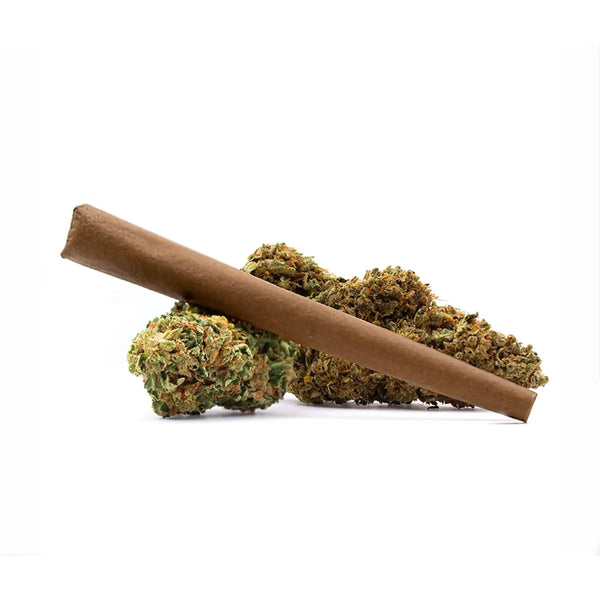
A THCa hemp blunt is a pre-rolled cigar-style smoke — usually wrapped in a natural tobacco leaf, hemp wrap, or reconstituted leaf — filled entirely with hemp flower that has been cultivated to carry high concentrations of THCa while remaining under 0.3% Delta-9 THC on a dry-weight basis. That dual profile is exactly what makes it both legally interesting and commercially popular.
Unlike traditional CBD hemp flower, THCa flower is specifically bred and selected for cannabinoid potency similar to dispensary-grade cannabis. Strains commonly used in THCa blunts carry 18–28% THCa, giving them a cannabinoid density comparable to marijuana — with the critical legal distinction being that the active Delta-9 THC remains under the federal threshold in raw, unheated form.
The wrap matters too. Authentic THCa blunts use natural hemp wraps or tobacco leaf, which slow the burn, deliver a fuller smoke, and are associated with the classic blunt experience. Some products use hemp paper or palm leaf, which are tobacco-free alternatives increasingly popular with wellness-conscious consumers.
Does a THCa Blunt Get You High?
This is one of the most-searched questions in the hemp space right now, and it deserves a direct, honest answer. Does THCa blunt get you high? Yes — and here's the science behind why.
THCa Decarboxylation Explained
THCa decarboxylation explained simply: when you apply heat to THCa, a chemical reaction occurs. The acidic carboxyl group (COOH) is removed from the molecule, converting THCa into Delta-9 THC. This process — decarboxylation — happens rapidly when you light a blunt.
The conversion isn't 100% efficient. Roughly 12% of THCa mass is lost as CO2 during the process, which is why the federal total-THC formula uses the multiplier 0.877 when calculating converted THCa. But the bottom line is that smoking THCa flower delivers real Delta-9 THC to your lungs, your bloodstream, and your brain.
This is not a technicality or a loophole manufacturers exploit. It's straightforward plant chemistry that has been understood for decades. The regulatory gap existed because the 2018 Farm Bill measured hemp compliance on Delta-9 content in raw, untested flower — not on what that flower becomes when combusted.
THCa Blunt Effects
THCa blunt effects are functionally similar to smoking high-quality cannabis flower. Users commonly report:
Euphoria and mood elevation — The Delta-9 THC produced through decarboxylation activates CB1 receptors, triggering the same euphoric cascade associated with traditional cannabis use.
Deep physical relaxation — Many users report significant body relaxation, muscle tension release, and a heavy, calming sensation that distinguishes high-potency flower from lower-THC hemp products.
Enhanced sensory perception — Colors, sounds, tastes, and textures may feel heightened or more vivid, a classic THC effect.
Appetite stimulation — The well-documented "munchies" effect associated with Delta-9 THC applies equally to THCa blunts after combustion.
Possible mild sedation — Depending on the terpene profile of the specific strain, effects can lean energizing (sativa-dominant strains) or sedating (indica-dominant strains).
Intensity varies significantly based on THCa blunt potency, individual tolerance, and consumption method. A first-time or low-tolerance user smoking a high-potency blunt should approach it the same way they would approach any high-THC cannabis product — cautiously, in a safe environment, with time to gauge their response.
THCa vs THC: Understanding the Legal Distinction
The entire legal framework around THCa blunts hinges on understanding THCa vs THC at the molecular and regulatory level.
Chemically, THCa and Delta-9 THC are nearly identical molecules. The only difference is a carboxyl group attached to the THCa molecule that makes it larger and changes how it interacts with receptors. This small structural difference has massive implications: THCa doesn't produce intoxication in its raw form, while Delta-9 THC is the primary psychoactive compound in cannabis.
Legally, the distinction was the foundation of the entire hemp-derived THCa industry. The 2018 Farm Bill defined legal hemp as cannabis containing no more than 0.3% Delta-9 THC on a dry-weight basis. The law did not include THCa in that threshold calculation. It did not account for what the plant would become after combustion. This gap allowed cultivators to legally grow cannabis with 25% THCa as long as active Delta-9 remained under 0.3%.
From a consumer perspective: the experience of smoking THCa flower in a blunt format is functionally indistinguishable from smoking comparable marijuana flower once the THCa has been converted through combustion. The legal distinction exists in the raw plant's chemical profile, not in the smoked experience.
The 2018 Farm Bill Foundation: How THCa Blunts Became Legal
The modern THCa market was built on the 2018 Farm Bill. Prior to that legislation, all cannabis was classified as a Schedule I controlled substance regardless of cannabinoid profile. The Farm Bill changed that by creating a legal category — hemp — defined specifically by Delta-9 THC content at or below 0.3% dry weight.
Farmers, chemists, and entrepreneurs quickly identified that this definition, focused solely on active Delta-9 THC, left room for high-THCa hemp cultivation. As long as the plant's Delta-9 remained compliant, THCa content was irrelevant to federal legal status. That created a massive market opportunity.
By 2022 and 2023, THCa flower had exploded into a multi-million dollar industry segment. Dispensary-comparable strains became available online, shipped directly to consumers in most states. THCa pre-rolls, including blunts, became some of the best-selling products in the hemp space — offering an experience equivalent to dispensary flower at online hemp prices, with nationwide shipping.
For several years, the DEA and USDA enforcement remained largely passive on THCa flower compliance. Court challenges, regulatory guidance letters, and enforcement actions were inconsistent. The industry operated in a state of productive legal ambiguity — beneficial to businesses, confusing for consumers, and clearly unsustainable.
What Changed: The 2026 Total-THC Rule
The 2026 Agricultural Appropriations Bill introduced the most significant shift in hemp regulation since the 2018 Farm Bill itself. The legislation adopted a total-THC testing standard that fundamentally alters how hemp compliance is calculated.
The formula is straightforward:
Total THC = (THCa × 0.877) + Delta-9 THC
Under this calculation, a flower that carries 25% THCa and 0.2% Delta-9 THC produces a total-THC value of approximately 22.1% — nearly 74 times over the 0.3% legal ceiling. Virtually every high-potency THCa strain on the market today would fail this test.
This isn't a regulatory tweak. It's a fundamental redefinition of what qualifies as legal hemp. The total-THC standard has been used in pre-harvest testing by some states for years, and its adoption at the federal level was anticipated by many industry observers — but its impact on the consumer market is profound.
The practical effect: once the total-THC rule fully takes effect, cultivators will need to develop genuinely low-cannabinoid hemp strains to comply — plants with perhaps 1–3% total THCa — or shift their THCa flower operations to licensed cannabis markets in adult-use states. The current model of growing high-potency flower and selling it federally as hemp will not survive the new standard.
The 365-Day Grace Period: What It Means for You
Recognizing the disruption the new total-THC standard would create for an established industry, Congress built in a 365-day grace period from the date of enactment. During this window, hemp products that were compliant under the original 2018 Farm Bill Delta-9 threshold can still be legally sold, purchased, and shipped interstate.
This means that right now, a THCa hemp blunt sold by a compliant retailer — one whose products carry third-party lab results showing Delta-9 THC under 0.3% dry weight — is federally legal to purchase and receive by mail.
But the grace period has a hard expiration. Once the 365 days conclude, products that don't comply with total-THC limits will lose their federal hemp protections. Interstate shipping of high-THCa products will become federally prohibited. The enforcement landscape will sharpen as USDA and DEA guidance catches up to the new statutory standard.
Key consumer takeaway: Act on good information, not urgency. You don't need to panic-buy, but you do need to understand the timeline and purchase from retailers who are transparent about compliance.
THCa Blunt Potency: What to Expect from a 1-Gram Blunt
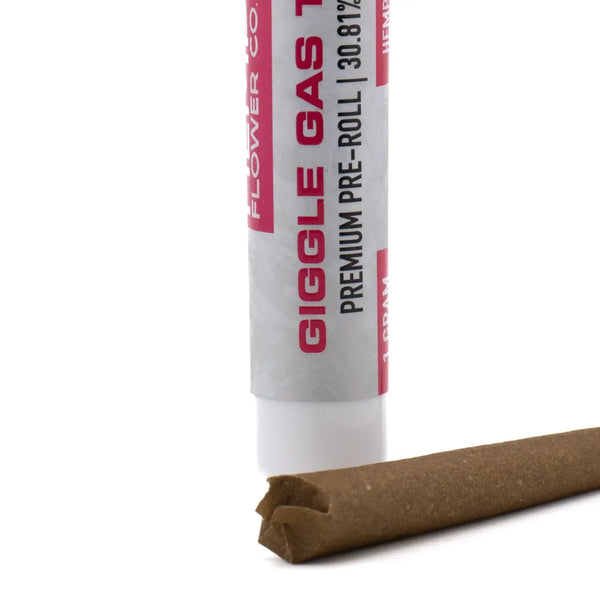
When shopping for a THCa 1 gram blunt, potency is one of the most important factors to evaluate — both for experience and for compliance purposes.
A standard 1-gram THCa blunt from a reputable retailer typically contains flower with 18–28% THCa. After decarboxylation during combustion, this converts to a significant Delta-9 THC equivalent — making these products among the most potent hemp-derived options available.
Here's what a potency label might tell you:
20% THCa in a 1-gram blunt means roughly 175mg of THCa by weight. After combustion conversion (approximately 87.7% efficiency), that delivers an estimated 150mg+ of active Delta-9 THC over the course of smoking — far more than most consumers need in a single session.
Terpene profile is equally important to overall experience. A blunt with 22% THCa and a rich myrcene-heavy terpene profile will feel very different from one with the same THCa content but a limonene-dominant profile. Always review strain information when available.
Consumption guidance: Start with a few puffs and wait. THCa blunts are not beginner products at standard potency levels. Experienced cannabis consumers will find them comparable to dispensary-grade flower. Beginners or low-tolerance users should approach them with significant caution, preferably in a safe, comfortable environment with no obligations requiring clear-headedness.
Can You Buy a THCa Blunt Online Right Now?
During the active grace period, yes — purchasing a THCa blunt online from a compliant retailer is federally legal. But "legal" doesn't mean "risk-free everywhere," and it doesn't mean "legal with any retailer." Here's what to verify before placing an order:
Third-party lab results are non-negotiable. Every reputable THCa blunt retailer publishes Certificates of Analysis (COAs) from independent labs. These documents should clearly show Delta-9 THC content at or below 0.3% dry weight. If you can't find a COA for a specific product, don't buy it. Period.
Verify hemp-derived sourcing. THCa flower must originate from hemp — cannabis cultivated under a licensed hemp program — to qualify for federal protections. Flower from unlicensed cannabis operations doesn't carry legal protections regardless of its cannabinoid profile.
Transparent shipping and compliance policies matter. Companies that publish clear state shipping restrictions, maintain updated compliance documentation, and don't ship universally to all 50 states without any caveats are demonstrating that they take regulatory compliance seriously. A retailer that ships to Idaho, Kansas, and Arkansas without any restrictions is almost certainly cutting corners somewhere.
Batch-specific COAs are best. Some retailers publish a single generic COA for a product type. Reputable operations provide batch-specific testing tied to specific product lots, ensuring what you're buying matches what was tested.
THCa Blunt Shipping: State-by-State Legal Overview
Federal law permits interstate hemp shipping during the grace period, but states retain broad authority to regulate or ban hemp products within their borders. Here's where the landscape stands:
Generally Shippable States
Consumers in these states can typically purchase THCa blunts online without significant state-level conflict (though you should always verify current local law, as this landscape changes):
Florida, Texas, Ohio, Pennsylvania, Georgia, Colorado, Nevada, Tennessee, Michigan, Missouri, Arizona, New Mexico, Illinois (for adults), Maryland, New York (with some nuances), Washington, Oregon, California, Wyoming, Montana, South Dakota, North Dakota, Nebraska, Oklahoma, Alabama, Mississippi, South Carolina, Wisconsin, Kentucky, West Virginia, Delaware, New Jersey, and Connecticut generally permit hemp-derived products under the federal definition.
High-Restriction or Near-Ban States
Idaho maintains a near-zero tolerance for any detectable THC, including THCa. Shipping THCa products here carries significant legal risk and is not recommended.
Kansas prohibits hemp products containing any THC concentration. High-THCa flower falls outside what the state considers compliant hemp.
Arkansas passed specific legislation targeting high-potency hemp products including THCa flower, establishing state-level restrictions that go beyond federal law.
Iowa restricts smokable hemp and has taken an aggressive stance on high-THCa products specifically.
Indiana has seen active regulatory crackdowns on hemp-derived cannabinoids, making THCa blunt shipping legally unstable.
States in Active Legislative Flux
Virginia, North Carolina, Louisiana, and Minnesota have all seen recent or ongoing legislative activity around hemp-derived cannabinoids. Shipping isn't necessarily prohibited in all of these states, but the regulatory ground is shifting. Verify current law before purchasing.
The golden rule: your state's law governs what you can legally receive, regardless of whether the retailer is federally compliant. A retailer shipping you a compliant product doesn't protect you from state-level enforcement.
What Happens After the Grace Period Expires?
Once the 365-day grace period ends, the hemp market will look fundamentally different at the federal level:
High-potency THCa strains will no longer qualify as legal hemp under federal law. Interstate shipping of products that don't meet the total-THC standard will become federally prohibited, not just restricted by individual states.
The online direct-to-consumer THCa market will contract dramatically. Retailers who built businesses around shipping high-THCa flower and pre-rolls nationwide will need to pivot to states with adult-use cannabis licensing or transition to genuinely low-cannabinoid hemp products.
Adult-use cannabis states will absorb some of this demand. Consumers in states like Colorado, California, Nevada, Michigan, Illinois, Oregon, Washington, and others will still access high-potency products through licensed dispensaries. The THCa flower experience won't disappear — it will shift channels.
Breeders may develop compliant cultivars. Some industry players are already investing in low-total-THC hemp genetics that could theoretically comply with the new standard while offering some cannabinoid activity. Whether these cultivars can deliver consumer-meaningful effects remains an open question.
Enforcement will sharpen. The USDA and DEA will have clearer statutory authority to pursue non-compliant hemp products once the new standard is fully in effect. Businesses that continue operating without compliance will face real legal exposure.
THCa Blunt vs. Traditional Cannabis Blunt: Key Differences
For consumers comparing options, here's how a THCa blunt compares to what you'd find at a dispensary:
Experience: Near-identical once smoked, assuming comparable THCa/THC percentages and similar terpene profiles. The combustion process converts THCa to Delta-9 THC regardless of origin.
Legal status: Currently different. THCa blunts from compliant hemp retailers can be purchased online and shipped interstate. Dispensary cannabis blunts require in-person purchase at a licensed retailer in a state with adult-use or medical cannabis programs.
Price: THCa blunts from hemp retailers have historically been priced competitively, often below dispensary prices, because hemp businesses have lower regulatory overhead than licensed cannabis operations.
Lab transparency: Reputable hemp retailers and dispensaries both provide COAs. Hemp COAs focus on Delta-9 THC compliance; dispensary lab results often include broader panels covering pesticides, heavy metals, mycotoxins, and residual solvents at higher testing frequency.
Product variety: Both channels offer considerable strain variety. Hemp retailers have particularly broad online catalogs because they can ship nationwide.
Frequently Asked Questions
Is a THCa blunt legal in 2026? During the active federal grace period, yes — federally. A THCa blunt sold by a compliant hemp retailer with Delta-9 THC under 0.3% dry weight by third-party testing is legal to purchase and ship interstate. However, state laws vary significantly. Several states, including Idaho, Kansas, and Arkansas, maintain bans that override federal hemp protections. Always verify your state's current law.
Does a THCa blunt get you high? Yes. When you light a THCa blunt, heat converts the raw THCa into active Delta-9 THC through decarboxylation. The resulting experience is functionally comparable to smoking traditional cannabis flower of similar potency. The "non-psychoactive" designation for THCa applies only to the unheated, raw compound — not to smoked or vaped THCa products.
What is the total-THC rule and why does it matter? The total-THC rule, introduced in the 2026 Agricultural Appropriations Bill, calculates hemp compliance using the formula: (THCa × 0.877) + Delta-9 THC. Under this standard, most high-potency THCa flower fails to qualify as legal hemp — including products with 20–28% THCa that are currently sold legally under the original Farm Bill's Delta-9-only threshold. The rule takes full effect after a 365-day grace period.
Can I have THCa blunts shipped to my state? It depends on where you live. During the federal grace period, interstate hemp shipping is generally permitted. But individual states can — and do — restrict or ban hemp-derived THCa products. States like Idaho, Kansas, Arkansas, and Iowa have restrictions that make shipping legally risky. States like Florida, Texas, Colorado, Tennessee, and Michigan are generally more permissible. Check your state's specific hemp laws before ordering.
How potent is a THCa 1-gram blunt? A standard 1-gram THCa blunt with 20–25% THCa is a high-potency product. After combustion converts THCa to Delta-9 THC, the experience is comparable to dispensary-grade cannabis. These are not low-dose products. New or low-tolerance consumers should approach them with the same caution they'd apply to any high-THC cannabis product.
What should I look for when buying a THCa blunt online? Look for third-party Certificates of Analysis (COAs) specific to the product batch, confirming Delta-9 THC under 0.3% dry weight. Verify that the retailer publishes clear state shipping policies and doesn't ship universally to all states without restrictions. Check that the THCa flower is sourced from licensed hemp farms. And confirm the retailer has a clear return or customer support policy.
Will THCa blunts still be available after the grace period ends? Not in their current online direct-to-consumer form at the federal level. Once the total-THC standard fully takes effect, high-potency THCa products that don't comply with the new formula will lose federal hemp protections. Consumers in adult-use cannabis states will continue to access similar products through licensed dispensaries. The online hemp channel will shift toward products that meet total-THC compliance — which will likely mean lower-potency options.
Are THCa blunts the same as marijuana blunts? In terms of smoked experience, high-potency THCa blunts are comparable to marijuana blunts of similar cannabinoid concentration. The legal distinction lies in the raw plant's Delta-9 THC content: THCa flower is grown under hemp regulations with Delta-9 under 0.3%, while marijuana is cannabis regulated under state cannabis licensing with Delta-9 above that threshold. After combustion, both deliver Delta-9 THC.
The Bottom Line: Buy Smart While the Window Is Open
The THCa blunt market is operating in one of the most clearly defined — and clearly finite — legal windows in hemp industry history. The 2018 Farm Bill created the framework. The 2026 Agricultural Appropriations Bill is winding it down. The grace period gives consumers and businesses a real runway, but it has a hard end date.
Here's what smart purchasing looks like right now:
Verify lab results before every purchase. Third-party COAs showing Delta-9 THC under 0.3% dry weight are your baseline. Don't accept anything less.
Know your state's laws. Federal compliance doesn't protect you from state-level enforcement. If you're in Idaho, Kansas, Arkansas, Iowa, or Indiana, the federal grace period doesn't insulate you from state restrictions.
Buy from retailers who take compliance seriously. Transparent COA practices, honest state shipping restrictions, and clear product sourcing information are markers of a retailer you can trust. Corners cut on compliance today become your legal problem tomorrow.
Don't wait for panic-buying pressure. The grace period is a runway, not a sprint. Use it to find a reputable supplier, verify their compliance documentation, and make an informed purchase decision — not a rushed one based on artificial urgency.
Oregon Hemp Flower's THCa pre-rolls and blunts are fully lab-tested, hemp-derived, and compliant with current federal law. Our COAs are published and batch-specific. Our state shipping policies are transparent. While the federal grace period remains active, you can shop with confidence knowing you're purchasing from a retailer that takes compliance as seriously as you take your experience.


