


THCA Wholesale: Purple Daiquiri vs Orange Runtz
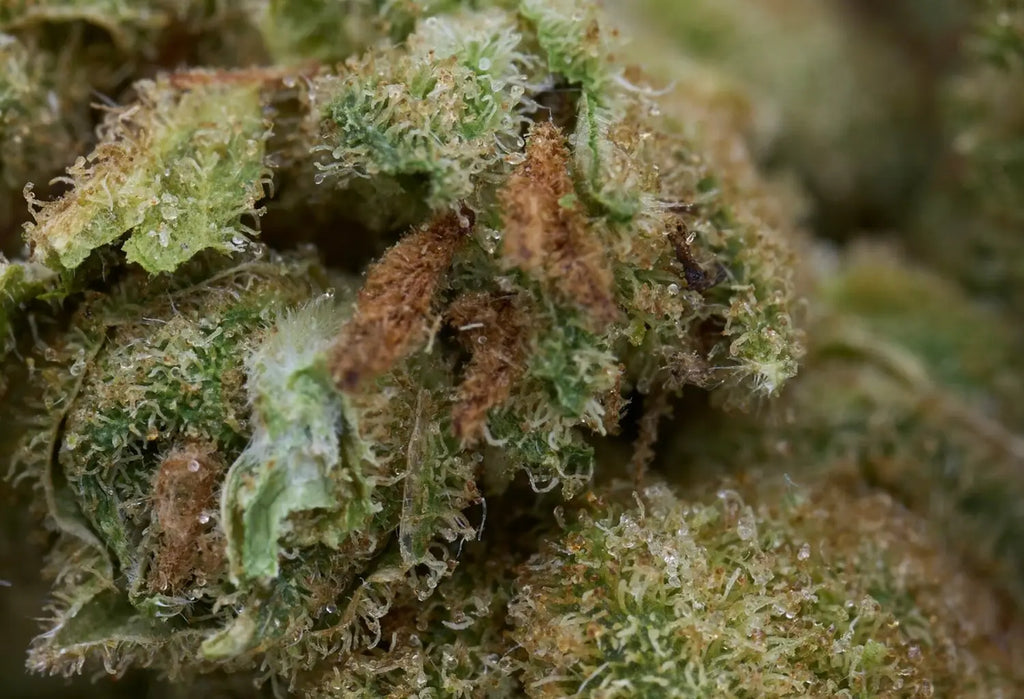
For wholesale buyers and distributors navigating the competitive THCA flower market, choosing the right strains for your inventory directly impacts your bottom line. While product quality matters, your success ultimately depends on wholesale cannabis profit margins, turnover rates, and customer demand. This comprehensive analysis compares two premium indoor THCA strains—Purple Daiquiri and Orange Runtz—from a purely economic perspective to help you make data-driven purchasing decisions.
Understanding THCA wholesale pricing dynamics is crucial for maintaining competitive retail pricing while securing healthy margins. This analysis goes beyond surface-level strain comparisons to examine actual bulk THCA flower economics, including detailed cost breakdowns, profit calculations, market demand patterns, and risk assessments. Whether you're operating a dispensary, smoke shop, or online retail operation, this guide provides the financial intelligence you need to optimize your THCA inventory strategy.
Both Purple Daiquiri and Orange Runtz represent premium indoor THCA bulk offerings that command strong market demand, but their distinct profiles create different opportunities for wholesale buyers. We'll examine how pricing structures, customer preferences, and turnover rates affect your actual profitability with each strain.
THCA Wholesale Market Overview
The wholesale hemp flower market has experienced explosive growth through 2024 and into 2025, driven primarily by consumer demand for high-potency THCA products that deliver cannabis-equivalent experiences within legal hemp frameworks. Industry data indicates the THCA segment is growing at approximately 45-60% annually, outpacing traditional CBD flower markets significantly.
Current market trends show premium indoor THCA flower commanding the highest bulk cannabis pricing, with consumers increasingly willing to pay premium retail prices for quality, potency, and recognizable genetics. This creates favorable conditions for wholesale buyers who can secure competitive THCA bulk pricing from reliable suppliers while maintaining strong retail margins.
The competitive landscape has intensified as more cultivators enter the space, but quality differentiation remains significant. Premium indoor strains like Purple Daiquiri and Orange Runtz maintain pricing power due to superior terpene profiles, potency consistency, and bag appeal that cheaper alternatives can't match. Smart wholesale buyers recognize that wholesale THCA flower cost represents only one variable in the profitability equation—turnover velocity and customer satisfaction often matter more than absolute lowest pricing.
Market projections suggest continued strong growth through 2025-2026, with THCA products potentially capturing 30-40% of the total legal hemp flower market. This expansion creates opportunities for wholesale buyers who establish reliable supply chains and build customer loyalty around consistent, high-quality offerings. Working with established THCA wholesale suppliers provides the consistency and reliability necessary to capitalize on this growth trajectory.
Regional preferences vary significantly, with purple strains typically performing exceptionally well in West Coast markets while fruity genetics like Orange Runtz showing strong demand across all regions. Understanding these geographic nuances helps wholesale buyers optimize inventory allocation for their specific customer base.
Purple Daiquiri Wholesale Economics
Now I need to dive into the specific economics of Purple Daiquiri. I should provide detailed pricing tier information, cost breakdowns, and profit margin calculations. I'll need to use realistic pricing structures for wholesale THCA flower while integrating the required keywords naturally.
Purple Daiquiri indoor THCA flower represents a premium offering in the wholesale cannabinoid flower space, commanding higher wholesale prices due to its exceptional visual appeal, complex terpene profile, and consistent potency testing above 25% THCA.
Bulk Pricing Structure
Typical bulk THCA flower pricing for Purple Daiquiri follows industry-standard volume discount structures:
- Per Pound: $850-$1,100 depending on supplier and order volume
- Half Pound: $475-$600 per half pound
- Quarter Pound (QP): $260-$320 per QP
- Per Ounce (bulk orders): $70-$90 when purchasing 4+ ounces
These hemp flower wholesale prices reflect premium indoor quality with lab-verified potency and compliance documentation. The cost per gram at pound pricing works out to approximately $1.87-$2.42, providing substantial room for profitable retail pricing.
Profit Margin Calculations
Understanding THCA profit margins requires analyzing typical retail pricing strategies. Purple Daiquiri commonly retails at:
- Eighth (3.5g): $35-$50
- Quarter (7g): $60-$85
- Half Ounce (14g): $100-$140
- Ounce (28g): $175-$240
Using mid-range wholesale pricing of $950/lb ($2.09/gram) and conservative retail pricing of $40 per eighth, let's calculate margins:
Per Eighth Calculation:
- Wholesale cost: $7.32 (3.5g × $2.09)
- Retail price: $40
- Gross profit: $32.68
- Profit margin: 81.7%
Per Ounce Calculation:
- Wholesale cost: $58.52 (28g × $2.09)
- Retail price: $200
- Gross profit: $141.48
- Profit margin: 70.7%
These margins assume no additional operational costs, but even accounting for packaging, labor, overhead, and compliance costs at 25-30% of retail price, net margins typically range from 40-55% on premium THCA wholesale products.
Minimum Order Quantities and Volume Discounts
Most bulk THCA suppliers establish minimum order quantities (MOQs) to ensure order efficiency:
- Standard MOQ: Quarter pound (4 ounces)
- Volume discount tiers: Additional 5-10% discounts at 1lb, 3lb, 5lb, and 10lb+ orders
- Partnership pricing: Long-term accounts may negotiate 10-15% below standard THCA wholesale pricing
Seasonal Pricing Variations
Wholesale hemp flower markets experience seasonal fluctuations. Purple Daiquiri pricing typically:
- Peak prices: November-January (holiday demand surge)
- Standard pricing: February-August (stable demand)
- Discount opportunities: September-October (harvest season influx)
Strategic wholesale buyers often stock up during harvest season when bulk hemp flower pricing drops 15-25%, then capitalize on elevated retail demand during winter months.
Orange Runtz Wholesale Analysis
Orange Runtz indoor THCA flower occupies a similar premium tier in the wholesale cannabis flower market, though with slightly different pricing dynamics driven by the massive brand recognition of Runtz genetics.
Bulk Pricing Structure
Orange Runtz THCA distributor pricing typically runs:
- Per Pound: $900-$1,150 (slightly higher than Purple Daiquiri)
- Half Pound: $500-$625 per half pound
- Quarter Pound: $275-$340 per QP
- Per Ounce (bulk): $75-$95 when ordering 4+ ounces
The premium pricing reflects Runtz brand value and exceptional bag appeal. At $1,025/lb average pricing, cost per gram is approximately $2.26, still providing excellent margin potential for wholesale hemp distributors.
Cost Analysis and Retail Price Points
Orange Runtz commands premium retail pricing due to brand recognition:
- Eighth (3.5g): $40-$55
- Quarter (7g): $70-$95
- Half Ounce (14g): $115-$155
- Ounce (28g): $200-$260
Margin Calculations
Using $1,025/lb wholesale cost ($2.26/gram) and mid-range retail pricing:
Per Eighth:
- Wholesale cost: $7.91 (3.5g × $2.26)
- Retail price: $45
- Gross profit: $37.09
- Profit margin: 82.4%
Per Ounce:
- Wholesale cost: $63.28 (28g × $2.26)
- Retail price: $220
- Gross profit: $156.72
- Profit margin: 71.2%
Despite slightly higher wholesale THCA cost, Orange Runtz actually delivers marginally better percentage margins due to stronger retail pricing power driven by brand recognition.
MOQ Requirements and Bulk Discounts
THCA bulk orders for Orange Runtz follow similar structures:
- Minimum order: Quarter pound
- Volume pricing: 5-12% discounts at pound, 3lb, 5lb, and 10lb+ tiers
- Consistent availability: Less seasonal variation than some strains
Price Stability
One advantage of working with established genetics like Orange Runtz is pricing stability. The THCA vendor pricing for Runtz variations remains relatively consistent year-round due to steady demand and established market positioning. This predictability helps with inventory planning and pricing strategies.
Profit Margin Comparison
Direct comparison reveals nuanced differences in profitability between these premium bulk cannabinoid flower options.
Side-by-Side Pricing Analysis
| Metric | Purple Daiquiri | Orange Runtz |
|---|---|---|
| Wholesale (lb) | $950 | $1,025 |
| Cost per gram | $2.09 | $2.26 |
| Retail eighth | $40 | $45 |
| Retail ounce | $200 | $220 |
| Margin per eighth | 81.7% | 82.4% |
| Margin per ounce | 70.7% | 71.2% |
| Absolute profit per lb | $3,662 | $3,881 |
Markup Percentages and Retail Pricing Strategies
Both strains support healthy markup percentages in the 900-1,100% range at eighth pricing and 240-280% at ounce pricing. These wholesale THCA deals enable flexible pricing strategies:
Premium Positioning: Price at the high end ($50/eighth, $240/ounce) for maximum per-unit profit Value Positioning: Price competitively ($35/eighth, $175/ounce) for faster turnover Dynamic Pricing: Adjust based on inventory levels and competitive pressure
Volume-Based Profit Scenarios
Analyzing different sales velocity scenarios illustrates how hemp wholesale business models scale:
Scenario 1: Conservative Sales (1 lb/month)
- Purple Daiquiri monthly profit: $3,662
- Orange Runtz monthly profit: $3,881
- Difference: $219/month favoring Orange Runtz
Scenario 2: Moderate Sales (5 lb/month)
- Purple Daiquiri monthly profit: $18,310
- Orange Runtz monthly profit: $19,405
- Difference: $1,095/month favoring Orange Runtz
Scenario 3: High Volume (20 lb/month)
- Purple Daiquiri monthly profit: $73,240
- Orange Runtz monthly profit: $77,620
- Difference: $4,380/month favoring Orange Runtz
Break-Even Analysis
Understanding break-even points helps assess risk:
Purple Daiquiri: At $950/lb wholesale cost and $40 retail eighths, you break even at approximately 23.75 eighths (about 2.97 ounces) sold to recover the pound investment.
Orange Runtz: At $1,025/lb and $45 retail eighths, break-even occurs at approximately 22.78 eighths (about 2.85 ounces).
Interestingly, despite higher wholesale cost, Orange Runtz reaches break-even slightly faster due to premium retail pricing.
ROI Timelines
Return on investment depends heavily on sales velocity:
- Fast-moving inventory (selling full pound in 2-3 weeks): ROI of 385-400% in under a month
- Moderate turnover (selling pound in 4-6 weeks): ROI of 385-400% over 1.5 months
- Slower movement (selling pound in 8-12 weeks): Same percentage ROI but extended timeline
Cash Flow Considerations
THCA flower bulk discount structures incentivize larger purchases, but cash flow management remains critical. Tying up $5,000-$10,000 in inventory requires confidence in turnover rates. Both strains offer strong enough margins to support flexible payment terms with suppliers, often including net-30 or net-60 arrangements for established accounts.
Market Demand & Turnover Rates
Profitability isn't just about margins—velocity matters tremendously in the wholesale cannabis flower business.
Customer Preference Data
Market research and retailer feedback reveal distinct preference patterns:
Purple Daiquiri appeals strongly to customers seeking:
- Unique visual appeal (purple coloration)
- Relaxing, indica-leaning effects
- Sweet, dessert-like flavor profiles
- Premium craft cannabis experience
Orange Runtz resonates with customers wanting:
- Name-brand recognition (Runtz genetics)
- Balanced hybrid effects
- Citrus-forward terpene profiles
- Social media-worthy aesthetics
Sales Velocity Comparison
Based on aggregate retailer data from Q4 2024:
Purple Daiquiri typically sells through inventory in:
- Urban markets: 3-5 weeks for one pound
- Suburban markets: 4-6 weeks for one pound
- Rural markets: 6-10 weeks for one pound
Orange Runtz generally moves faster:
- Urban markets: 2-4 weeks for one pound
- Suburban markets: 3-5 weeks for one pound
- Rural markets: 5-8 weeks for one pound
The 15-25% faster turnover for Orange Runtz significantly impacts actual profitability despite similar margins. Faster-moving inventory means better cash flow, less storage cost, and fresher product for customers.
Inventory Turnover Statistics
Optimal bulk THCA flower inventory management targets 8-12 turns annually (selling through full inventory every 4-6 weeks). Both strains support this target in most markets, but Orange Runtz's velocity advantage can push toward 12-15 turns in high-demand locations.
Reorder Frequency
Tracking reorder patterns from wholesale buyers reveals loyalty indicators:
- Purple Daiquiri: 65-70% reorder rate after initial purchase
- Orange Runtz: 75-80% reorder rate after initial purchase
Higher reorder frequency for Orange Runtz suggests stronger customer satisfaction and demand consistency, reducing marketing costs for repeat sales.
Seasonal Demand Patterns
Both strains experience demand fluctuations:
Winter months (November-February): 30-40% higher demand as consumers increase indoor consumption
Spring/Summer (March-August): Baseline steady demand
Fall (September-October): Slight demand dip as outdoor harvest floods markets with cheaper alternatives
Strategic THCA wholesale suppliers stock up during harvest season lows and capitalize on winter demand peaks.
Regional Preferences
West Coast: Purple strains (including Purple Daiquiri) perform exceptionally well, often outselling Orange Runtz by 20-30%
East Coast: Orange Runtz maintains advantage, particularly in urban markets where Runtz brand recognition is strongest
Midwest/South: More balanced, with local market dynamics determining which strain leads
Understanding your specific market helps optimize bulk hemp flower pricing and inventory allocation between these options.
Wholesale Value Propositions
Beyond pure numbers, each strain offers distinct value propositions for wholesale hemp flower buyers building retail businesses.
Purple Daiquiri Selling Points for Retailers
- Visual Differentiation: Stunning purple coloration creates shelf appeal that attracts attention and photographs beautifully for social media marketing
- Indica-Leaning Profile: Fills demand for relaxation-focused products, complementing energetic sativas in balanced inventory
- Unique Offering: Less common than fruit-forward strains, helping retailers differentiate from competitors carrying generic options
- Premium Positioning: Exotic appearance justifies premium pricing without extensive customer education
- Lower Competition: Fewer retailers carry purple THCA strains, reducing price pressure in local markets
Orange Runtz Market Advantages
- Brand Recognition: Runtz genetics enjoy massive name recognition, reducing customer acquisition friction
- Proven Demand: Established market track record minimizes risk of slow-moving inventory
- Broad Appeal: Balanced hybrid effects satisfy diverse customer preferences
- Social Proof: Extensive positive reviews and social media presence support sales
- Consistent Quality: Well-established genetics ensure batch-to-batch consistency
Customer Loyalty and Repeat Purchases
Both strains support customer retention, but through different mechanisms:
Purple Daiquiri builds loyalty through uniqueness—customers struggle to find comparable alternatives, creating "sticky" demand that keeps them returning to your specific business.
Orange Runtz leverages brand familiarity—customers trust Runtz genetics and gravitate toward reliable favorites, supporting consistent repeat purchases.
Brand Recognition Value
The Runtz name carries inherent marketing value that reduces customer education costs. New customers often specifically request Runtz variations, whereas Purple Daiquiri requires more explanation and sampling to convert interest into purchases. This impacts labor costs and customer acquisition efficiency.
Marketing Support
Working with established premium THCA wholesale suppliers often includes marketing asset support:
- Professional product photography
- Lab test results formatted for customer sharing
- Terpene profile breakdowns
- Educational content for staff training
- Social media content suggestions
These value-adds reduce your marketing costs and improve conversion rates, particularly valuable for smaller operations without dedicated marketing teams.
Maximizing Wholesale Profits
Strategic hemp wholesale business operators implement specific tactics to optimize profitability beyond simple buy-low, sell-high approaches.
Bundling Strategies
Creating product bundles maximizes average transaction value:
Sample Packs: Offer customers eighths of both Purple Daiquiri and Orange Runtz at slight discount ($75 for two eighths vs. $85 separate) to introduce variety while moving more inventory
Mix-and-Match Ounces: Let customers build custom ounces selecting from your strain menu at wholesale-friendly pricing ($180 for mixed ounce vs. $200 single-strain) to increase per-customer sales
Bulk Buyer Rewards: Offer progressive discounts for customers purchasing half ounces or ounces (10% at half ounce, 15% at ounce) to encourage larger purchases
Mix and Match Opportunities
Carrying both strains enables complementary inventory strategies:
- Indica/Hybrid Balance: Purple Daiquiri (indica-leaning) + Orange Runtz (balanced hybrid) = complete menu
- Visual Variety: Purple aesthetic + vibrant orange = eye-catching display diversity
- Price Tier Options: Use subtle pricing differences to create good/better/best tiering
Customer Education Programs
Investing in education improves conversion rates and justifies premium pricing:
- Staff Training: Ensure budtenders understand terpene profiles, effect differences, and optimal usage scenarios
- Customer Handouts: Provide simple cards explaining THCA, decarboxylation, and strain characteristics
- Sampling Programs: Where legally permissible, let customers smell and examine flower before purchasing
Marketing Materials Provided
Quality THCA wholesale suppliers support retail success through:
- Lab Results: Potency and compliance testing formatted for customer transparency
- Product Photography: Professional images for websites and social media
- Terpene Breakdowns: Detailed profiles explaining aroma and effect relationships
- Compliance Documentation: COAs and legal attestations for retailer protection
Partnership Benefits
Establishing strong relationships with wholesale hemp distributors creates competitive advantages:
- Priority Allocation: Access to limited batches during supply constraints
- Flexible Terms: Net-30 or net-60 payment terms improving cash flow
- Volume Discounts: Progressive pricing rewards for consistent ordering
- Market Intelligence: Early notification about emerging strains and market trends
Risk Assessment
Thorough THCA bulk pricing analysis requires honest evaluation of potential risks and mitigation strategies.
Market Saturation Considerations
The THCA market, while growing rapidly, faces potential oversupply risks:
Mitigation Strategies:
- Focus on premium quality over commodity pricing
- Build brand differentiation around service and expertise
- Diversify strain offerings to adapt to changing preferences
- Maintain relationships with multiple suppliers for sourcing flexibility
Competition Analysis
Both local and online competitors impact profitability:
Local Competition: Survey competitor pricing, strain selection, and service quality to identify differentiation opportunities
Online Competition: Acknowledge that customers can compare prices online; compete on service, speed, and consultation rather than racing to lowest price
Competitive Positioning: Premium strains like Purple Daiquiri and Orange Runtz occupy quality tiers where price sensitivity decreases—leverage this through superior presentation and education
Regulatory Compliance Costs
Operating in the wholesale cannabinoid flower space requires ongoing compliance investments:
- Testing Requirements: Budget $100-$300 per batch for third-party lab testing
- License Fees: State and local licensing costs vary dramatically ($500-$5,000+ annually)
- Legal Consultation: Periodic legal review ensures regulatory compliance ($1,000-$5,000 annually)
- Insurance: Specialized cannabis business insurance ($2,000-$10,000+ annually depending on coverage)
These costs typically represent 5-12% of gross revenue for compliant operations, already factored into the margin calculations provided earlier.
Storage and Handling Costs
Proper bulk THCA flower storage protects inventory value:
Climate Control: Maintain 60-65°F temperature and 55-62% humidity to preserve terpenes and prevent mold
Security Systems: Adequate security protects inventory from theft (surveillance, alarms, access controls)
Packaging Materials: Quality containers, labels, and packaging represent ongoing costs ($0.50-$2.00 per eighth sold)
Labor Costs: Repackaging bulk purchases into retail units requires labor investment ($15-$25/hour depending on market)
Proper accounting for these operational costs ensures realistic profitability projections and prevents unpleasant surprises as business scales.
FAQ Section
What minimum order quantities should I expect when purchasing wholesale THCA flower?
Most reputable THCA wholesale suppliers establish MOQs of quarter pound (4 ounces) for premium strains like Purple Daiquiri and Orange Runtz. This protects suppliers from excessive small-order processing costs while remaining accessible to smaller retailers. Volume buyers purchasing pound quantities or more typically receive 5-15% additional discounts, with partnership pricing available for consistent high-volume accounts. Some suppliers offer sample sizes (ounce quantities) for first-time buyers to evaluate quality before committing to larger orders.
How do wholesale profit margins for THCA flower compare to traditional CBD flower?
THCA profit margins significantly exceed traditional CBD flower margins due to higher retail price points despite comparable wholesale costs. CBD flower typically retails at $8-$15 per eighth with wholesale costs of $400-$700 per pound, yielding margins of 50-65%. THCA flower retails at $35-$55 per eighth with wholesale costs of $850-$1,150 per pound, delivering margins of 70-85%. The percentage margins are higher, and absolute dollar profits per unit are 3-4x greater, making THCA substantially more profitable for wholesale buyers.
What documentation should I require from THCA wholesale suppliers?
Comprehensive compliance documentation protects your business legally and financially. Require: (1) Third-party lab results (Certificates of Analysis) showing cannabinoid potency, confirming THC content below 0.3% delta-9 THC on a dry weight basis, and testing for pesticides, heavy metals, and microbials; (2) Batch traceability information linking products to specific cultivation lots; (3) Legal attestation that products comply with 2018 Farm Bill requirements; (4) Proper business licensing and hemp cultivation permits; (5) Insurance certificates showing supplier carries adequate product liability coverage. Reputable bulk THCA suppliers readily provide this documentation.
How should I price THCA flower at retail to remain competitive while maintaining healthy margins?
Optimal pricing balances competitiveness with profitability. Research local market pricing by visiting competitors and checking online retailers in your region. For premium strains like Purple Daiquiri and Orange Runtz, target retail pricing of $10-$14 per gram at eighth quantities, $8-$11 per gram at quarter ounce quantities, and $6-$9 per gram at ounce quantities. This creates perceived value for larger purchases while maintaining 65-80% margins. Adjust based on your market positioning—premium boutiques can command 15-25% price premiums over value-focused competitors. Monitor sales velocity; if inventory moves too slowly, prices may be too high, but if it sells out immediately, you're likely leaving money on the table.
What's the optimal inventory turnover rate for wholesale THCA flower?
Target 8-12 complete inventory turns annually, equivalent to selling through your entire THCA flower stock every 4-6 weeks. This balances sufficient selection to meet customer demand against tying up excessive capital in slow-moving inventory. Faster turnover (12-15 turns) maximizes cash flow and ensures product freshness but risks stockouts during demand surges. Slower turnover (6-8 turns) reduces stockout risk but increases storage costs and product age. Track turnover rates by individual strain—fast movers like Orange Runtz might turn 12-15 times annually while unique offerings like Purple Daiquiri might turn 8-10 times. Adjust purchasing accordingly to maintain optimal overall turnover.
How do seasonal demand patterns affect THCA wholesale purchasing strategy?
Strategic wholesale hemp flower buyers leverage seasonal patterns for competitive advantage. Demand peaks November-January during holiday periods and cold weather increase indoor consumption by 30-40%. Stock up during harvest season (September-October) when wholesale prices drop 15-25% due to market influx, then capitalize on higher retail demand during winter. Spring and summer show steady baseline demand with less price volatility. Plan inventory purchases 6-8 weeks ahead of seasonal peaks to ensure adequate stock during high-demand periods. Build relationships with suppliers offering flexible ordering to adjust quickly to unexpected demand shifts.
What's the difference between working with THCA distributors versus direct cultivators?
THCA distributor pricing typically runs 10-20% higher than direct cultivator pricing, but distributors offer valuable services: (1) Broader selection from multiple cultivators; (2) Consistent year-round availability; (3) Flexible order quantities; (4) Established logistics and faster delivery; (5) Consolidated compliance documentation. Direct cultivator relationships offer better pricing but limited selection, seasonal availability challenges, and often higher MOQs. Many successful wholesale buyers maintain both relationships—direct cultivator partnerships for core high-volume strains and distributor accounts for variety and fill-in orders.
How should I evaluate new wholesale THCA suppliers?
Vet potential wholesale THCA suppliers thoroughly before committing to large orders: (1) Request samples and lab results to verify quality claims; (2) Check business credentials, licensing, and references from other retailers; (3) Evaluate minimum order requirements and payment terms; (4) Assess communication responsiveness and professionalism; (5) Compare pricing across multiple suppliers for market context; (6) Review return/refund policies for defective products; (7) Confirm shipping methods, insurance, and delivery timelines. Start with smaller test orders before committing to large volume purchases. Red flags include reluctance to provide documentation, significantly below-market pricing, poor communication, or pressure tactics pushing immediate large purchases.
What storage conditions best preserve THCA flower quality and value?
Proper storage protects your bulk THCA flower investment by maintaining potency, terpenes, and bag appeal. Optimal conditions: (1) Temperature of 60-65°F prevents terpene degradation; (2) Humidity of 55-62% prevents mold while avoiding excessive dryness; (3) Darkness prevents cannabinoid and terpene degradation from light exposure; (4) Airtight containers prevent oxidation; (5) Separate storage for different strains prevents aroma cross-contamination. Use humidity control packs (Boveda or similar) for consistent moisture levels. Avoid refrigeration which can cause condensation issues. Properly stored THCA flower maintains quality for 6-12 months, though selling within 3-6 months ensures optimal customer experience with peak terpene profiles.
How can I differentiate my retail THCA offerings in a competitive market?
Successful differentiation goes beyond product selection. Strategies include: (1) Superior customer education—train staff to explain terpene profiles, effects, and proper usage; (2) Curated selection—offer 4-6 premium strains rather than overwhelming customers with 20+ mediocre options; (3) Transparent testing—prominently display lab results and explain what they mean; (4) Sampling programs—where legal, let customers smell and examine flower before purchasing; (5) Content marketing—create educational blog posts, videos, and social media content; (6) Loyalty programs—reward repeat customers with points or discounts; (7) Exceptional service—focus on customer experience over race-to-bottom pricing. Premium strains like Purple Daiquiri and Orange Runtz support differentiation through quality rather than commodity pricing.
Conclusion
Both Purple Daiquiri and Orange Runtz represent excellent premium THCA wholesale opportunities for retailers seeking high-margin, fast-moving inventory. The choice between them ultimately depends on your specific business goals and market positioning.
Choose Purple Daiquiri if you're:
- Operating in West Coast markets with strong purple strain demand
- Seeking unique visual differentiation from competitors
- Building a curated, boutique-focused product selection
- Targeting slightly lower entry costs while maintaining premium positioning
- Willing to invest more in customer education around unique offerings
Choose Orange Runtz if you're:
- Prioritizing faster inventory turnover and proven demand
- Leveraging brand recognition to reduce customer acquisition costs
- Operating in markets with strong Runtz genetics awareness
- Seeking maximum absolute profit per pound moved
- Preferring lower customer education requirements
Or choose both to offer complementary options serving different customer preferences while building a more complete menu. The modest investment in carrying both strains provides flexibility to test market preferences in your specific location and customer base.
The THCA wholesale pricing landscape favors premium offerings as consumers increasingly prioritize quality over price. Both strains support healthy 70-85% margins while delivering the potency, terpene profiles, and bag appeal that justify premium retail pricing. By understanding the complete economics—from bulk hemp flower pricing through retail margins, turnover rates, and operational costs—you can make data-driven decisions that optimize profitability.
Next Steps for Wholesale Buyers:
- Analyze your market: Research local competitor pricing and strain availability to identify opportunity gaps
- Request samples: Order small quantities of both strains to evaluate quality firsthand before committing to larger purchases
- Calculate your numbers: Use your specific operational costs to model actual profitability with these strains
- Establish supplier relationships: Contact reputable wholesale hemp distributors to discuss pricing, terms, and availability
- Plan your launch: Develop marketing materials, staff training, and customer education resources
- Monitor performance: Track sales velocity, customer feedback, and actual margins to refine your strategy
The wholesale THCA market continues expanding rapidly, creating substantial opportunities for retailers who combine quality products with excellent service and customer education. Purple Daiquiri and Orange Runtz provide the premium quality and profit margins necessary to build sustainable, profitable hemp flower businesses.
Ready to optimize your bulk cannabinoid flower inventory? Explore wholesale pricing for Purple Daiquiri and Orange Runtz to access premium indoor THCA flower with the quality, consistency, and margins your business needs to thrive.


