


What Is CBDa Good For? Benefits, Research and What We Know in 2026
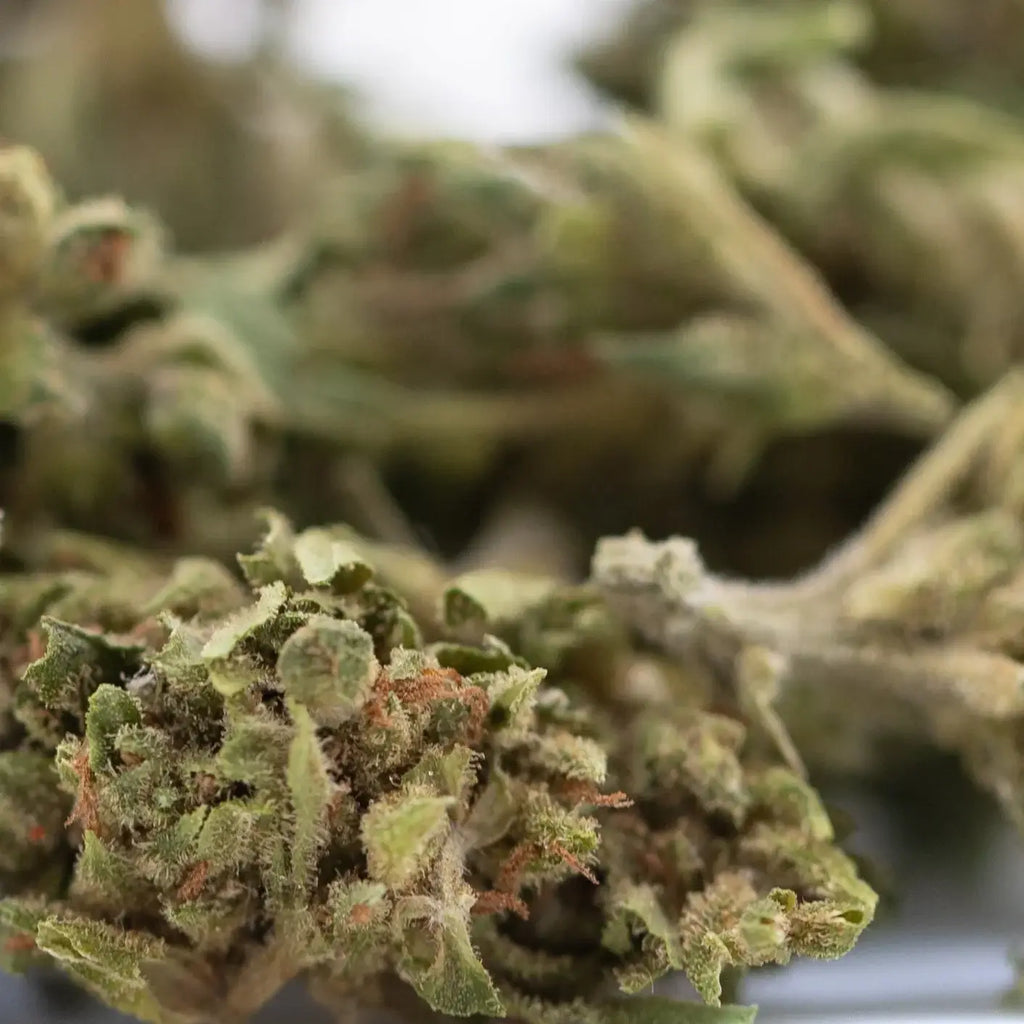
Ask most hemp consumers to name the cannabinoids they know, and you'll hear CBD, THC, and maybe CBG or CBN. CBDa — cannabidiolic acid — rarely makes the list. That's starting to change.
As CBDa flower gains visibility in the hemp wellness market, one question is driving more search traffic than almost any other: what is CBDa good for? It's a fair question, and it's the right one to ask. The hemp industry has a history of overpromising on health claims, and consumers are right to want specifics before adding anything new to their wellness routine.
CBDa, or cannabidiolic acid, is the raw, unheated precursor to CBD. It exists naturally in the hemp plant — abundant in freshly harvested flower, in raw plant material, and in cold-extracted products that haven't been subjected to the decarboxylation process that converts CBDa into CBD. For most of the hemp industry's history, CBDa was considered a byproduct: something you converted away from, not something you sought out.
That framing is now being challenged by science.
In 2026, the research on cannabidiolic acid benefits is still developing — but it's further along than most consumers realize. There is a substantial body of preclinical evidence, a growing number of in vitro and animal-model studies, and early institutional interest from pharmaceutical companies that have staked patents on CBDa's therapeutic potential. The picture is not complete, but it is detailed enough to take seriously.
This post reviews CBDa health benefits through the lens of current research: what the studies show, where the evidence is strongest, where it's still early, and what honest consumers should know before drawing conclusions.
Estimated reading time: 14 minutes Word count: ~3,500 words
What Is CBDa? A Brief Primer
Before exploring CBDa uses and potential benefits, it helps to understand what the compound actually is.
CBDa (cannabidiolic acid) is the acidic form of cannabidiol. In the living hemp plant, CBDa is synthesized from CBGa (cannabigerolic acid) through the action of the enzyme CBDA synthase. When hemp is harvested and dried gently — or when plant material is consumed raw — much of the CBDa remains intact. When heat is applied through smoking, vaping, cooking, or extraction, CBDa undergoes decarboxylation: it loses a carboxyl group (CO₂) and converts to CBD.
This means that virtually all CBD products on the market — oils, gummies, capsules, vapes — are made from material that has already lost its CBDa content. To benefit from CBDa directly, consumers need raw hemp products, cold-pressed or CO₂-extracted oils made from fresh plant material, or raw CBDa flower wellness products that preserve the cannabinoid in its natural state.
CBDa and CBD share a molecular parent but behave differently in the body. They interact with receptors and enzymes in distinct ways, and there is growing evidence that CBDa has pharmacological properties that are not simply replicated by CBD at an equivalent dose. In some cases, the research suggests CBDa may be more potent.
CBDa for Nausea and Vomiting: The Strongest Evidence
If there is one area where CBDa research 2026 points most clearly to a meaningful benefit, it is nausea and vomiting. This is arguably CBDa's best-documented application, and it is one where CBDa may actually outperform CBD.
Multiple preclinical studies — primarily conducted in rodent models that closely replicate human nausea physiology — have found that CBDa for nausea works at remarkably low doses. In several of these studies, CBDa reduced anticipatory nausea and vomiting at doses significantly lower than what CBD required to produce the same effect. The difference is not marginal: some research has suggested CBDa may be one to two orders of magnitude more potent than CBD in nausea suppression.
The proposed mechanism is CBDa's high binding affinity for 5-HT1A serotonin receptors. Serotonin signaling plays a central role in the nausea reflex — particularly the type of nausea triggered by chemotherapy, motion, and psychologically conditioned stimuli. By modulating 5-HT1A receptor activity, CBDa appears to regulate the nausea response at a neurological level rather than through a purely peripheral mechanism.
Researchers at the University of Guelph, led by Dr. Linda Parker and her team, have published a series of papers on CBDa's anti-nausea and anti-emetic properties. Their work has consistently found that CBDa reduces both acute and anticipatory nausea in animal models, and they have proposed that the compound works synergistically with low doses of THC to enhance these effects. This combination approach has attracted interest from oncology and palliative care researchers who are looking for better options for chemotherapy-induced nausea and vomiting (CINV), a side effect that remains poorly managed in a significant percentage of cancer patients.
For consumers, the practical implications are meaningful. People dealing with chronic nausea, morning sickness during pregnancy, motion sickness, or nausea induced by medications may find CBDa a compelling option — particularly through raw hemp formats or cold-extracted products that preserve the CBDa content rather than converting it to CBD.
It is worth noting: the nausea research is predominantly preclinical. Human clinical trials specific to CBDa and nausea are still limited. But the mechanistic grounding is solid, and the animal data is consistent enough that this is considered one of CBDa's most credible potential applications.
CBDa for Inflammation: A Specific, Well-Understood Mechanism
One of the most scientifically compelling arguments for CBDa for inflammation is that the mechanism is not vague or speculative — it maps onto one of the most well-understood anti-inflammatory pathways in human biology.
CBDa has demonstrated the ability to inhibit COX-2 (cyclooxygenase-2) enzymes, a key driver of the inflammatory cascade. COX-2 is the enzyme responsible for producing pro-inflammatory prostaglandins — signaling molecules that trigger swelling, pain, heat, and redness in response to tissue damage or immune activation. Critically, COX-2 is the same enzyme targeted by non-steroidal anti-inflammatory drugs (NSAIDs) like ibuprofen, naproxen, and the prescription drug celecoxib (Celebrex).
Studies have shown that CBDa acts as a selective COX-2 inhibitor. This is a meaningful distinction: selective COX-2 inhibition reduces inflammation without simultaneously suppressing COX-1, the enzyme that protects the gastrointestinal lining. Selective COX-2 inhibitors are considered preferable to non-selective NSAIDs in part for this reason, as they carry a lower risk of gastrointestinal side effects at equivalent anti-inflammatory doses.
This matters because it means CBDa is not engaging in "general anti-inflammatory activity" through some undefined mechanism — it is acting on a specific, clinically validated enzymatic target. For consumers and researchers alike, that specificity lends credibility to the anti-inflammatory claim.
The implications are broad. COX-2 overexpression is implicated in a wide range of inflammatory conditions: rheumatoid arthritis, osteoarthritis, inflammatory bowel disease, skin inflammation, and chronic systemic inflammation linked to metabolic disease. Research into CBDa as a natural COX-2 inhibitor has been ongoing since the early 2000s, and while large-scale human trials are still lacking, the mechanistic evidence is among the most solid in the CBDa literature.
For consumers dealing with joint pain, muscle soreness after exercise, or chronic inflammatory conditions, CBDa benefits in this area make it a plausible addition to a broader anti-inflammatory wellness approach — alongside diet, movement, and other evidence-supported strategies.
CBDa for Anxiety: Promising, Preclinical, and Plausible
The CBDa for anxiety research is less developed than the inflammation or nausea literature, but it is grounded in the same receptor mechanism that makes CBDa compelling across multiple applications.
As noted above, CBDa has a high affinity for 5-HT1A serotonin receptors. These receptors are not only involved in nausea signaling — they are also deeply involved in mood regulation, stress response, and anxiety. 5-HT1A is a target of buspirone, a commonly prescribed anxiolytic medication, as well as one of the proposed mechanisms through which SSRI antidepressants produce their anxiolytic effects over time.
Both CBD and CBDa appear to modulate 5-HT1A receptor activity, but some animal studies suggest CBDa may do so at lower concentrations than CBD. This has led researchers to propose that CBDa could be a potent anxiolytic compound, potentially achieving meaningful effects at sub-therapeutic CBD doses.
One particularly interesting line of research has examined CBDa in combination with very low doses of CBD for anxiety outcomes. The hypothesis is that CBDa and CBD together may produce anxiolytic effects that neither compound achieves alone at those low concentrations — a form of cannabinoid synergy that fits within the broader framework of the entourage effect. This "synergistic low-dose" model is primarily preclinical at this stage, but it has clear implications for anxiety-focused hemp formulations that incorporate both raw CBDa and CBD content.
For consumers who currently use CBD for anxiety support, raw hemp flower or cold-extracted products that preserve CBDa may offer a complementary or alternative approach — particularly at lower doses. Whether CBDa will prove more effective than CBD in human anxiety research remains to be determined, but the foundational biology supports the inquiry.
CBDa and Cancer Biology: Early Research Worth Knowing
The most attention-generating area of CBDa research — and the one that requires the most careful qualification — involves cancer cell biology. A 2012 study published in the Journal of Natural Medicines found that CBDa suppressed the migration of MDA-MB-231 cells, a particularly aggressive and treatment-resistant breast cancer cell line, in vitro.
Cell migration is the process by which cancer cells move from the primary tumor to other tissues — a critical step in metastasis. CBDa's proposed mechanism in this context involves two pathways: its inhibition of COX-2 (which, as discussed above, plays a role in tumor biology and cancer-associated inflammation) and its influence on the RhoA/ROCK signaling pathway, which regulates cell motility and invasiveness.
It is essential to be clear about what this research does and does not show. This is in vitro data — conducted on isolated cancer cells in laboratory conditions, not in living organisms and certainly not in human patients. The distance between in vitro results and a clinical cancer treatment is enormous, and the vast majority of compounds that show anti-cancer effects in cell studies do not survive the journey to human trials.
No consumer health claim about CBDa treating or preventing cancer is supported by the current evidence. It would be irresponsible to imply otherwise.
What the research does show is that CBDa interacts with cancer cell biology in ways that are specific, mechanism-grounded, and consistent with other anti-tumor research in cannabinoids. It is a legitimate area of scientific inquiry. The fact that it is being studied seriously — not as a fringe idea but in peer-reviewed publications with clear mechanistic hypotheses — is itself meaningful context for consumers who want to understand cannabidiolic acid benefits comprehensively.
CBDa and Epilepsy: Pharmaceutical-Level Interest
One of the most telling signals about CBDa's potential comes not from academic research but from corporate patent activity. GW Pharmaceuticals — the UK-based company that developed Epidiolex, the first FDA-approved plant-derived cannabinoid medication (approved for certain rare epilepsy syndromes) — has held patents on CBDa for epilepsy treatment.
GW's interest in CBDa is not incidental. The company built its scientific reputation on cannabinoid pharmacology, and their patent filings explicitly reference CBDa's potential utility in seizure management. Early research has suggested that CBDa may be more potent than CBD in some seizure models, which aligns with the broader pattern of CBDa demonstrating activity at lower doses than its decarboxylated counterpart.
Development of CBDa-based pharmaceutical treatments for epilepsy remains in early stages, and no CBDa medication has reached FDA approval. However, institutional investment from a company with an approved cannabinoid drug — a company with the resources and scientific expertise to discriminate between genuine potential and marketing noise — is a meaningful data point. It suggests that at least some of the world's most serious cannabinoid researchers believe CBDa is worth pharmaceutical-level development.
CBDa for Pain: Multiple Mechanisms, Limited Human Data
Pain is a complex phenomenon involving overlapping biological systems: inflammation, neural signaling, oxidative stress, and psychological processing all play roles. CBDa may engage several of these pathways simultaneously, which makes it an interesting candidate for pain research — even if the human clinical data remains limited.
The primary pain-relevant mechanism is CBDa's COX-2 inhibitory activity, which would be expected to reduce inflammatory pain through the same pathway as NSAIDs. Beyond inflammation, CBDa has been shown to interact with TRPV1 (transient receptor potential vanilloid 1) channels — the same receptors activated by capsaicin in hot peppers. TRPV1 channels are involved in pain perception and sensitization, and modulating their activity is a recognized approach in pain pharmacology.
Finally, through its 5-HT1A serotonin receptor activity, CBDa may influence the psychological and emotional processing of pain — the affective dimension that determines how distressing a pain signal feels, not just whether it exists. This multi-pathway profile is similar to what researchers observe in other compounds that show promise as pain treatments.
No human clinical trials have established CBDa as a pain treatment. The mechanistic evidence across multiple pathways is compelling for hypothesis generation, but consumers should be clear-eyed about the gap between mechanism and clinical proof.
CBDa Flower Wellness: How Consumers Are Using It
Beyond specific therapeutic applications, CBDa flower wellness is emerging as a general approach for consumers who want to incorporate raw cannabinoids into their daily routine.
The most direct way to consume CBDa is through raw hemp flower — juiced, blended into smoothies, or used in cold preparations that don't involve heat. Some consumers chew or eat small amounts of raw flower directly, though palatability varies. Cold-pressed hemp oils and water-soluble CBDa preparations are also available and preserve the compound's integrity.
For consumers who are primarily interested in CBD's effects, it is worth considering that any unheated hemp flower product naturally contains both CBDa and trace amounts of CBD — and that consuming them together, as the plant produces them, may offer benefits that isolated CBD alone does not replicate. This is consistent with the broader entourage effect hypothesis.
A growing segment of the hemp market is sourcing high-quality CBDa flower specifically for raw consumption. Strain selection matters here: different hemp cultivars express different cannabinoid ratios, and fresh-cured flower with a high CBDa content will deliver more of the compound than older or improperly stored material.
What We Don't Know Yet: Honest Gaps in the Research
Intellectual honesty is essential in hemp content, and the CBDa research base — despite its real promise — has significant gaps. Consumers deserve to understand both what the science supports and where it doesn't yet go.
Long-term human safety data is absent. There are no long-term human safety studies specific to CBDa. While the compound appears to be well-tolerated in the animal research, extrapolation to humans at scale has not been studied.
Optimal dosing is unknown. Without clinical trials establishing effective dose ranges for specific conditions, any dosing guidance for CBDa is speculative. Animal study doses cannot be directly translated to human equivalents without pharmacokinetic bridging data.
Human bioavailability is understudied. While animal data suggests that CBDa may be well-absorbed orally — potentially better than CBD in some models — human pharmacokinetic studies are limited. How CBDa behaves in the human gut, bloodstream, and target tissues is not well characterized.
Head-to-head comparisons with CBD are lacking. Despite suggestive preclinical data pointing to CBDa's superior potency in some contexts, direct human-trial comparisons between CBDa and CBD for any indication do not yet exist at meaningful scale.
Standardization is a challenge. The raw hemp market lacks the standardization of pharmaceutical-grade extracts, meaning that the CBDa content of any given product can vary significantly based on cultivation, harvest timing, storage, and processing.
These gaps do not invalidate the existing research. They are the normal limitations of an emerging field — limitations that are being actively addressed as interest in CBDa grows and funding for human trials increases. But consumers should enter the CBDa space with realistic expectations and a healthy skepticism toward any company making specific medical claims.
Frequently Asked Questions About CBDa
Q: What is CBDa, and how is it different from CBD?
CBDa (cannabidiolic acid) is the raw, acidic precursor to CBD found naturally in the hemp plant. When hemp is heated — smoked, vaped, or cooked — CBDa converts to CBD through a process called decarboxylation. CBDa and CBD share a molecular parent but interact with the body's receptors and enzymes in different ways. Some research suggests CBDa may be more potent than CBD for certain applications, particularly nausea suppression, at equivalent or lower doses.
Q: What is CBDa good for based on current research?
Based on the current research, what is CBDa good for centers on a few key areas: nausea and vomiting (particularly in chemotherapy and motion sickness contexts), inflammation through COX-2 inhibition, anxiety through 5-HT1A receptor modulation, and pain management through multiple overlapping mechanisms. There is also early-stage research into CBDa's potential in epilepsy and cancer biology, though this is less developed.
Q: Is CBDa better than CBD?
"Better" depends on the application. For nausea suppression, some preclinical evidence suggests CBDa may be significantly more potent than CBD at equivalent doses. For other conditions like anxiety or inflammation, the comparison is less clear because head-to-head human trials don't yet exist. For most consumers, the most accurate framing is that CBDa and CBD are complementary — not competing — cannabinoids with distinct and overlapping mechanisms.
Q: How do you consume CBDa without losing it to heat?
To preserve CBDa uses and benefits, you need to avoid heating the hemp material. Options include: juicing raw hemp flower, blending it into cold drinks or smoothies, using cold-pressed or CO₂-extracted hemp oils made from fresh material, or consuming raw flower directly. Any product that has been smoked, vaped, or processed with heat will have converted most of its CBDa to CBD.
Q: Does CBDa show up on a drug test?
CBDa itself is not typically detected by standard drug tests, which screen for THC metabolites. However, if a CBDa product contains trace amounts of THC (legal hemp is allowed up to 0.3% delta-9 THC), there is a theoretical risk of accumulation with heavy use. As with all hemp products, consumers subject to drug testing should use caution and choose products with verified third-party lab results.
Q: Is CBDa legal?
CBDa from hemp plants is federally legal in the United States under the 2018 Farm Bill and its subsequent regulatory interpretations, provided the source material meets the legal THC threshold. State-level laws vary, so consumers should verify local regulations. As with any hemp purchase, look for products accompanied by Certificates of Analysis (COAs) from third-party labs confirming cannabinoid content and THC compliance.
Q: Are there any side effects of CBDa?
CBDa's side effect profile has not been extensively studied in humans. Animal research suggests it is generally well-tolerated. Because CBDa converts to CBD in the body over time, potential side effects may mirror those associated with CBD: mild fatigue, digestive changes, or interactions with certain medications (particularly those metabolized by the CYP450 enzyme system in the liver). Consumers taking pharmaceutical medications should consult a healthcare provider before introducing CBDa.
Q: Where can I find high-quality CBDa flower?
High-quality CBDa flower wellness products are available from reputable hemp brands that provide third-party COAs confirming cannabinoid content. Look for fresh-cured flower with visible trichomes, proper storage (airtight containers, away from heat and light), and lab results that specifically list CBDa content — not just total CBD or total cannabinoids, which may mask the actual pre-decarboxylation cannabinoid profile.
Q: Can CBDa help with morning sickness?
The research on CBDa for nausea — particularly the University of Guelph studies — has generated interest in its potential for morning sickness during pregnancy. However, pregnant consumers should exercise significant caution and consult their obstetrician before using any hemp or cannabis product. The safety of CBDa specifically during pregnancy has not been established in human studies.
Q: What does the latest CBDa research in 2026 show?
CBDa research 2026 continues to build on the preclinical foundation established over the past decade. Current directions include expanded investigation of CBDa's anti-nausea mechanisms, continued interest from pharmaceutical companies in its anti-epileptic potential, and early exploration of its role in synergistic cannabinoid formulations. Human clinical trials remain limited but are increasing as commercial and academic interest grows.
Conclusion: CBDa Is a Serious Cannabinoid, Not a Marketing Trend
CBDa benefits are real — not in the sweeping, unsupported sense that characterizes the worst of hemp marketing, but in the specific, mechanistically grounded sense that characterizes legitimate emerging science.
The evidence is strongest for nausea suppression and COX-2-mediated inflammation reduction. It is meaningful and plausible — though earlier-stage — for anxiety, pain, epilepsy, and cancer biology. In every case, CBDa's activity can be traced to specific receptor interactions and enzymatic pathways: 5-HT1A serotonin receptors, COX-2 inhibition, TRPV1 channel modulation, and others. These are not vague "wellness" claims — they are pharmacological mechanisms that researchers and pharmaceutical companies are actively investigating.
What cannabidiolic acid benefits are not, yet, is a proven clinical treatment for any condition. Like CBD before it, CBDa is being embraced simultaneously by wellness consumers and academic researchers, and the full picture will become clearer as human clinical trials accumulate. The compound's journey from plant chemistry curiosity to pharmaceutical patent subject to consumer wellness product has happened remarkably quickly — and the science is, for once, leading the market rather than chasing it.
For consumers curious about CBDa uses in 2026, the honest message is this: CBDa is among the most scientifically credible cannabinoids in the hemp plant, it engages with human biology through specific and well-understood mechanisms, and it is worth taking seriously — both as a subject to follow in the research and as a potential addition to a thoughtful hemp wellness routine.
Explore high-quality CBDa flower options to find the raw hemp products that best fit your needs.


