


How Growers Harvest and Process THCA Trim: Inside the Cultivation Workflow
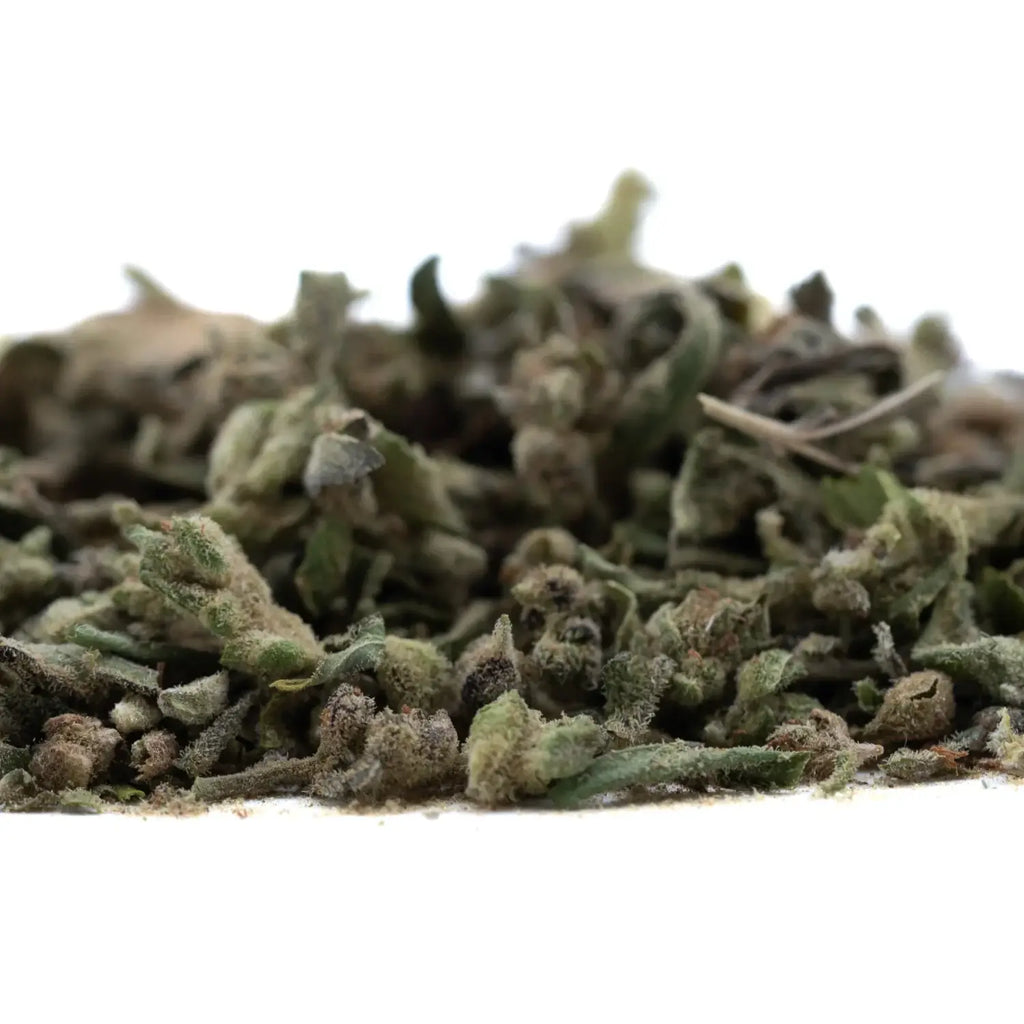
Most buyers of THCA trim interact with it after it's already been packaged and shipped — a bag of loose leaf material that shows up with a COA and a price per pound. But understanding where that trim comes from, how it was produced, and what decisions the grower made during harvest helps you evaluate quality, set expectations, and build better supplier relationships.
The hemp trim growing process is more complex than most buyers realize. Trim isn't a simple afterthought or accidental byproduct — it's a direct reflection of every cultivation and post-harvest decision made on the farm, from when the plants were cut to how the leaf material was dried and sorted before it ever reached a bag. This guide takes you inside the post-harvest workflow on a THCA hemp farm and explains exactly how trim is created, what affects its quality, and what happens between the field and your hands.
Stage 1: Determining Harvest Timing — The Foundation of Trim Quality
Everything in a hemp grow culminates in the harvest decision, and that decision shapes the quality of every downstream product, including trim. Understanding the THCA trim harvest process starts here, before a single plant is cut.
THCA content in the hemp plant peaks as the flowers approach full maturity. But that maturity isn't a single moment — it's a window, and growers have to identify it through careful observation. Trichomes, the resinous glands that coat both flowers and sugar leaves, pass through distinct developmental stages as the plant matures:
- Clear or transparent trichomes signal that the plant is still producing cannabinoids and hasn't yet reached peak potency. Harvesting here means leaving cannabinoid content on the table.
- Cloudy or milky white trichomes indicate that THCA production is at or near its peak. This is the window most growers targeting high-potency THCA products aim to harvest within.
- Amber trichomes signal that THCA has begun converting to CBN, a less desirable cannabinoid for most applications. Trim harvested at this stage will be lower in THCA content than trim from plants cut earlier.
The sugar leaves that become trim are covered in the same trichomes as the flowers themselves, which means a grower's harvest timing decision directly determines the cannabinoid profile of the trim, not just the flower. A farm that nails its harvest window produces trim with meaningful THCA content. A farm that waits too long or cuts too early produces trim that tests lower and delivers less value per pound.
Growers assess trichome development using jeweler's loupes (typically 30x to 60x magnification) or digital microscopes capable of displaying trichome structure clearly. Beyond trichome color, experienced cultivators also read the plant's broader signals — pistil coloration shifting from white to orange or red, calyx swelling, and the overall structure and density of the bud. These observations together paint a picture of plant maturity that guides the final harvest call.
What this means for buyers: a supplier who can speak intelligently about harvest timing — who knows when their plants were cut and why — is a supplier who understands the connection between cultivation decisions and product quality. It's worth asking.
Stage 2: Cutting the Plants — Mechanical vs. Hand Harvest
Once the harvest decision is made, the plants are cut. The method used matters for hemp harvest workflow efficiency and for the physical integrity of the trichomes on both the flower and the trim.
Hand Harvesting
In smaller operations and premium cultivation settings, plants are harvested by hand using pruning shears or harvest knives. Hand harvesting allows for selective cutting — experienced growers can take the most mature portions of a plant first and leave less mature sections to continue developing for a second pass a week or two later. This staggered approach maximizes both flower quality and trim quality because each portion of the plant is cut at its optimal moment.
Hand harvesting is also gentler on the plant material. Trichomes are physically fragile structures, and rough mechanical handling during harvest can knock significant quantities of them off both the buds and the fan and sugar leaves. Less trichome loss means more cannabinoid content preserved in the trim.
Mechanical Harvesting
Large commercial hemp trim production operations often can't hand-harvest at scale. Walk-behind mechanical harvesters or tractor-mounted cutting systems allow a single operator to move through rows quickly, cutting dozens or hundreds of plants per hour versus what a hand crew can accomplish.
The tradeoff is precision and trichome integrity. Mechanical harvesters are more aggressive, and the physical agitation during cutting and collection can degrade trichome density on all parts of the plant. Trim from heavily mechanized harvest operations may reflect that handling in its cannabinoid content and overall appearance.
For buyers sourcing THCA hemp harvest byproducts, understanding how a farm harvests gives useful context. Craft-scale hand harvesting and large-scale mechanical harvesting produce different base materials, and the trim reflects that difference.
After cutting, plant material needs to move promptly to the next processing stage. Delays between field cutting and processing — especially in warm or humid conditions — can cause temperature buildup in stacked plant material that begins degrading cannabinoids and creating conditions favorable for mold.
Stage 3: The Wet Trim vs. Dry Trim Decision
At the point of harvest, every grower faces one of the most consequential processing decisions in the hemp trim growing process: trim the plants immediately while fresh, or dry the whole plant first. This is the wet trim vs. dry trim question, and it has significant downstream effects on the character, handling requirements, and applications of the trim produced.
Wet Trimming
Wet trim dry trim farming is a topic every serious buyer should understand. Wet trimming means the sugar leaves are removed from the plant within hours of harvest, while all plant tissue is still fresh and moisture-rich. The leaves are soft and pliable in this state, which makes them physically easier to cut and process quickly.
Advantages of wet trimming:
- Faster processing throughput, especially important for large harvests that need to move quickly
- Trimmed buds can go directly onto drying racks with better airflow exposure, potentially speeding the drying process
- Wet trim can be used immediately for fresh frozen processing — ice water hash and live resin extraction using fresh-frozen material relies on trim being processed before drying
Challenges of wet trimming:
- Wet trim requires immediate handling; moist leaf material at 70% to 80% moisture content can develop mold within 24 to 48 hours if not dried promptly
- The fast drying required for wet trim can be more aggressive, sometimes at the cost of terpene preservation
- Managing high-moisture trim requires more drying infrastructure and close environmental monitoring
Dry Trimming
Dry trimming means the whole plant or large branches are hung in a climate-controlled drying room for one to two weeks before any trimming occurs. The plant dries slowly, the leaves curl inward and dry against the bud, and the overall curing process is more gradual.
Advantages of dry trimming:
- The slower dry and cure process is generally considered better for preserving terpene complexity and developing overall product quality
- Dry trim is easier to store and handle once removed because it already has lower moisture content
- Less urgency around immediate processing reduces operational pressure on the team
Challenges of dry trimming:
- More drying room space is required to hang whole plants or large branches rather than just trimmed buds
- The labor involved in trimming dried plant material is often more intensive because the leaves have curled tightly against the flower and require more care to remove cleanly
- Larger drying rooms require more environmental control infrastructure
Large commercial hemp farms typically wet trim for efficiency reasons — the logistics of hanging hundreds or thousands of whole plants are prohibitive at scale. Craft and premium operations often prefer dry trimming for the quality advantages it offers, accepting the tradeoff in labor cost and drying room requirements.
For buyers, the trimming approach often correlates with farm scale and quality positioning. Premium craft suppliers are more likely to dry trim; high-volume commodity suppliers are more likely to wet trim. Neither is universally better, but knowing which approach was used helps calibrate expectations for what you'll receive.
Stage 4: The Trimming Process Itself — Hand, Machine, and Hybrid Methods
Whether wet or dry, the actual THCA plant trimming stage is where the trim material is physically created. The method used at this stage is one of the strongest predictors of trim quality.
Hand Trimming Hemp
Hand trimming hemp is the most labor-intensive approach. Trimmers work with small, curved scissors — purpose-built trimming scissors — to carefully cut sugar leaves away from the bud, manicuring the flower down to a clean finished product. Good hand trimmers are skilled at knowing exactly where to cut: close enough to produce a clean bud, but not so aggressive that they remove material that should stay with the flower.
The trim produced by hand trimming tends to be high quality for several reasons. Experienced trimmers are selective — they're cutting clean sugar leaves from the flower rather than cutting through buds or collecting indiscriminately. The trim coming off hand-trimmed plants typically has more visible trichome coverage, lower stem content, and better overall consistency than machine-produced trim.
The significant downside is cost. At any commercial scale, hand trimming labor is expensive. Depending on the region and labor market, professional trimmers can process anywhere from a few ounces to a pound or more per hour. A large harvest requires either a large trimming crew over a long time or a machine-assisted approach.
Machine Trimming Hemp
Hemp trimming machines — tumble trimmers, bowl trimmers, and high-capacity automated trimming units — use physical agitation and cutting mechanisms to remove leaves from buds mechanically. They're dramatically faster than hand trimming and significantly cheaper at scale.
Common machine trimming approaches include:
Tumble trimmers: Buds tumble through a rotating drum with openings that allow leaves and small material to fall through while buds are retained. Blades cut the leaves as they emerge through the drum openings.
Bowl trimmers: Buds are placed in a bowl with a spinning mesh surface. The agitation and cutting action removes leaves that extend beyond the bud's surface.
The quality tradeoff with machine trimming is real and worth understanding. Machine trimming is less precise than hand trimming — it can remove too much or too little, and the physical agitation involved can cause trichome loss. Trim produced by machine trimming is often mixed with fine dust, broken trichome heads, and smaller plant fragments that fall through the cutting mechanism. This material may test lower in cannabinoid content than hand-trimmed trim of comparable origin because of trichome loss during processing.
For high-volume operations where efficiency is the priority and trim is a commodity byproduct rather than a premium product, machine trimming makes clear economic sense. For operations where trim quality is a selling point, it's a more complicated calculation.
The Hybrid Approach
Many farms land somewhere between pure hand trimming and pure machine trimming. A common approach is to run plants through a machine trimmer as a first pass — removing the bulk of the leaf material quickly and cheaply — then hand-finish the buds to clean up what the machine left behind. This hybrid method balances throughput efficiency with quality outcomes.
The trim collected in hybrid operations typically reflects the machine-trimming phase — it's the bulk leaf material that came off during mechanical processing, supplemented by what hand trimmers collect during finishing. Understanding whether a farm uses this hybrid approach helps buyers contextualize what they're receiving.
Stage 5: Collecting and Storing Trim Before Drying
As trimming proceeds, the leaf material accumulates. In machine trimming setups, trim falls into collection trays or bags positioned beneath the machine's cutting mechanism. In hand trimming, workers either let trim fall onto trimming surfaces and collect it periodically or use small containers at their workstation.
How trim is collected and handled in the immediate post-trimming period matters more than most buyers realize. Hemp post-harvest processing at this stage involves several variables that affect quality:
Handling gentleness: Trim that's handled roughly — scooped aggressively, compressed into containers too tightly, or transferred multiple times — loses trichomes at each handling step. The more gently the trim moves from trimming surface to drying, the more cannabinoid content is preserved.
Container cleanliness: Collecting trim in clean, dry containers is basic but important. Trim that picks up contamination, moisture, or debris from poorly maintained containers starts the drying process compromised.
Time to drying: Wet trim especially needs to begin drying as quickly as possible after collection. If wet trim sits in collection bags for hours before moving to drying racks, moisture accumulation begins creating conditions for mold growth. Quality-focused farms move trim to drying infrastructure within hours of collection.
Separation from debris: During trimming, some plant matter other than sugar leaves inevitably ends up in the trim collection. Small stems, fan leaf fragments, and other plant material can mix into the trim at the collection stage. Farms that take quality seriously watch for this and try to separate obvious debris before the trim moves to drying.
Stage 6: Drying the Trim — Environmental Conditions That Determine Final Quality
Hemp trim production quality is significantly shaped in the drying room. Wet trim enters the drying stage at 70% to 80% moisture content and needs to come out at 8% to 12% for stable storage. Getting from point A to point B without losing terpenes, degrading cannabinoids, or creating conditions for mold is a genuine technical challenge.
The key environmental variables in trim drying:
Temperature: The ideal range for trim drying is approximately 60°F to 70°F (15°C to 21°C). Higher temperatures accelerate moisture loss but come at the cost of terpene evaporation — terpenes are volatile compounds that can be driven off by heat — and potential cannabinoid degradation. Lower temperatures dry too slowly and can allow mold development before the material is stable.
Relative Humidity: Drying rooms should maintain 45% to 60% relative humidity (RH). Above 60% RH, moisture removal slows and mold risk increases — particularly in the interior of larger piles of drying trim. Below 45% RH, the trim dries too quickly, and rapid moisture loss can drive off terpenes before they've had time to develop through the curing process.
Airflow: Consistent, gentle airflow is essential in a quality drying room. Fans running continuously — ideally oscillating, not pointed directly at the trim — maintain air movement that prevents stagnant moisture pockets and ensures even drying across all material on the racks. Without adequate airflow, the outside of a trim pile can appear dry while the interior remains wet enough to mold.
Rack Depth: How deeply trim is piled on drying racks affects drying speed and consistency. Thin, evenly spread layers dry more consistently than thick piles. Large operations may need to turn or stir their drying trim periodically to ensure even moisture reduction throughout the batch.
Duration: Under well-controlled conditions, trim typically takes three days to two weeks to reach appropriate moisture content. Wet trim from freshly harvested plants at the longer end of this range; dry trim that was partially dried on the plant before trimming at the shorter end.
Large commercial operations with significant trim volumes often invest in industrial drying solutions — freeze dryers, food dehydrators, or purpose-built climate-controlled drying chambers — to process trim more quickly and consistently than passive rack drying allows. Freeze drying in particular has gained popularity in the premium cannabis market because it can preserve terpene profiles and cannabinoid content while removing moisture quickly.
Stage 7: Sorting and Quality Control — Where Good Trim Gets Separated from Average Trim
After drying, quality-focused farms take time to sort their trim before it's packaged for sale. This is one of the most telling indicators of supplier quality, and it's a step that less rigorous operations skip.
Unsorted dry trim contains a mix of material types that vary significantly in value and usefulness:
- Sugar leaves: The trichome-coated small leaves that grew directly from or adjacent to the flower. These are the premium component of trim — potent, covered in resin, and useful for extraction or direct infusion applications.
- Fan leaves: Larger, broader leaves that grew from the main branches of the plant. Fan leaves have minimal trichome coverage and very low cannabinoid content. They bulk up trim weight without adding meaningful value.
- Stems: Small stems and petioles that are pulled off during trimming. Stems dilute cannabinoid content and are generally undesirable in finished trim.
- Dust and fines: Broken trichome heads, plant dust, and very fine material that accumulates during trimming and handling. This fine material can vary in quality — trichome-rich dust may actually be potent — but its presence in high quantities indicates rough handling.
THCA hemp harvest stages of quality sorting typically involve visual inspection and hand sorting to remove obvious fan leaves and large stems, followed by a shaker or tumbler pass to separate fine material from the larger leaf fragments. Some operations invest in more sophisticated sorting equipment for high-volume processing.
Farms that sell sorted, clean sugar leaf trim produce a more consistent, more potent product that commands better prices and earns stronger supplier relationships. Farms that bag everything that fell off the plant during trimming — fan leaves, stems, dust, and all — produce a product that's difficult to evaluate and often disappointing when tested.
Stage 8: Testing and Packaging — The Final Steps in the THCA Trim Supply Chain
Before trim reaches buyers, quality suppliers complete two final steps: third-party lab testing and appropriate packaging.
Laboratory Testing
The THCA trim supply chain properly terminates at a third-party laboratory before the product ships. A Certificate of Analysis (COA) from an ISO-accredited testing lab confirms:
- THCA content: The primary value indicator for buyers using trim in extraction or cannabinoid applications
- Delta-9 THC compliance: Federal and state compliance requires total THC (calculated as delta-9 THC + 0.877 x THCA) to fall below 0.3% on a dry weight basis under the 2018 Farm Bill framework
- Pesticide residues: A full pesticide panel confirms the trim doesn't carry agricultural chemical contamination from the grow
- Heavy metals: Soil contaminants can bioaccumulate in hemp plants; testing confirms the trim is free of lead, cadmium, arsenic, and mercury above acceptable thresholds
- Microbial contamination: Testing for total yeast and mold, E. coli, and Salmonella confirms the trim was dried and handled under conditions that didn't allow pathogen growth
Buyers should always request current COAs — preferably from batches tested within the last 60 to 90 days — and verify that the testing lab's accreditation is legitimate. Suppliers who can't or won't provide third-party COAs are a significant quality risk.
Packaging
Trim is packaged in quantities appropriate for the buyer's scale and storage needs. Retail and small-batch buyers may receive one-pound or two-pound bags. Wholesale and commercial buyers typically work in larger units — 10-pound bags, 50-pound cases, or custom bulk configurations. Quality packaging protects the trim from moisture, light, and physical damage during transit.
What This Means for Buyers: Applying Cultivation Knowledge to Sourcing Decisions
Understanding the hemp hemp farm trim byproduct production process gives buyers practical leverage when evaluating suppliers. Here's how to apply what you know:
Ask about harvest timing. Suppliers who can tell you when their plants were harvested and what trichome development looked like at harvest are suppliers who pay attention. Growers who don't track this information are making quality decisions by feel or guesswork.
Ask about trimming method. Hand-trimmed trim is generally cleaner and more potent than machine-trimmed trim. Knowing which you're sourcing helps calibrate expectations for appearance, potency, and value per pound.
Ask about drying conditions. A supplier who can describe their drying room environment — temperature, humidity, airflow, duration — has invested in proper infrastructure. A supplier who can't tell you anything about how their trim was dried is a higher risk.
Ask about sorting. Does the farm separate fan leaves from sugar leaves before packaging? This single question reveals a lot about how seriously a supplier takes the quality of their trim product.
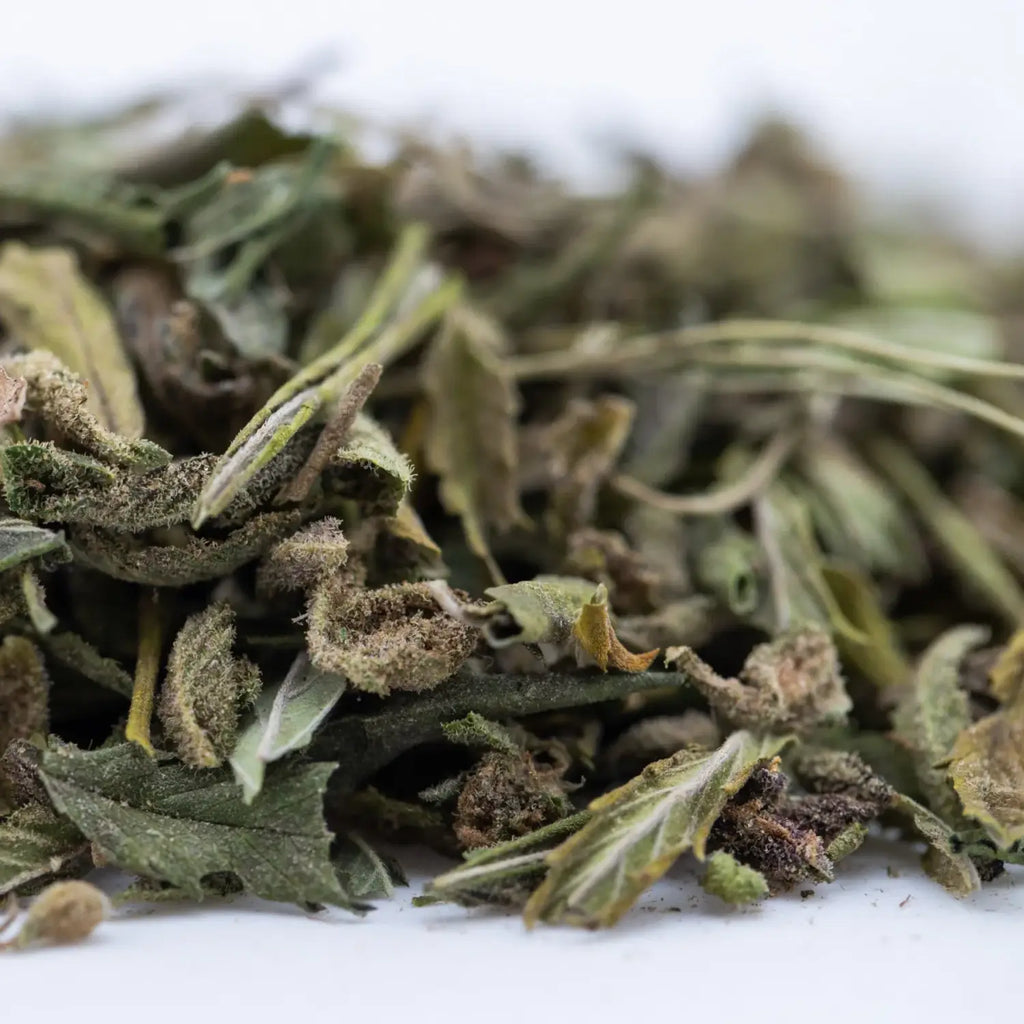
Inspect samples before committing to volume. The trim's appearance tells a story. Good trim has visible trichome coverage, appropriate color (golden green to light brown, not dark green or gray), minimal stem content, low dust, and a clean, pleasant aroma. These visual and sensory cues reflect the cultivation and processing decisions that went into it.
Verify the COA. Test results from a legitimate third-party lab are non-negotiable for any serious buyer. Confirm THCA content, delta-9 THC compliance, and the absence of contaminants before purchasing.
Final Thoughts
Harvesting THCA hemp trim is not a passive or incidental process. Trim is the direct product of every decision made throughout the cultivation and post-harvest workflow — harvest timing, cutting method, the wet-vs-dry-trim choice, trimming method, collection handling, drying conditions, and sorting quality all determine whether a batch of trim is genuinely useful material or overpriced plant waste.
The buyers who get the most value from trim relationships are the ones who understand this. They ask better questions, evaluate samples more critically, read COAs more thoroughly, and build supplier relationships based on real transparency about how products are produced. The more fluent you become in how hemp cultivation trim is actually made, the better equipped you are to find the growers who do it well.
Frequently Asked Questions
Does harvest timing affect THCA trim potency?
Yes, significantly. Trim harvested at peak trichome development — when the majority of trichomes are in the cloudy or milky white stage — will have higher THCA content than trim from plants cut too early (clear trichomes, underdeveloped cannabinoid production) or too late (amber trichomes, THCA converting to CBN). The sugar leaves that become trim carry the same trichomes as the flowers, so harvest timing affects both products equally.
Is hand-trimmed THCA trim better than machine-trimmed trim?
Generally yes, though with nuance. Hand trimming is more selective and precise, produces cleaner sugar leaf trim with more visible trichome coverage, and causes less physical damage to trichomes than machine trimming. Machine-trimmed trim is often more variable, may contain more dust and fine material, and can reflect trichome loss from mechanical agitation. That said, well-run machine trimming operations produce acceptable trim, and the cost efficiency at scale is significant. Knowing which method was used helps set appropriate quality expectations.
What is wet trim vs. dry trim, and which is better for buyers?
Wet trim is removed from the plant within hours of harvest while the plant is still fresh and moisture-rich. Dry trim is removed after the whole plant has been hung and dried for one to two weeks. Dry trimming is generally associated with higher overall product quality — the slower cure benefits both the flowers and the trim — while wet trimming is more efficient at scale. For buyers, dry-trimmed trim often has better terpene preservation. Wet trim that was fresh-frozen is highly valuable for ice water hash extraction applications.
How long does it take to dry THCA trim properly?
Under properly controlled conditions — 60°F to 70°F, 45% to 60% relative humidity, consistent airflow — trim typically takes three to fourteen days to reach a stable moisture content of 8% to 12%. Wet trim from freshly harvested plants takes longer; trim from plants that were partially dried before trimming may reach target moisture more quickly. Rushing drying with high heat or very low humidity can degrade terpenes and cannabinoids.
What is the trim-to-flower ratio on a hemp farm?
This varies by strain, cultivation environment (indoor vs. outdoor vs. greenhouse), growing practices, and trimming style. As a general estimate, a hemp plant might produce 20% to 40% of its total harvest weight as trim material. Heavily leaved strains produce more trim relative to flower; tight, compact cultivars may produce less. High-quality hand trimming tends to produce slightly less trim per plant than aggressive machine trimming because skilled trimmers are more conservative about what they remove.
Does indoor or outdoor cultivation produce better trim?
Indoor cultivation typically produces more trichome-dense trim because controlled lighting, temperature, and humidity allow for denser cannabinoid and terpene development throughout the entire plant, including the sugar leaves. Outdoor trim is generally less potent — plants grown under natural conditions experience more environmental variability — but is more widely available and less expensive. Greenhouse-grown trim often falls between the two. For high-potency extraction applications, indoor trim commands a premium. For volume-driven processing where price per pound matters more, outdoor trim is frequently the better economic choice.
What should I look for when evaluating trim quality?
Visually, look for visible trichome coverage on the sugar leaves (the material should look frosty or resinous, not dull), appropriate color (golden green to light brown rather than very dark green or gray), low stem content, and minimal dust or fine material. The aroma should be clean and pleasant — strain-appropriate terpene scents are a positive sign. Avoid trim that smells musty or hay-like (signs of poor drying or curing), looks very brown or degraded, or contains obvious fan leaf material mixed in. Always confirm your evaluation with a current, third-party COA.


